
Ikari has released a new firmware for the SD2Snes Flash Cartridge (Super Nintendo/Famicom). The upgrade instructions can be found here.
Changelog:
- SA-1 support by RedGuy! Big thanks to RedGuy again :) This was a really tight fit for the FPGA so there’s a little catch – MSU1 is not available for SA-1 games.
- Also from RedGuy comes partial SRAM detection for some known games (SuperFX & SA-1). This calculates a ROM CRC and chooses to monitor only specific regions in cartridge RAM for changes. This enables automatic saving without having to resort to periodic saving, reducing wear on the SD card.
- SNES CPU <-> PPU clock phase alignment. This is a long standing issue on a sub-CPU-cycle base inside the SNES. HDMA to certain registers can cause flickering sprite slabs to appear when CPU and PPU are out of phase after a cart-side reset (which does not reset the PPUs). This fixes the notorious flickering of characters with the giant frog attack in Chrono Trigger, sprites in Kirby Super Star, characters behind the text box in Star Ocean, and probably more. See https://github.com/RedGuyyyy/sd2snes/issues/6 for technical details.
- Added an option to always go back to menu on reset, regardless of whether it’s a short or long reset.
- LED brightness setting (16 levels)
- Added an option to choose whether you want to start a game with or without cheats enabled (of those that are marked as enabled in the YAML file). You can enable / disable them later using the L+R+Start+A / L+R+Start+B button combinations if you have in-game buttons enabled.
- Disable Satellaview emulation when a real Satellaview base unit is detected to avoid bus fighting and facilitate Satellaview development.
- System Information now shows the currently effective video mode (50 or 60 Hz).
- Fixes:
- Control signal edges are detected a bit earlier, improving stability on some consoles (Github Issues)
- Fix timing of auto region patching. This should solve cross-issues with Super Scope games because they rely on the same register that is also used to read the console region.
- Fix brightness patching / limiting for games that use HDMA to alter the brightness register. (e.g. Star Fox)
- Fix an occasional imaginary access cycle carried out by the FPGA after reconfiguration. This fixes lockups when loading games with dedicated FPGA files, i.e. SuperFX, SA-1, OBC-1.
- Fix SuperCIC pair mode entry for consoles with ≤ 3.072MHz CIC clock (notably GPM revisions). (Github Issue)
- S-RTC register state is reset when the console is reset.
Download:
source: sd2snes.de

Atari SAP Music Archive (ASMA) is a Atari XL-XE music collection. It is one of the largest and most accurate computer music collections known.
ASMA archive now uses an online repository, where it is constantly updated.
source: ASMA Repository

Firmware upgrade for the UK1541 a real time drive emulator with cycle-exact 6502 instructions execution and VIA’s emulation just by tiny MCU, LCP1114, Cortex M0, 48Mhz (0,84 DMIPS/Mhz) developed by Krzysztof Switajski aka Kisiel/ICON.
Changelog:
- Core6502 update 2.0.1.11-2018 with major improvements for VIA emulation.
Download:
source: wiki.projekt64.filety.pl
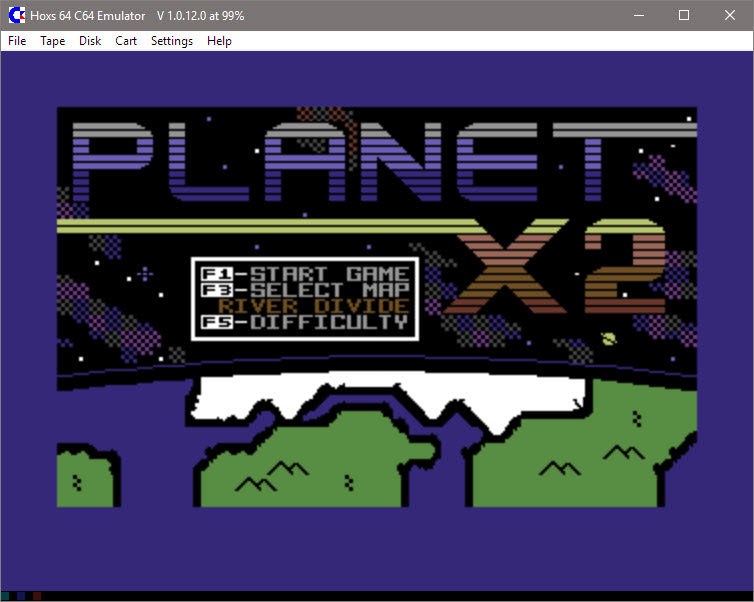
Hoxs64 written by David Horrocks is a Commodore 64 emulator for Microsoft Windows 2K/XP/Vista/Seven (DirectX 9+)
The emulator substantially reproduces this legacy machine in minute detail.
Changelog:
- Allow game device axes to be unselected in the joystick settings.
- Experimental support for game devices with more than 32 buttons and up to 128 buttons.
- Fix to broken save state.
Download:
source: hoxs64.net
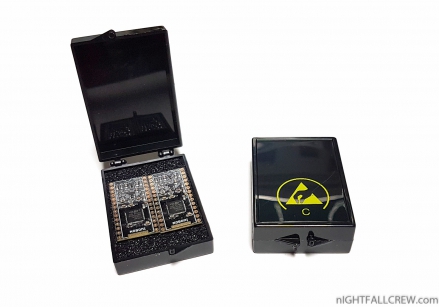
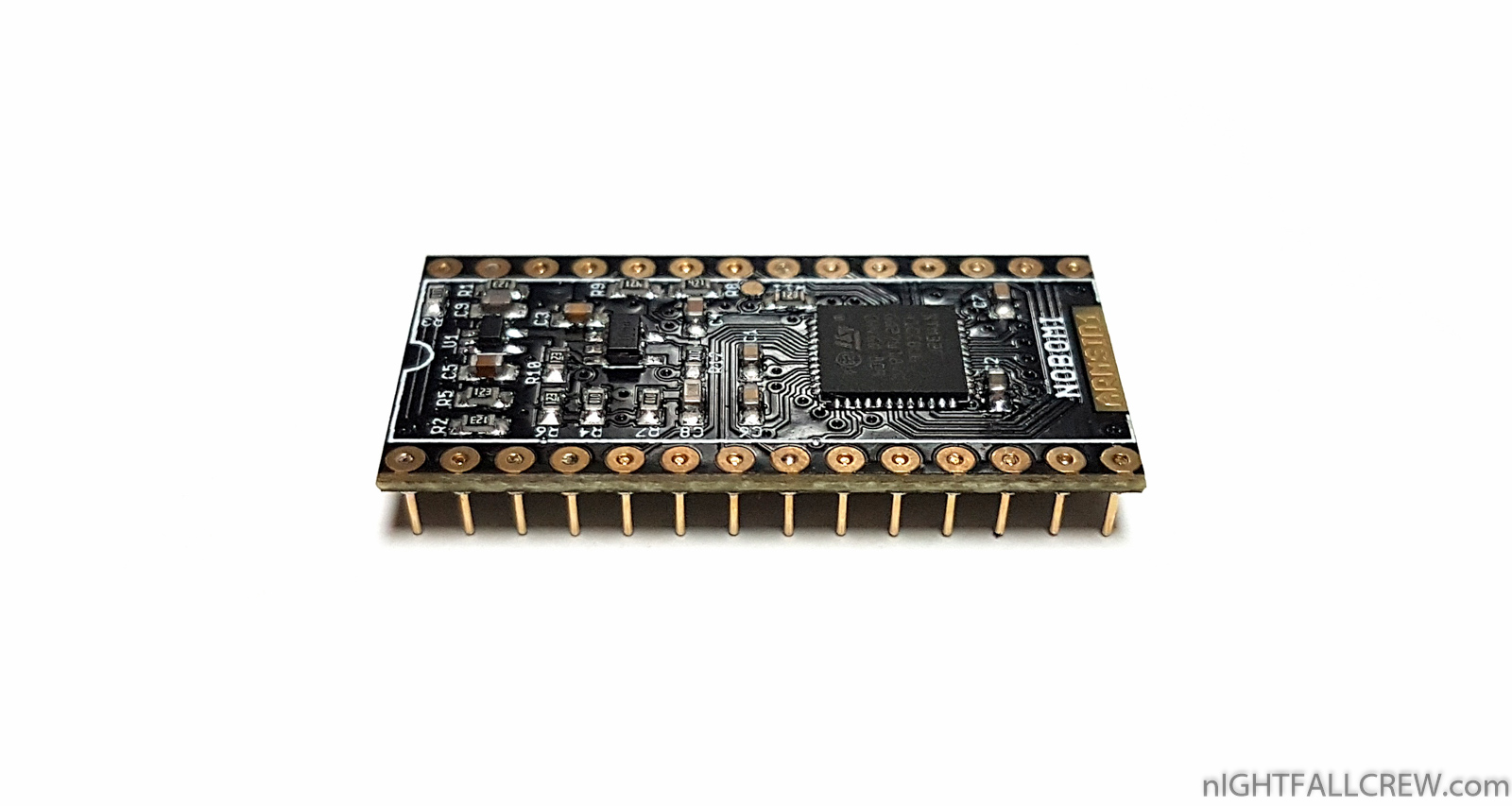
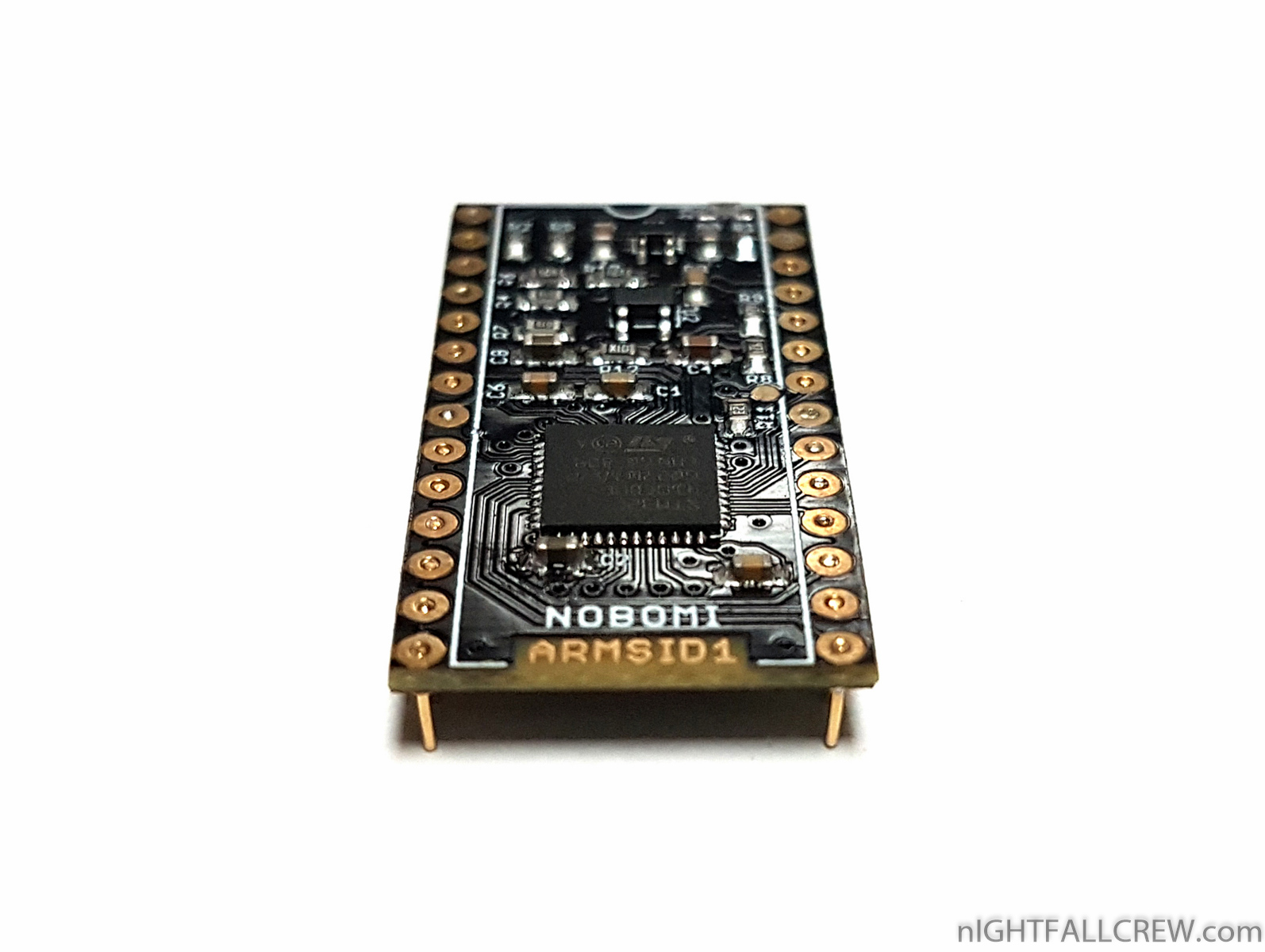
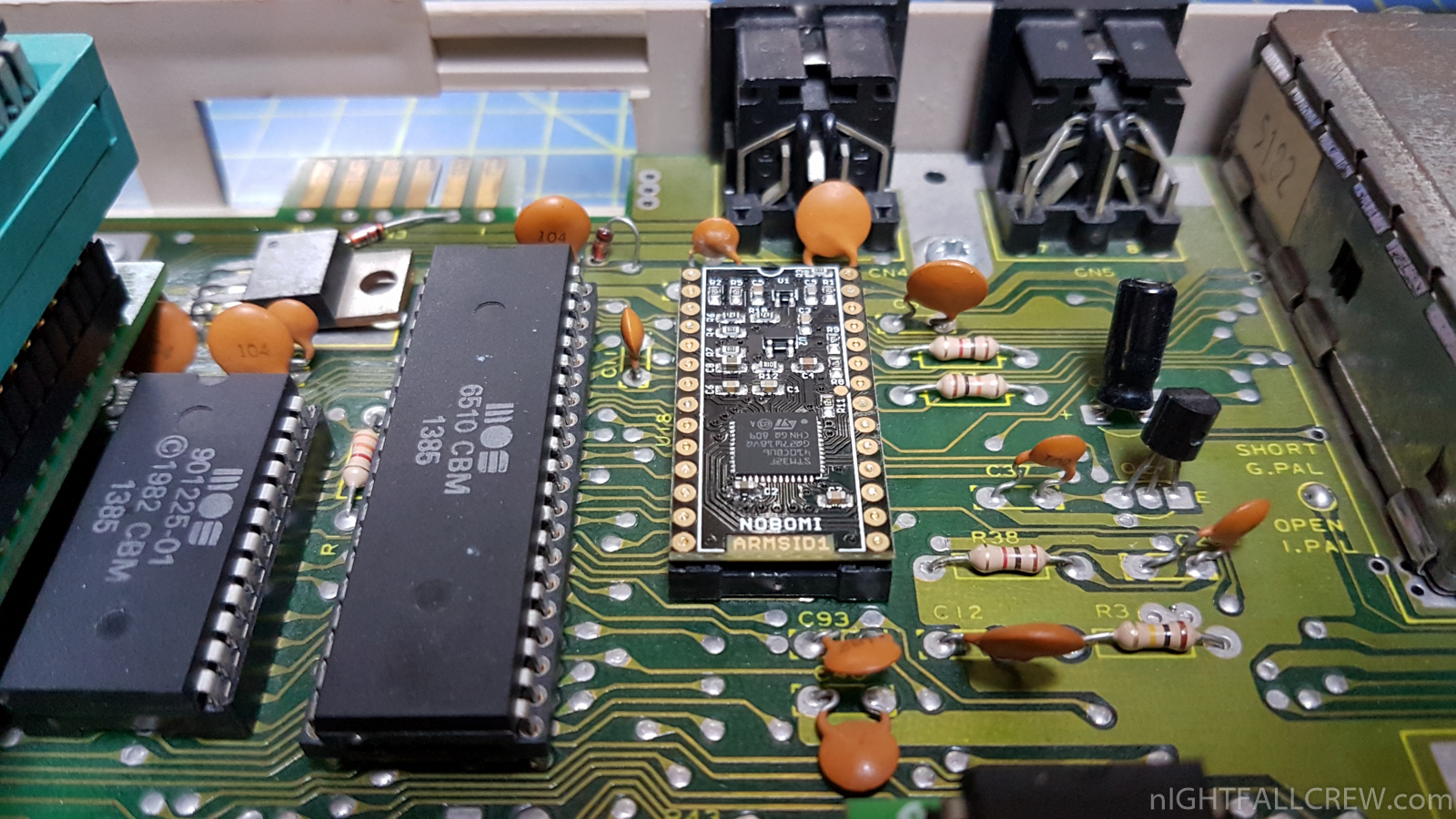
ARMSid (6581/8580 Replacement) by Nobomi.
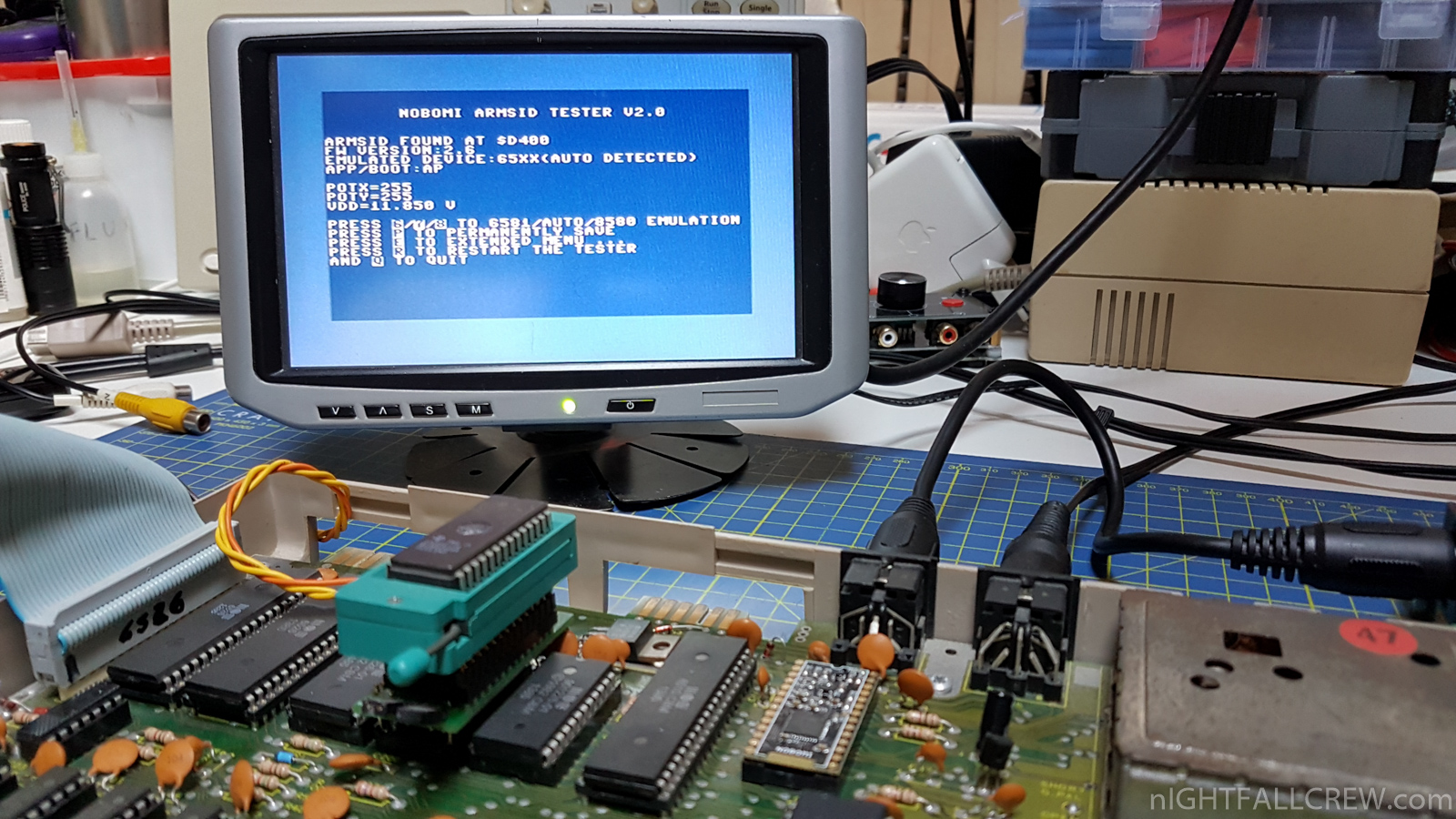
I could not resist the temptation to try also this emulation of the SID 6581/8580 with the STM32F410 ARM Cortex M4, i’m talking about the ARMSid by Nobomi.
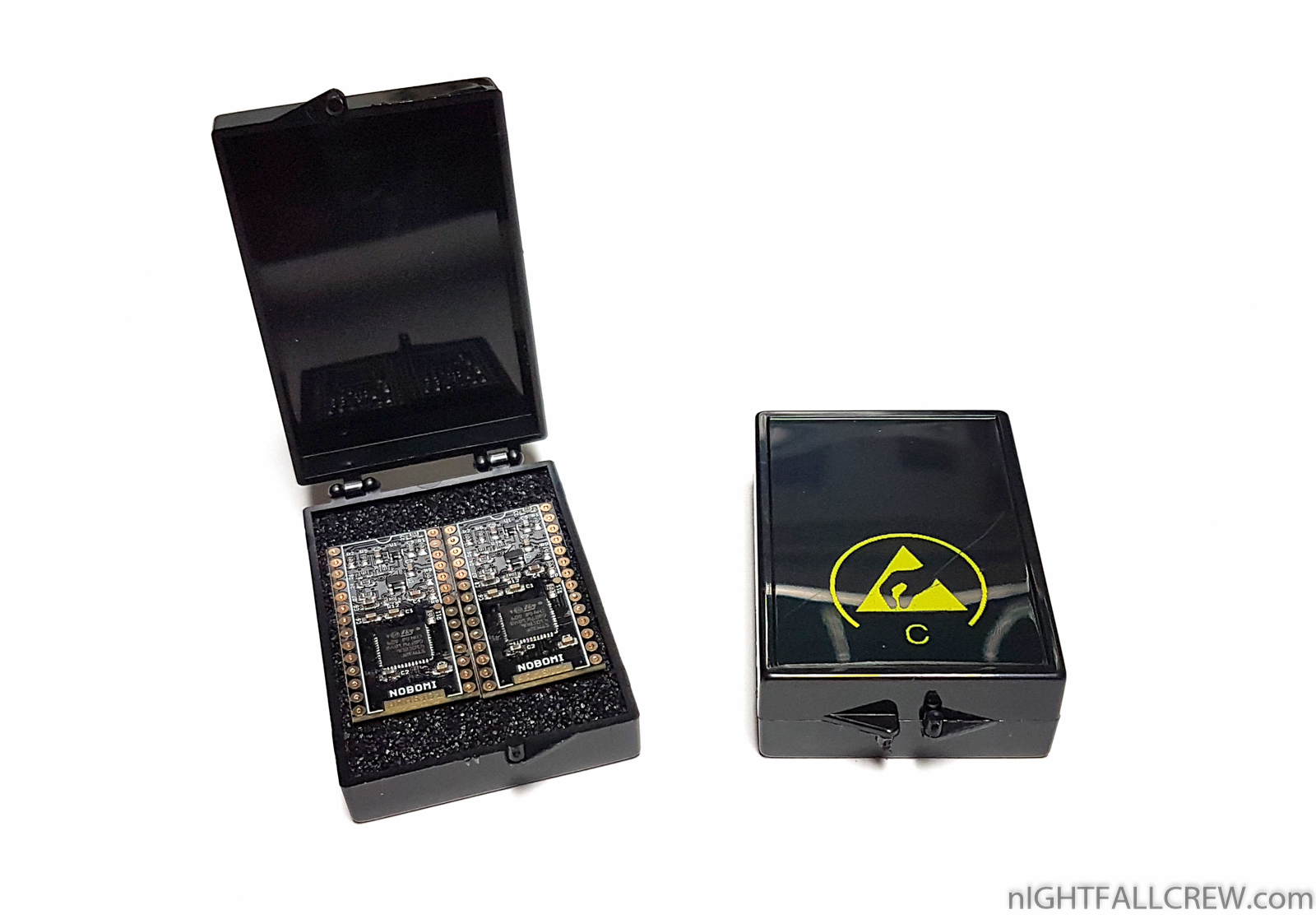
The fast shipping and the courtesy of Nobomi are certainly very well but also the packaging, the ARMSid is shipped in a plastic case to avoid any problem with the shipping.
The sound and the “audio” feeling are good like the SwinSID Ultimate but better, personally i would place the ARMDSid between the Original SID and the SwinSID Ultimate, Nobomi you have made a very good job. Congratulations.
Nobomi also wrote a software for Commodore 64 to configure the various ARMSid options and another software to update the Firmware.
Some information taken from the Nobomi site:
What is it ?:
- A new replacement of the MOS6581 and MOS8580 used in the Commodore C64. It is minimalistic (in simplicity of circuit and use, not in function and power).
- Real “plug & play” solution. Just insert instead of the original SID into the slot and it’s done.
- It determines (through supply voltages) which chip it replaces and starts the appropriate emulation (it can be changed later in software).
- No need to switch the PAL / NTSC version, the circuit uses directly the clock from the computer bus, always synchronous with the C64.
- It also emulates analog inputs (joysticks, mouse, etc. – POTX and POTY inputs)
- Analog output is sufficiently buffered, it is not necessary to change anything on the computer board for proper operation.
- Output sampling frequency is 1/16th bus clock of C64 (approx. 62kHz), real 12bit D/A converter, no pwm.
- Filters completely transferred to digital form, emulated by float point arithmetic.
- Significantly lower noise level and less interference from the power supply than the original :)
- Lower power consumption than the original.
- Firmware update possible inside the C64.
- Emulates all waveforms, and even “samples” (at least some of them, Ghostbusters laugh, Chimera screams at you).
- Full support of analog filters (LowPass, BandPass, HighPass, combination, Q quality control).
- Emulation of OSC3 and ENV3 registers (little delay, approximately 16 clocks of the C64 bus).
- Joysticks and mice work.
What is inside ?:
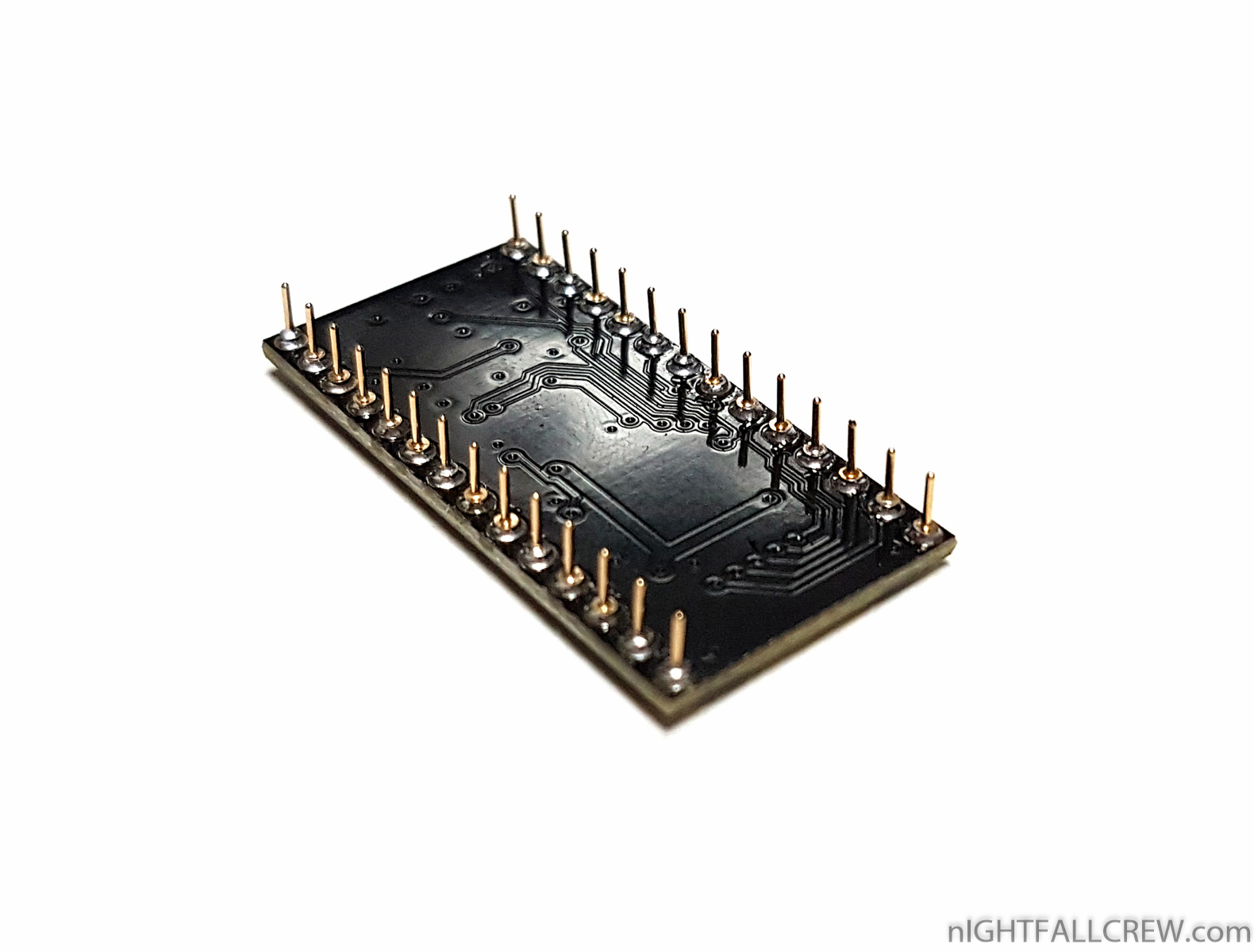
- A few resistors, capacitors, one stabilizer, one opamp and a processor. That’s all, parts only from one side.
- The only programmable circuit is the STM32F410, ARM Cortex M4 with HW float point arithmetic at 100MHz.
- Analogue output amplified via the AD8515 opamp.
- Stabilizer for the 3.3V processor, the processor itself has 5V tolerance inputs.
Firmware:
- New features in FW 2.6:
- Optimization for speed again (approx. 10ns more faster response to read registers, faster processing of writing registers).
- New features in FW 2.5:
- Again faster interrupt (approx. 10ns more faster response to read registers).
- New features in FW 2.4:
- Further optimization of the interrupt (approx. 20ns faster response to read registers).
- New features in FW 2.3:
- A part of source code (interrupt routine) has been rewritten in assembler and manually optimized.
- It makes a possibility to control the bus only through the CS signal (no need for O2 clock synchronization, so it can run on systems with a different CPU than MOS6502 now).
- Low frequency limit and filter strength settings and saving settings to permanent flash memory.
Gallery:
Download:
ARMSiD Video:
source: ARMSiD Homepage



Recent Comments