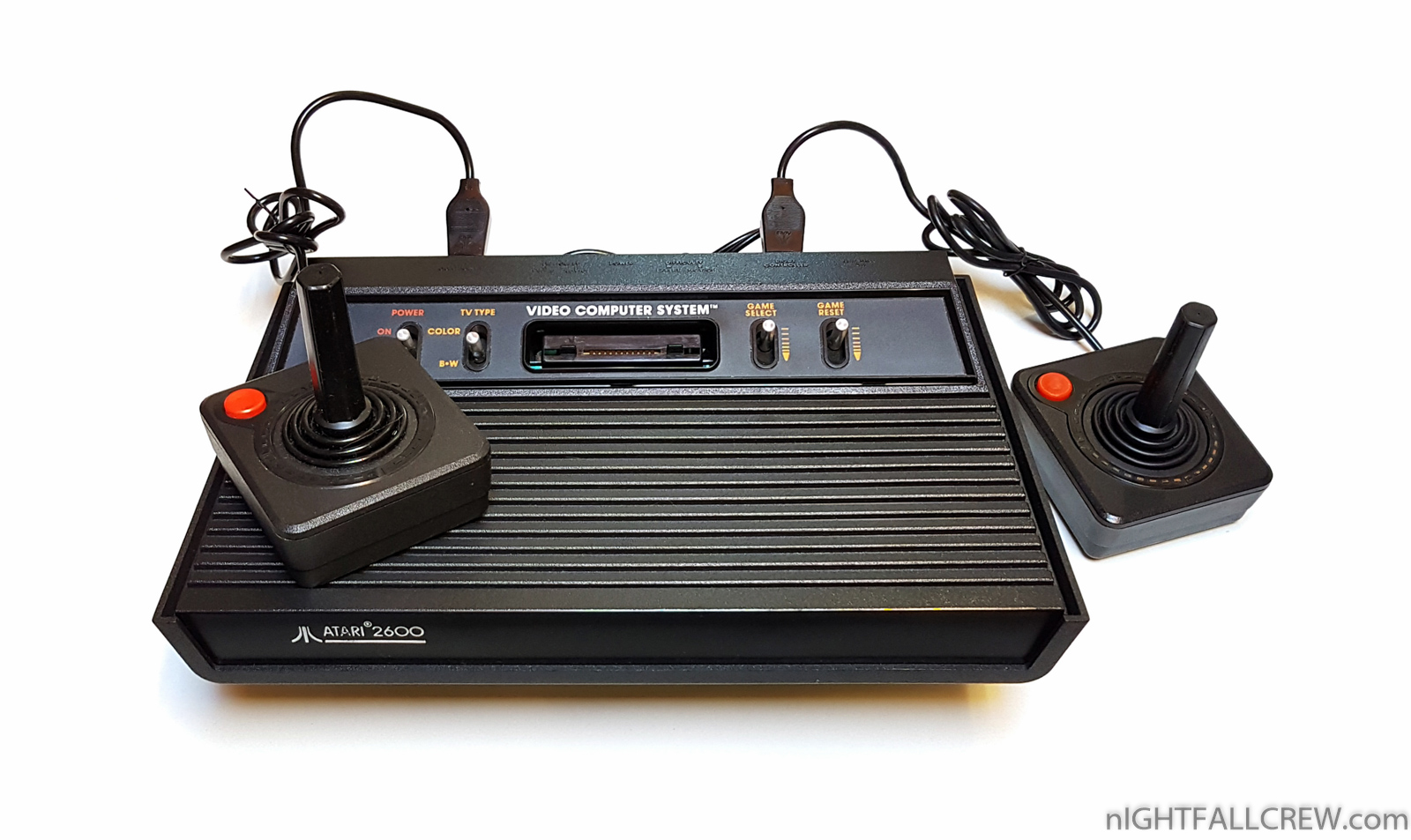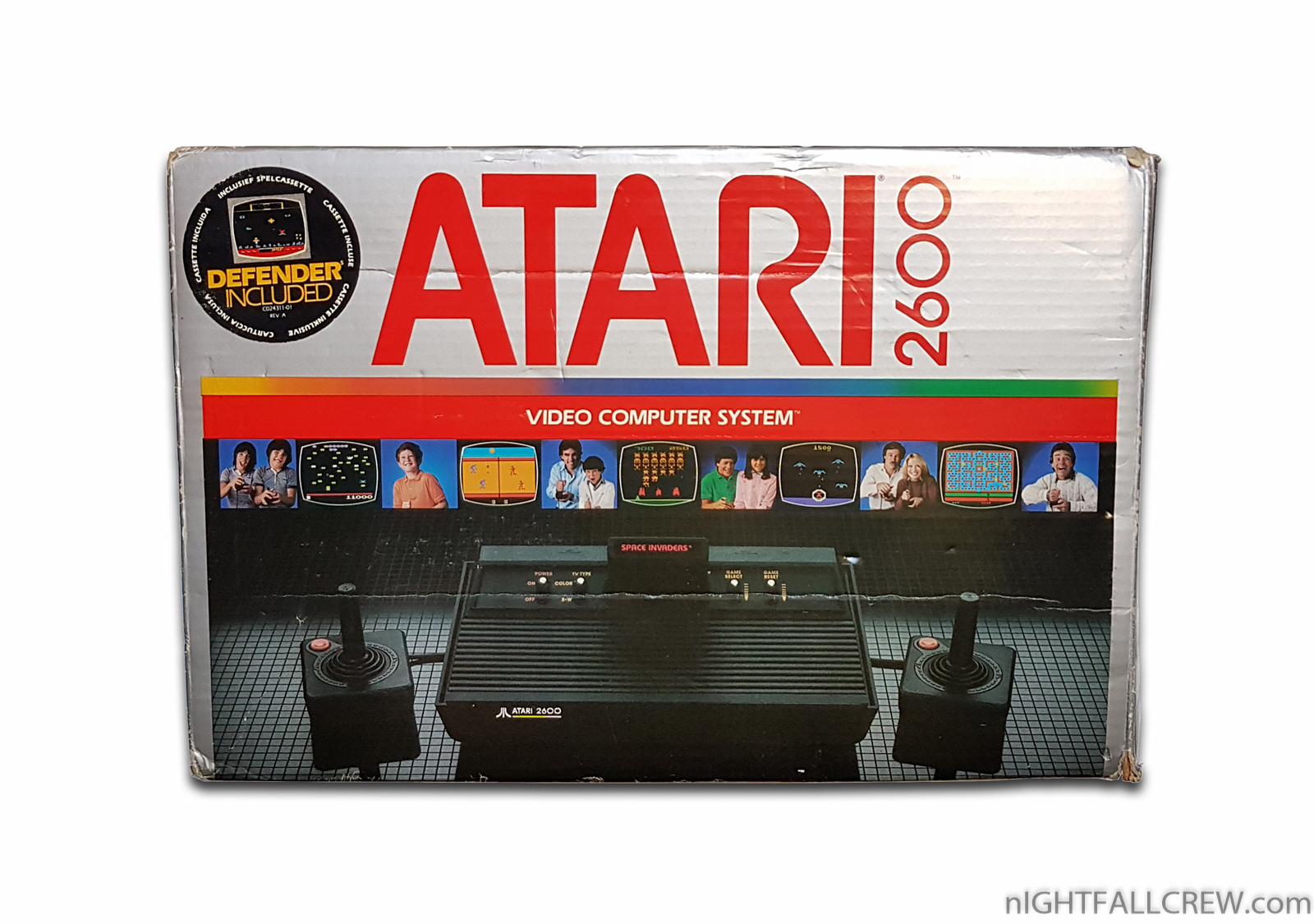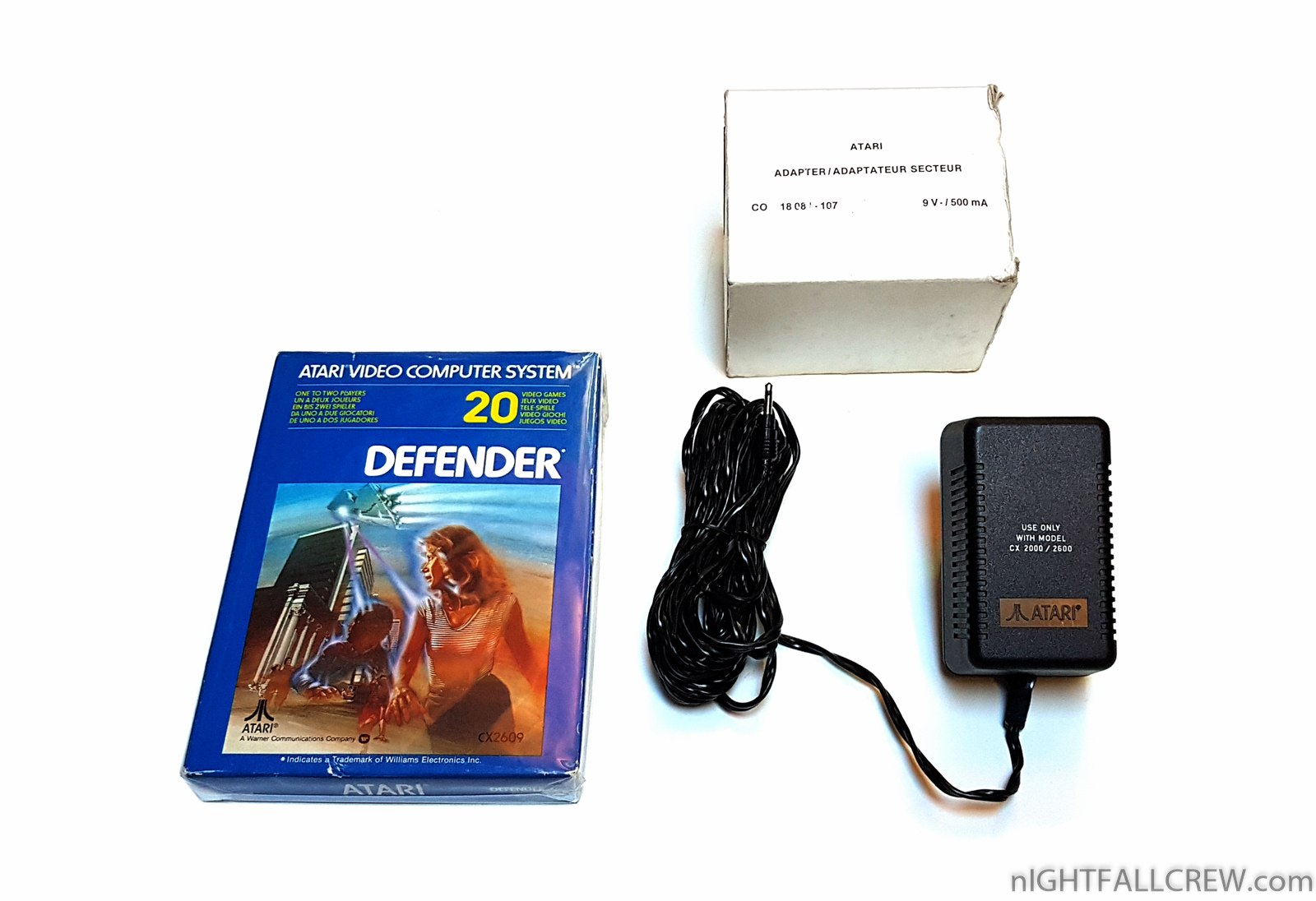
Atari 2600 Dark Vader Defender Pack (Boxed)
The Atari 2600 (or Atari Video Computer System before November 1982) is a home video game console by Atari, Inc. Released on September 11, 1977, it is credited with popularizing the use of microprocessor-based hardware and ROM cartridges containing game code, a format first used with the Fairchild Channel F video game console in 1976. This format contrasts with the older model of having non-microprocessor dedicated hardware, which could only play the games that were physically built into the unit.
For five years, 1977 until late 1982, the system was officially sold as the Atari VCS, an abbreviation for Video Computer System. Following the release of the Atari 5200 in November 1982, the VCS was renamed to the “Atari 2600″, after the unit’s Atari part number, CX2600. The 2600 was typically bundled with two joystick controllers, a conjoined pair of paddle controllers, and a game cartridge: initially Combat, and later Pac-Man.
Gallery:
source: wikipedia
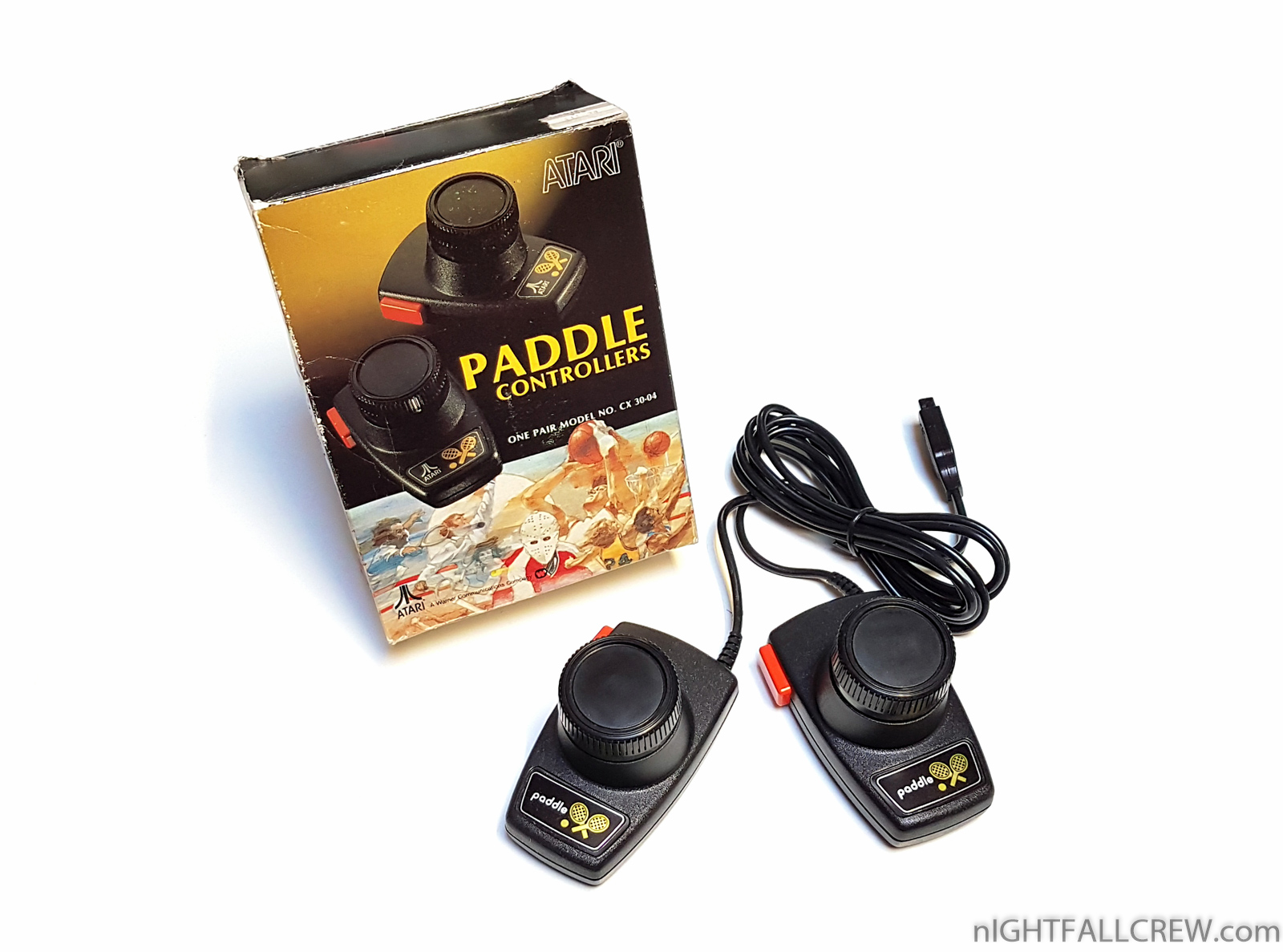
Atari Paddle Controllers CX 30-04 Retail Box
A paddle is a game controller with a round wheel and one or more fire buttons, where the wheel is typically used to control movement of the player object along one axis of the video screen.
A paddle controller rotates through a fixed arc (usually about 330 degrees); it has a stop at each end.
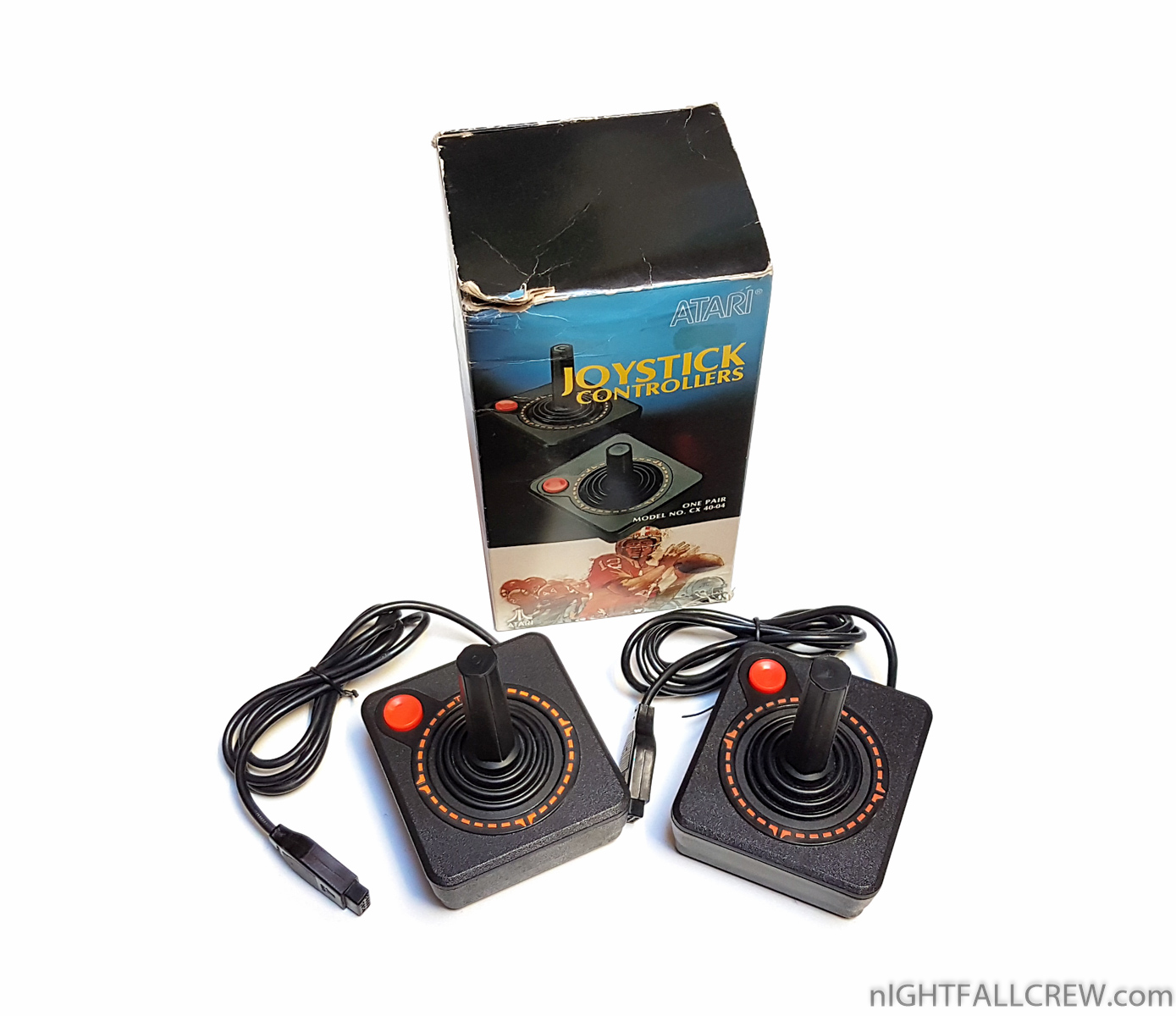
Atari Joystick CX-40-04 Retail Box
The Atari CX40 joystick was the first widely used cross-platform game controller. The original CX10 appeared on the Atari 2600 in 1977, and was considered such a great advance over other controllers that it became the primary input device for most games on the platform. The CX10 was replaced after a year by the much simpler and less expensive CX40. The addition of the Atari joystick port to other platforms cemented its popularity, and millions were produced and used on almost every game console and home computer of the era.
The CX40 was so popular during its run that it became as iconic for Atari as its “Fuji” it remains a common staple in video game iconography to this day, and is commonly referred to as the symbol of 1980s video game system design. The CX40 has been called “the pinnacle of home entertainment controllers in its day”, and remains a staple of industrial design discussions.
source: wikipedia
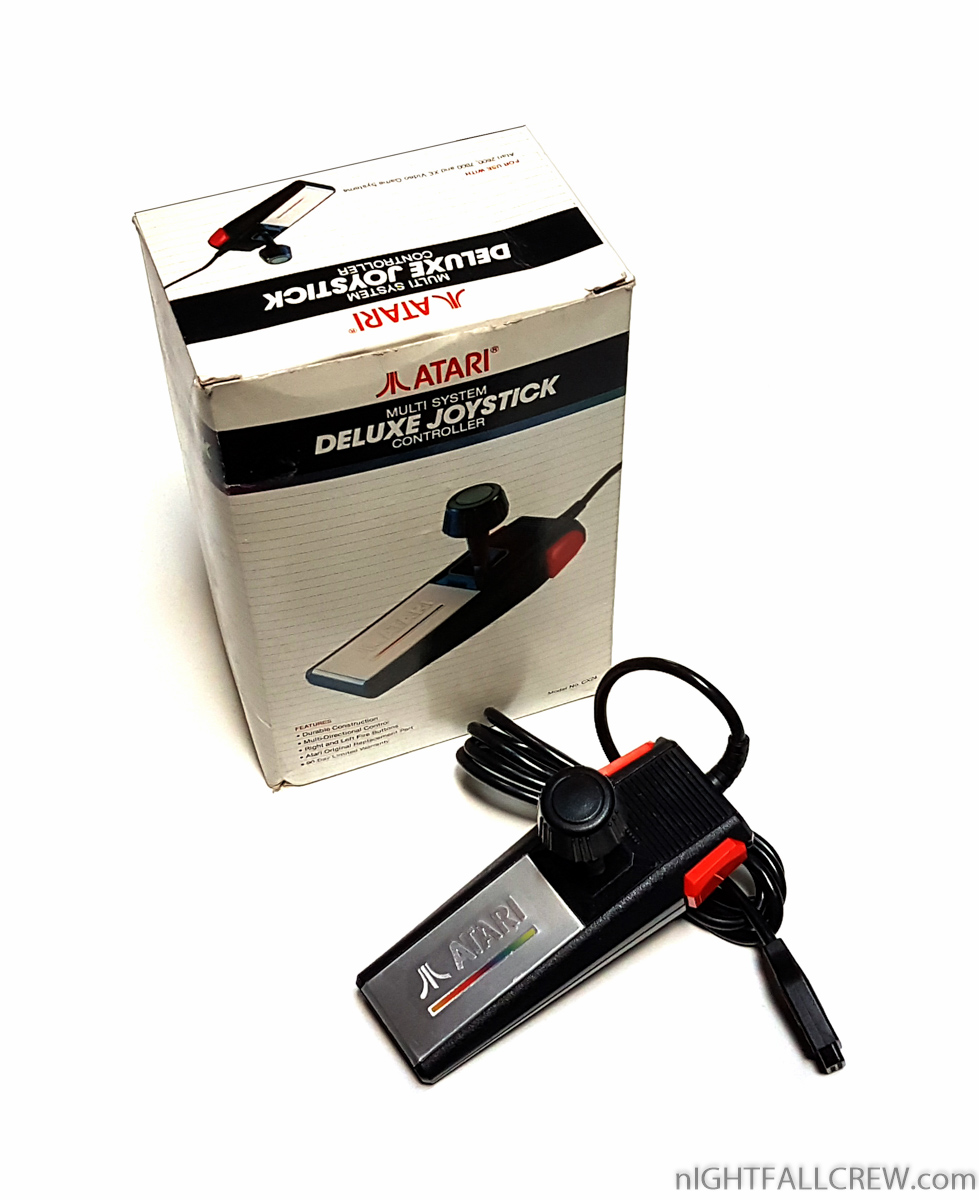
Atari Multi System Deluxe Joystick Controller CX24 (Boxed)
Of all of the Joysticks Atari ever made over the years they were in business, our two least favorite Atari controllers were the 7800 CX24 Slim line Deluxe Joystick (sometimes called the Atari Proline Joystick) and the ill fated Atari Space Age Joystick, which had an internal flex circuit problem from the start and caused it to be dropped by Atari very fast. Now Atari Space Age Joysticks are a very rare Atari collector item.
The main reason why the Atari CX24 dual fire button Joystick was not one of our favorite Atari controllers made, was the left, right fire button PCB’s and Main X / Y PCB would fail very fast. 1st the left and right fire buttons PCBs would fail and second the main X / Y PCB would fail next with any kind of normal use.
You can read more about this joystick here
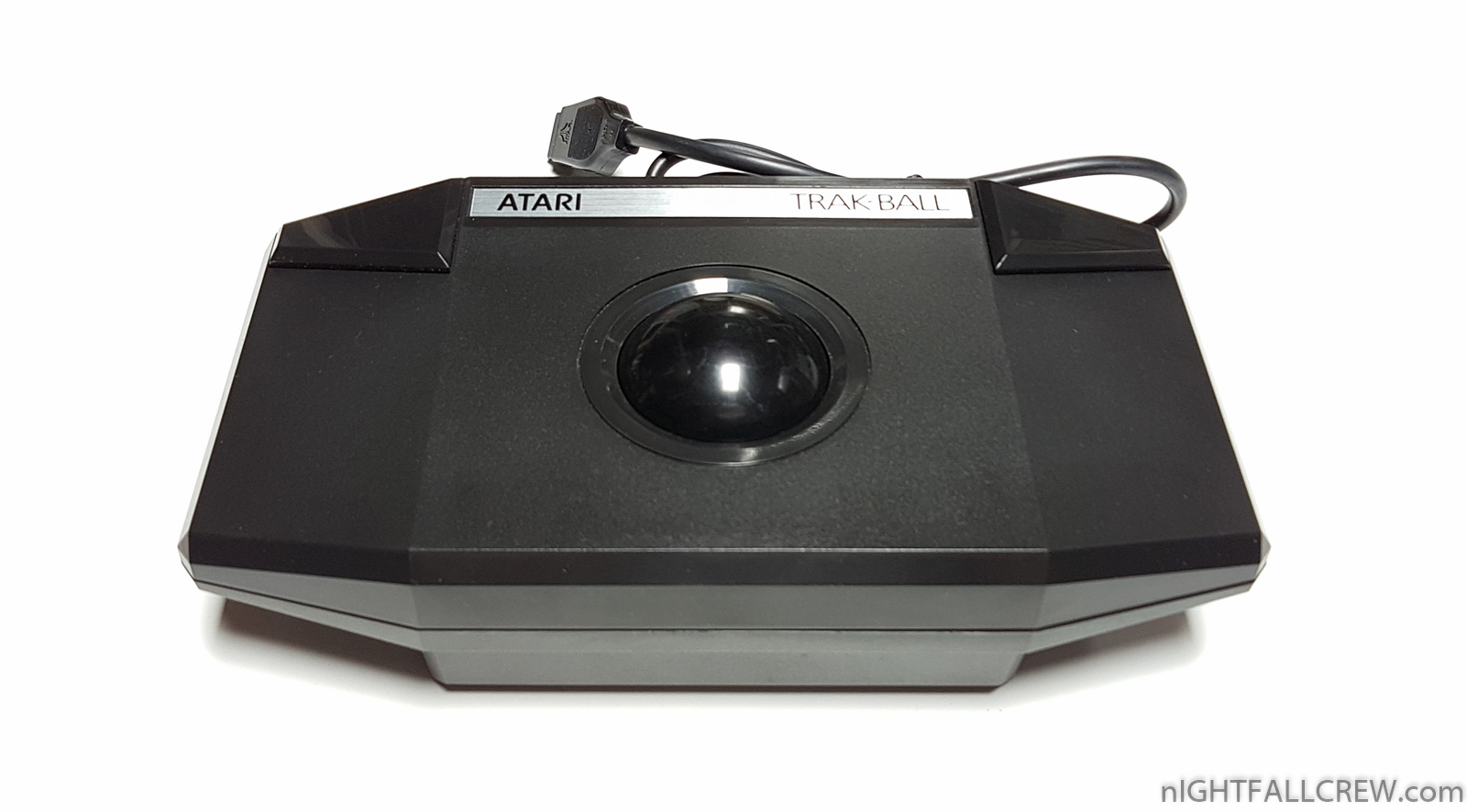
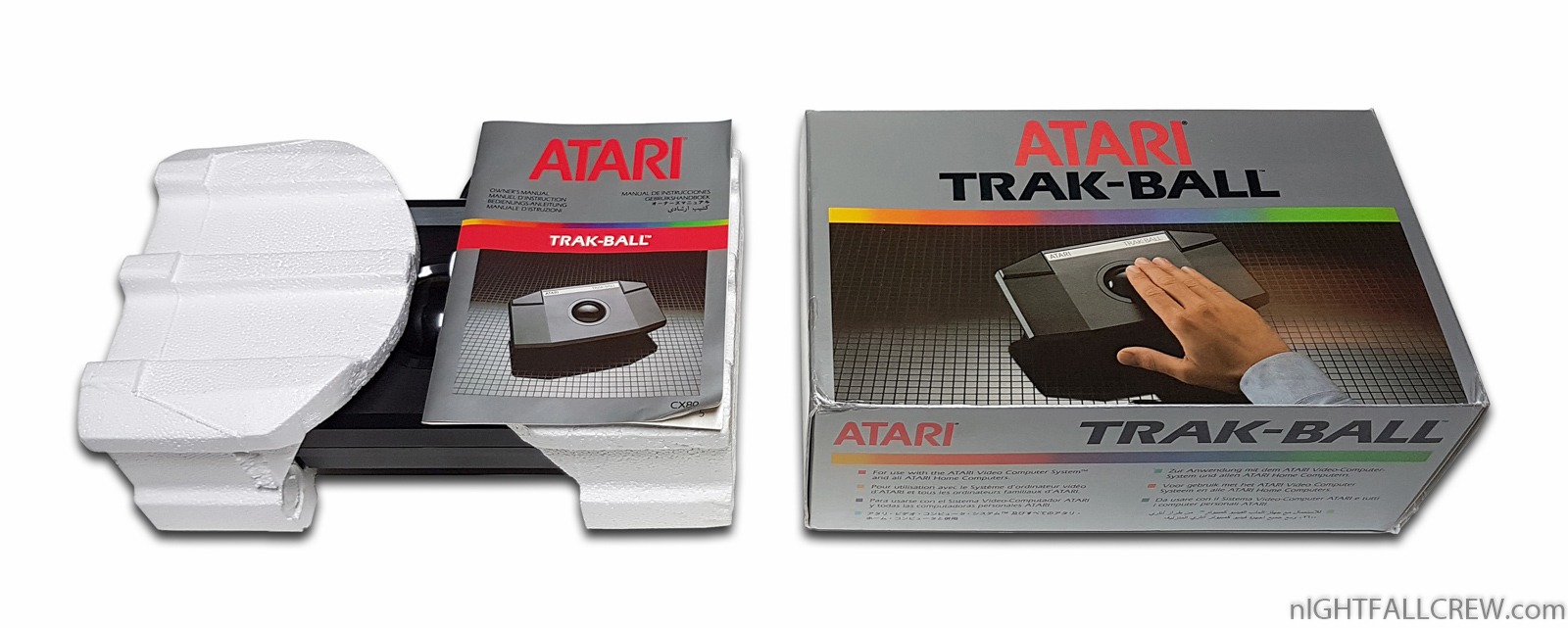
Atari Trak-Ball CX-80 (Boxed)
The Atari Trak-Ball is a pointing/movement device consisting of a ball held by a socket containing sensors to detect a rotation of the ball about two axis-like an upside-down mouse with an exposed protruding ball. The user rolls the ball with the palm of the hand while using the fingertips to press the two large buttons.
The Atari Track-Ball is mainly used with games like Centipede, Missile Command, Crystal Castle, etc.
Gallery:
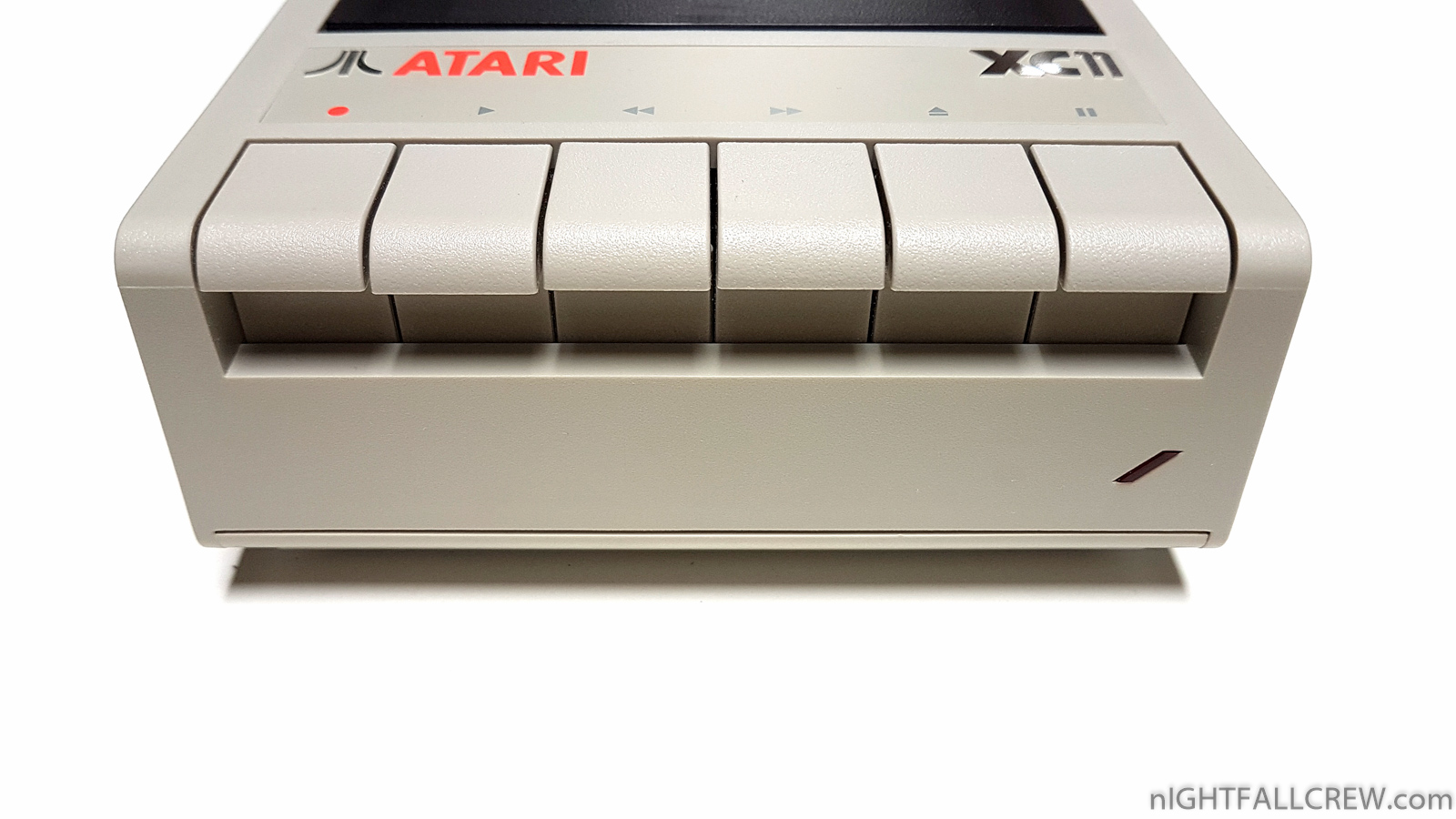
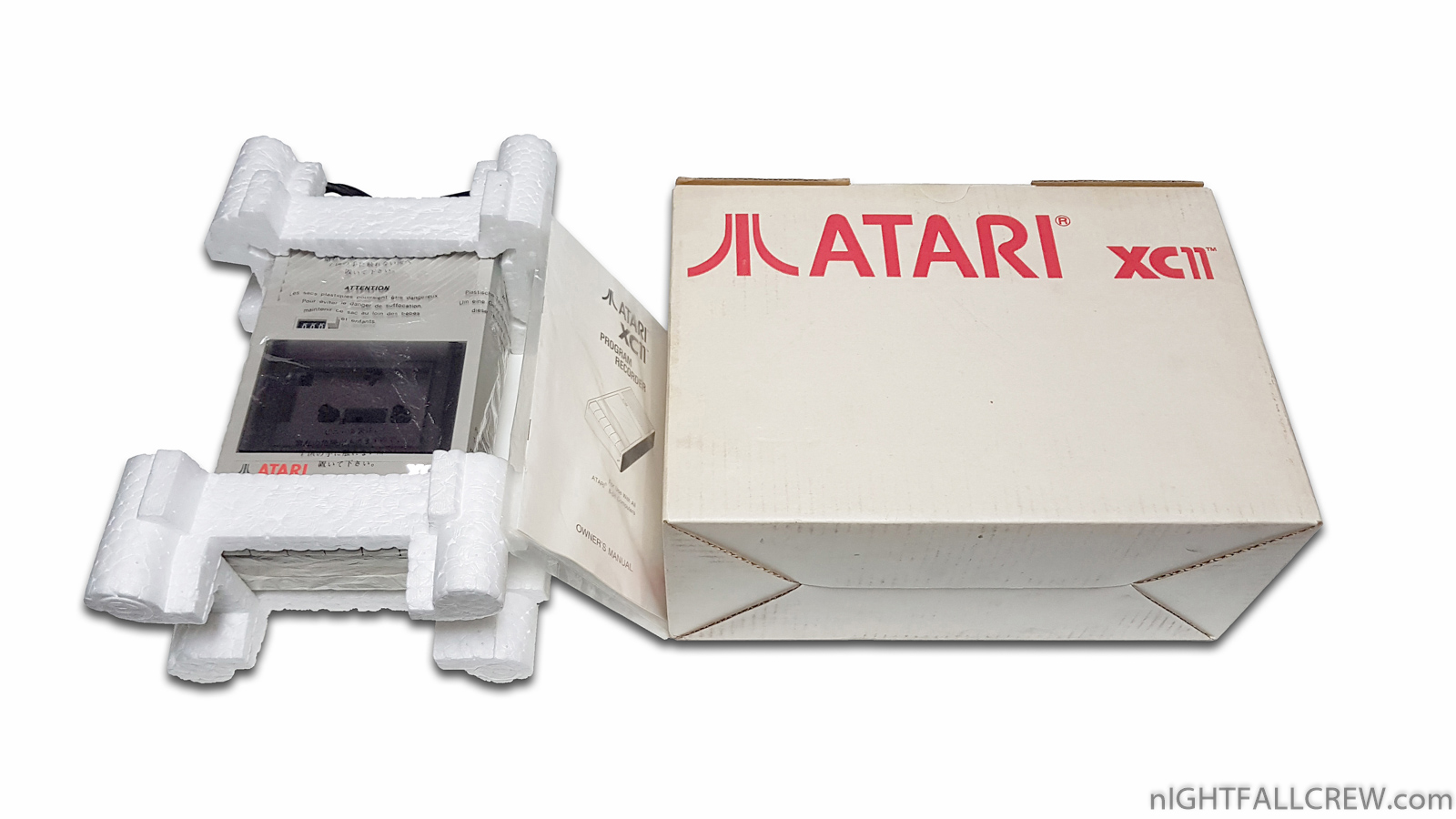
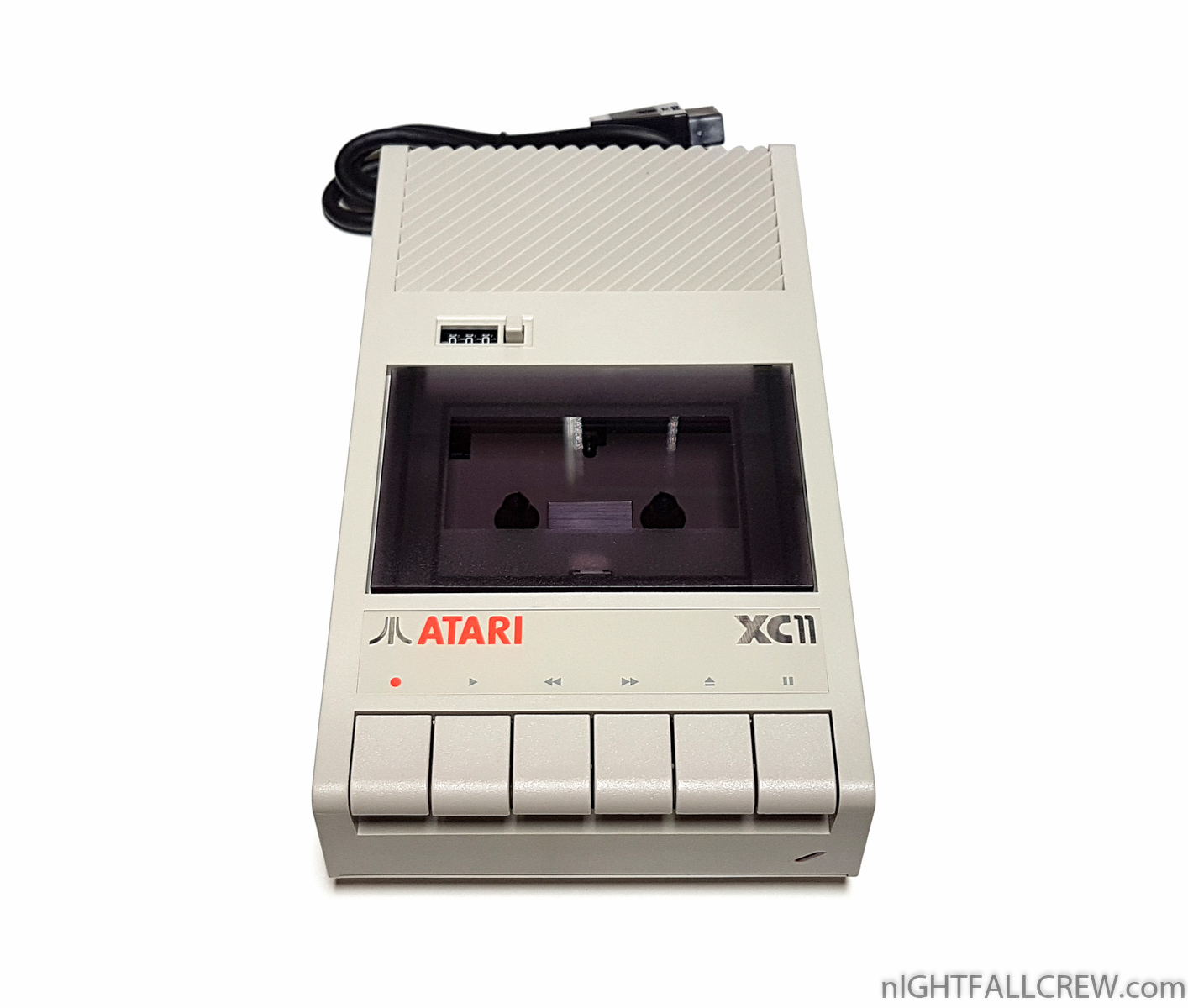
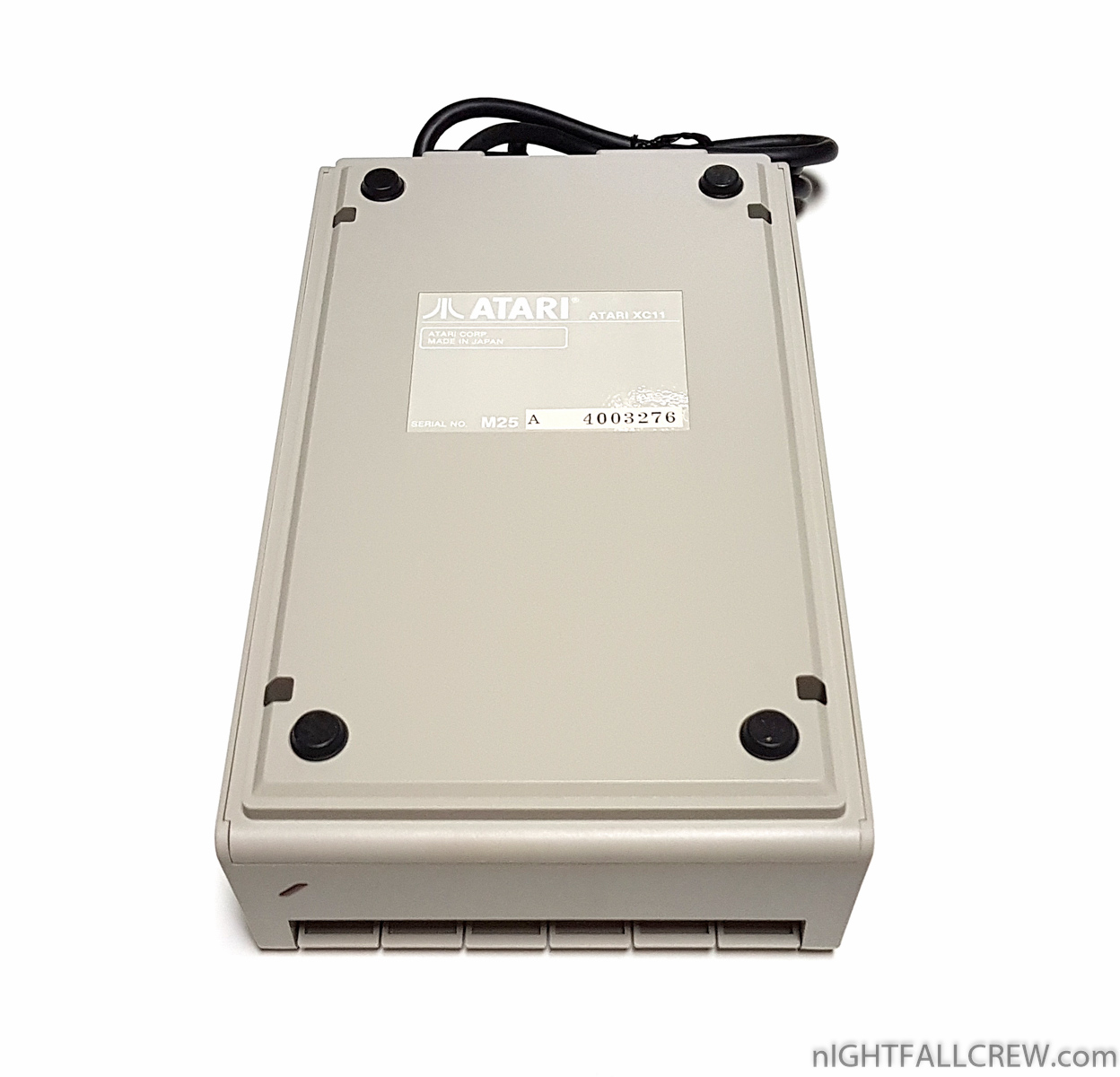
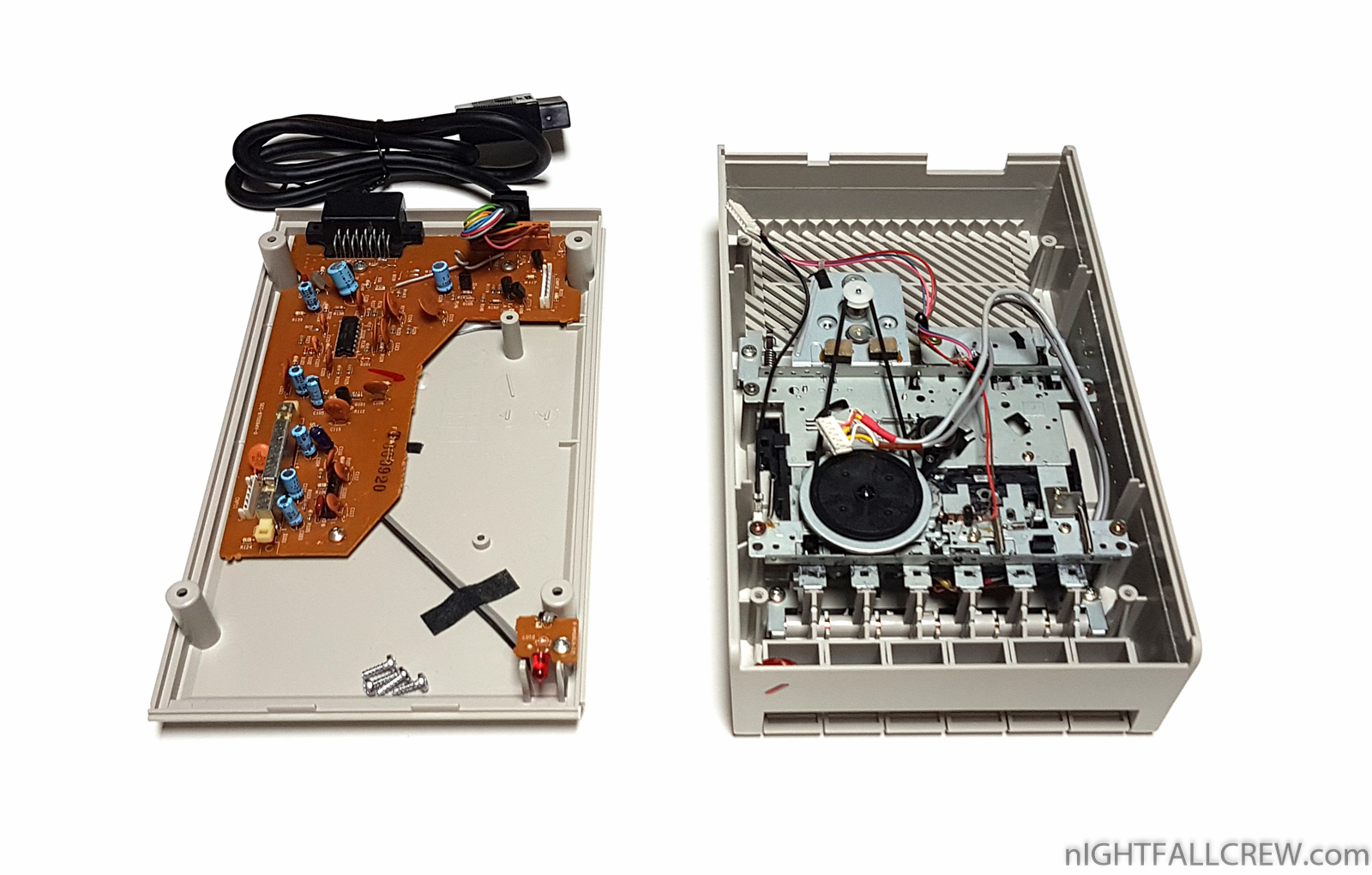
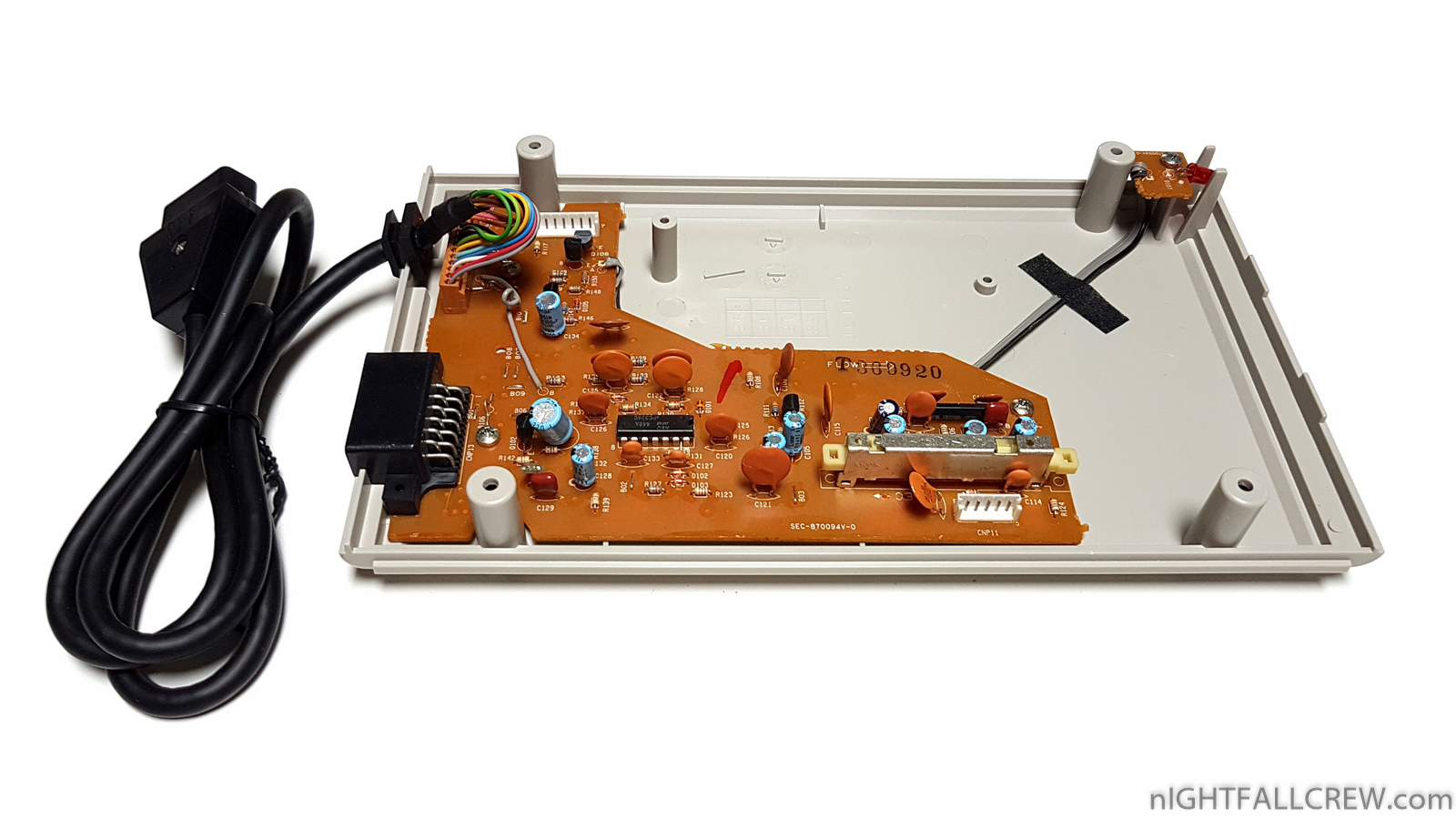
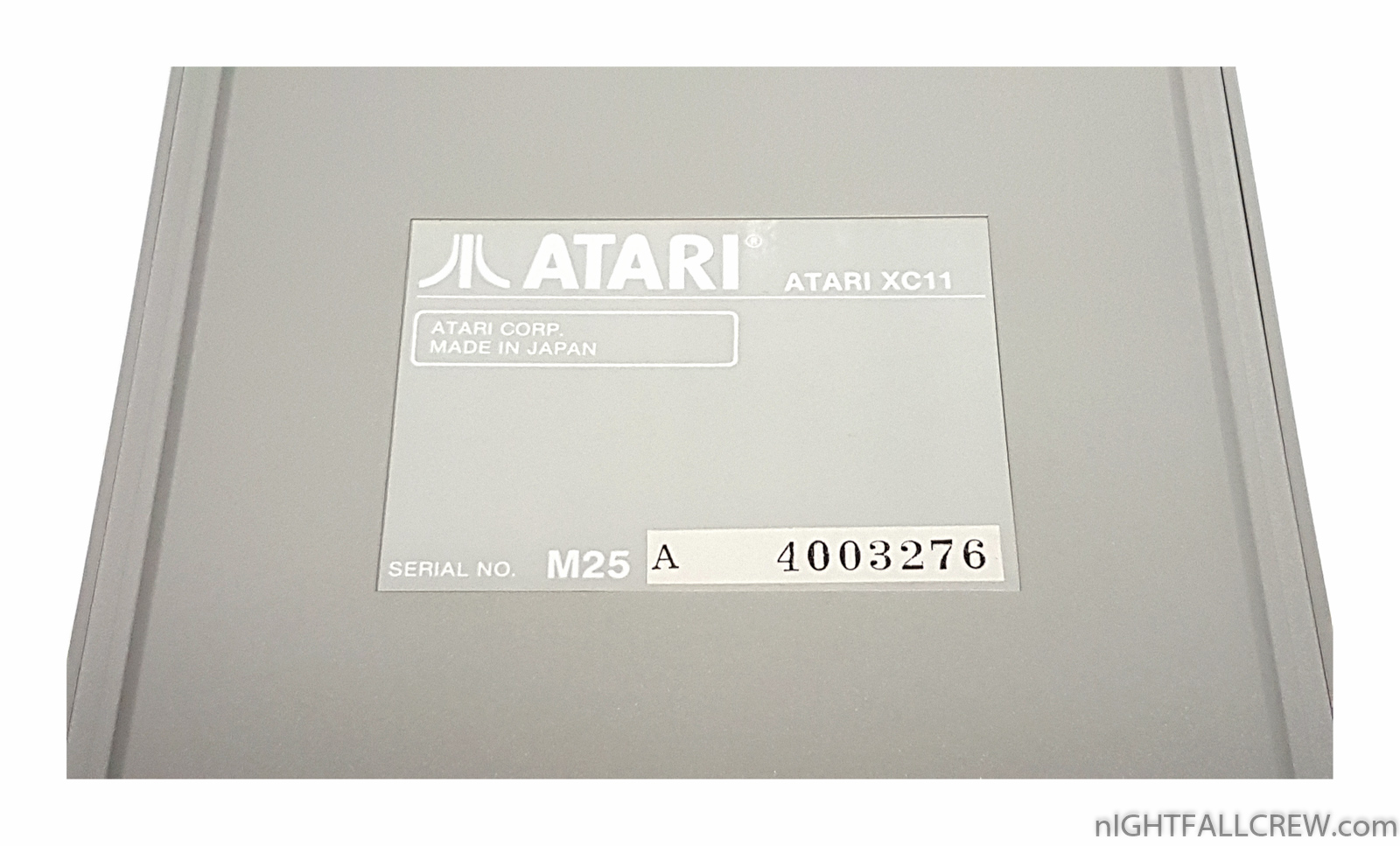
Atari Program Recorder Model XC11 (Boxed)
The Atari Tape Recorder Model XC11 can save or load programs/data from magnetic media (audio cassette).
The transfer rate is 600bits per second, so you can record about 100,000 bytes of data on a regular 60 minute cassette.
Unlike the new XC12 model in the XC11 we find the SIO pass through connector so this device can be connected anywhere in the SIO chain.
The power is supplied from the I/O Serial cable (SIO).
Gallery:
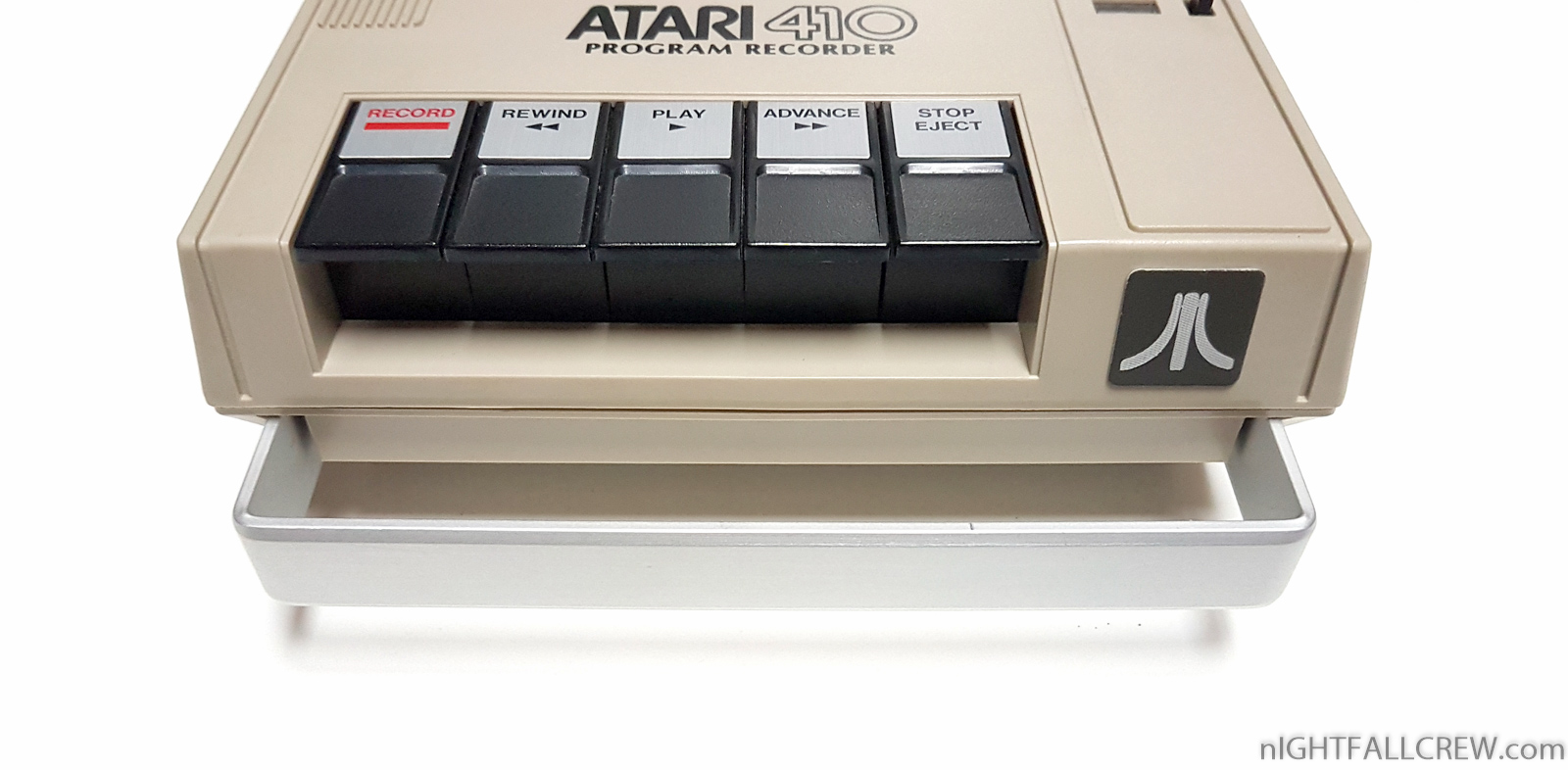
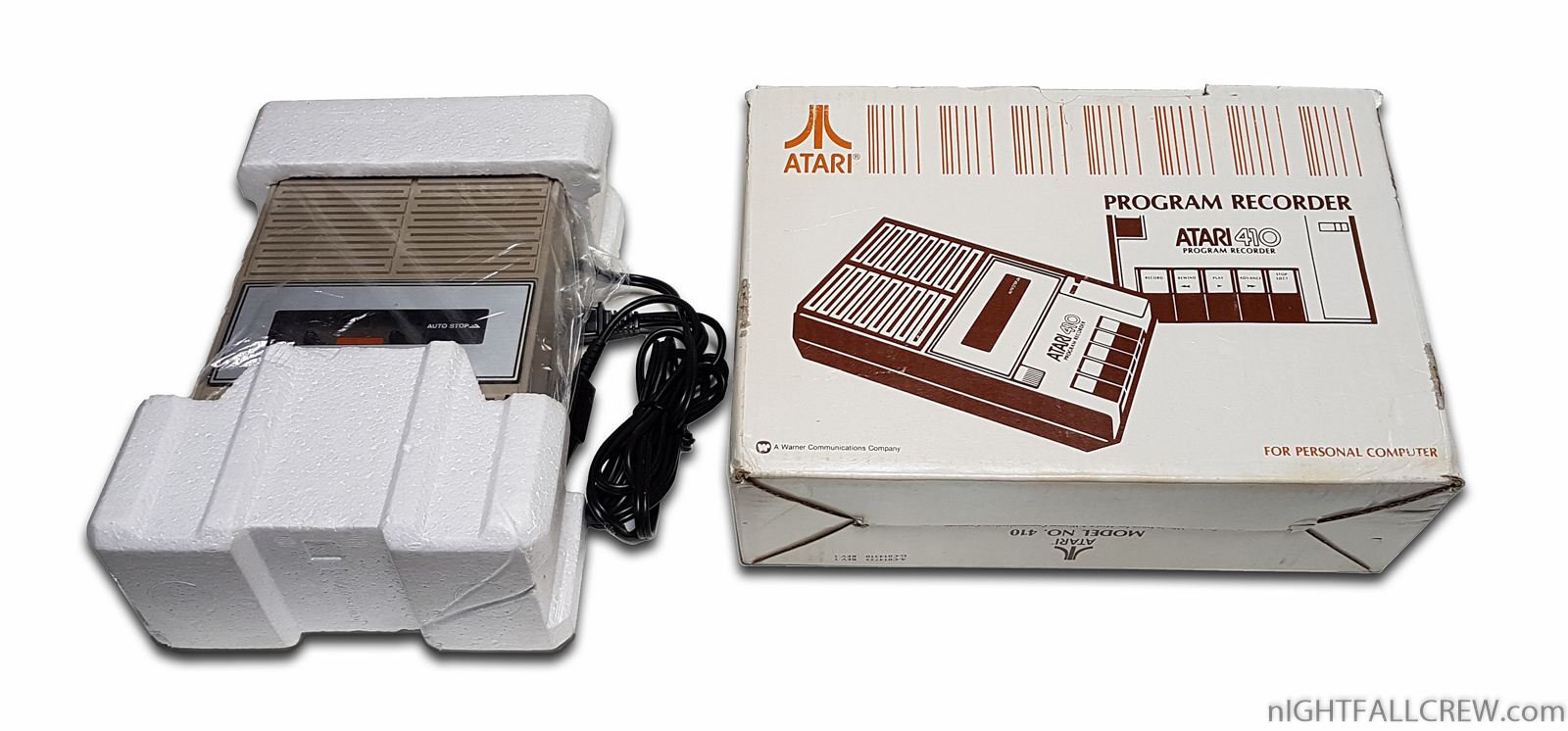
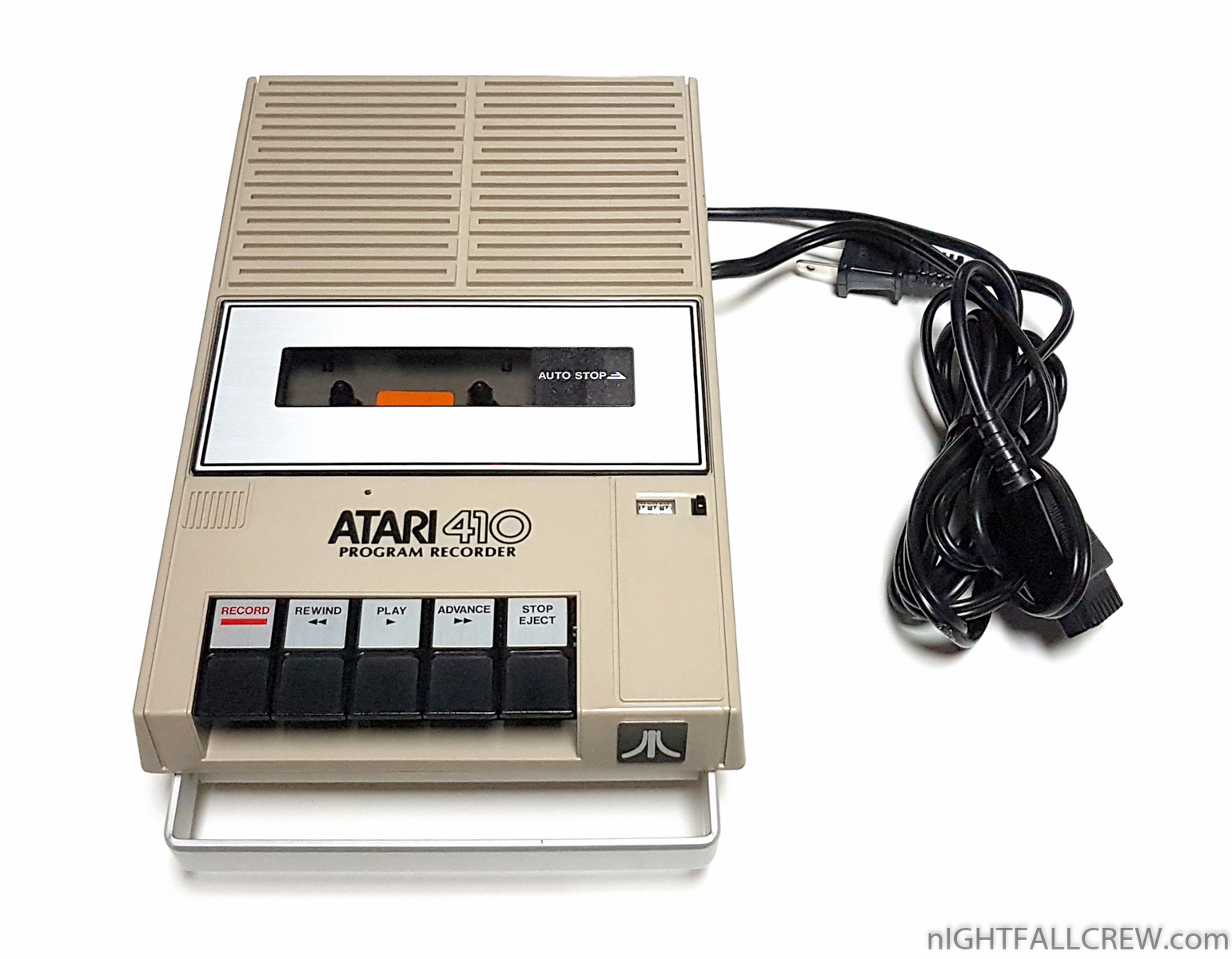
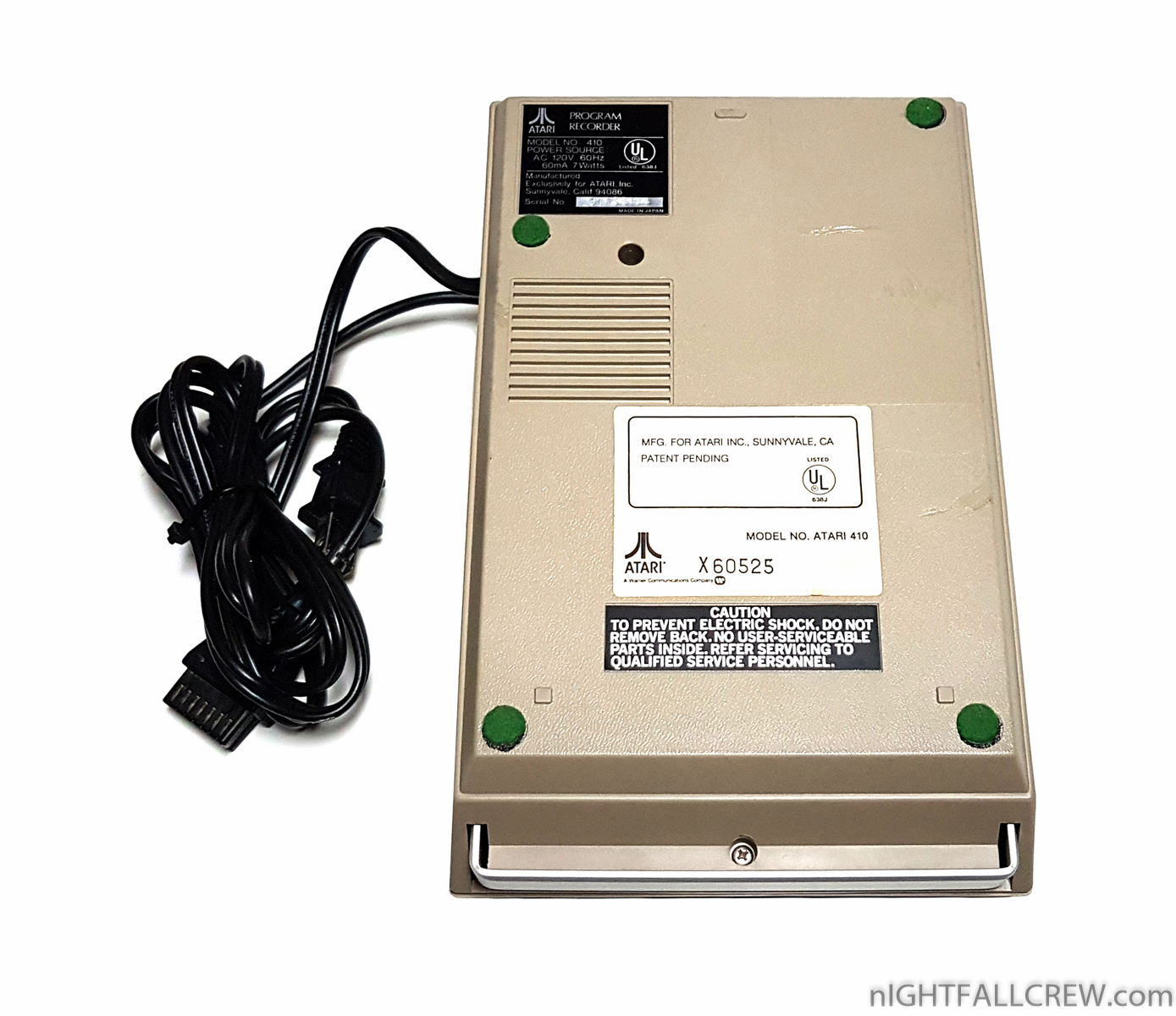
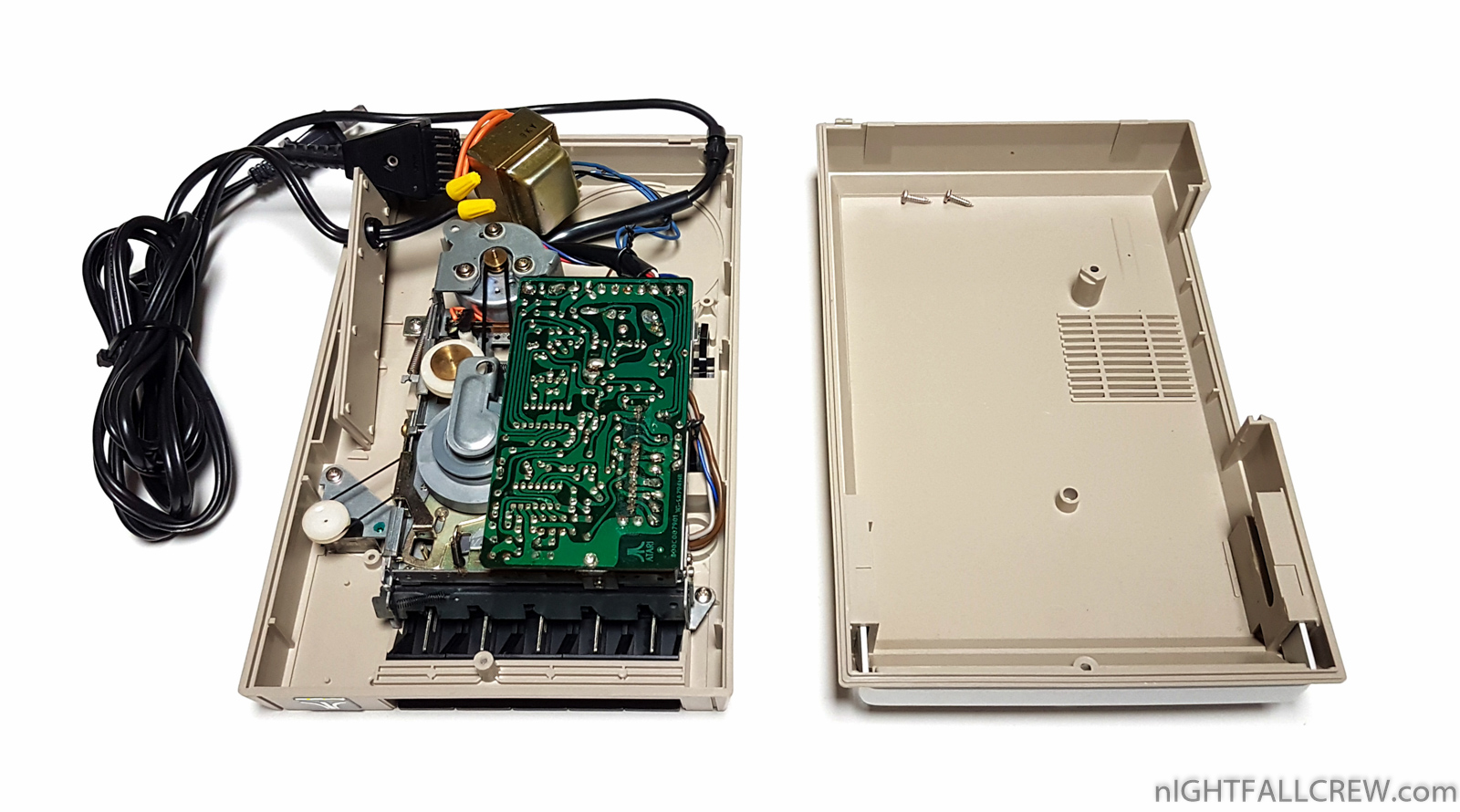
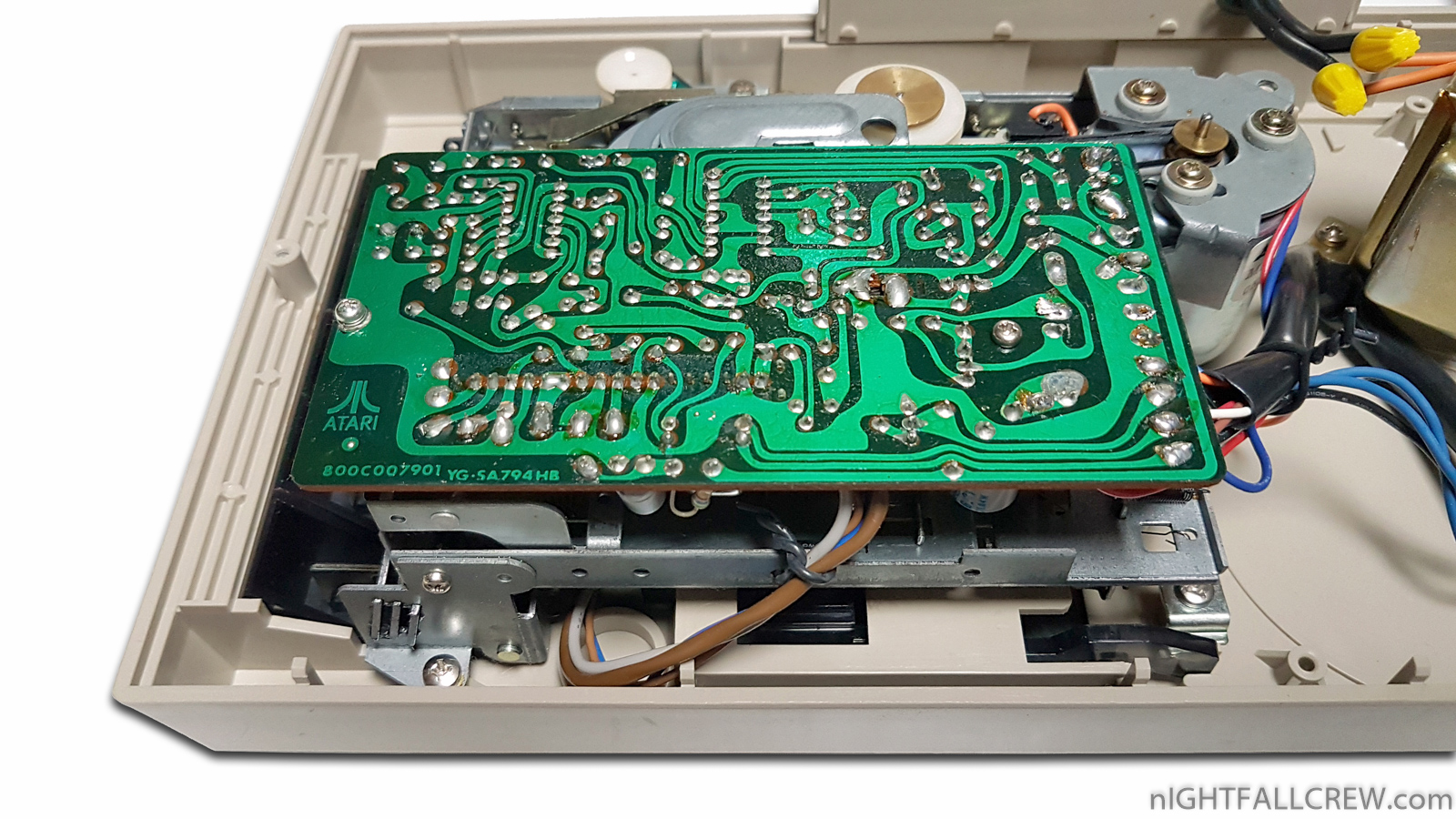
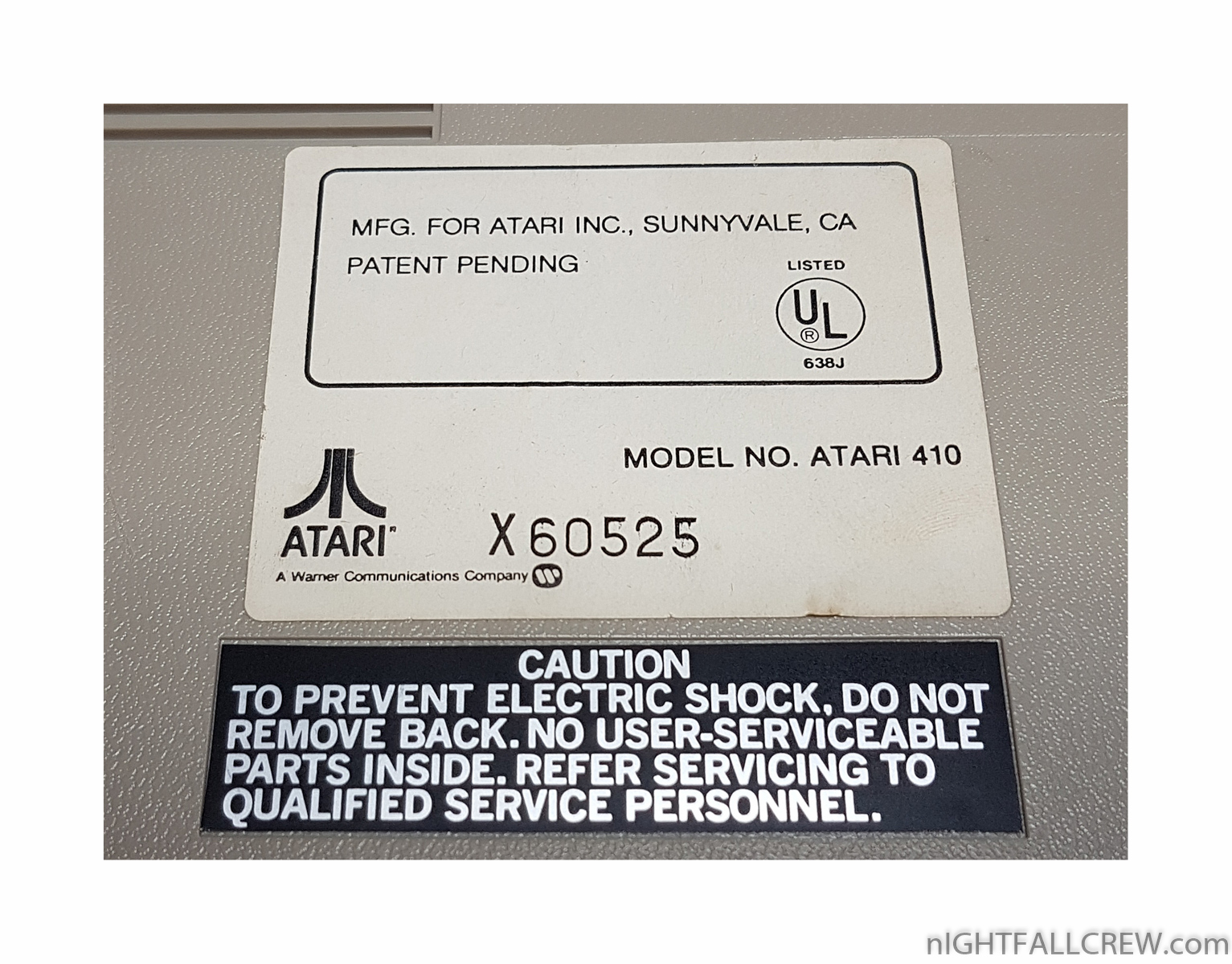
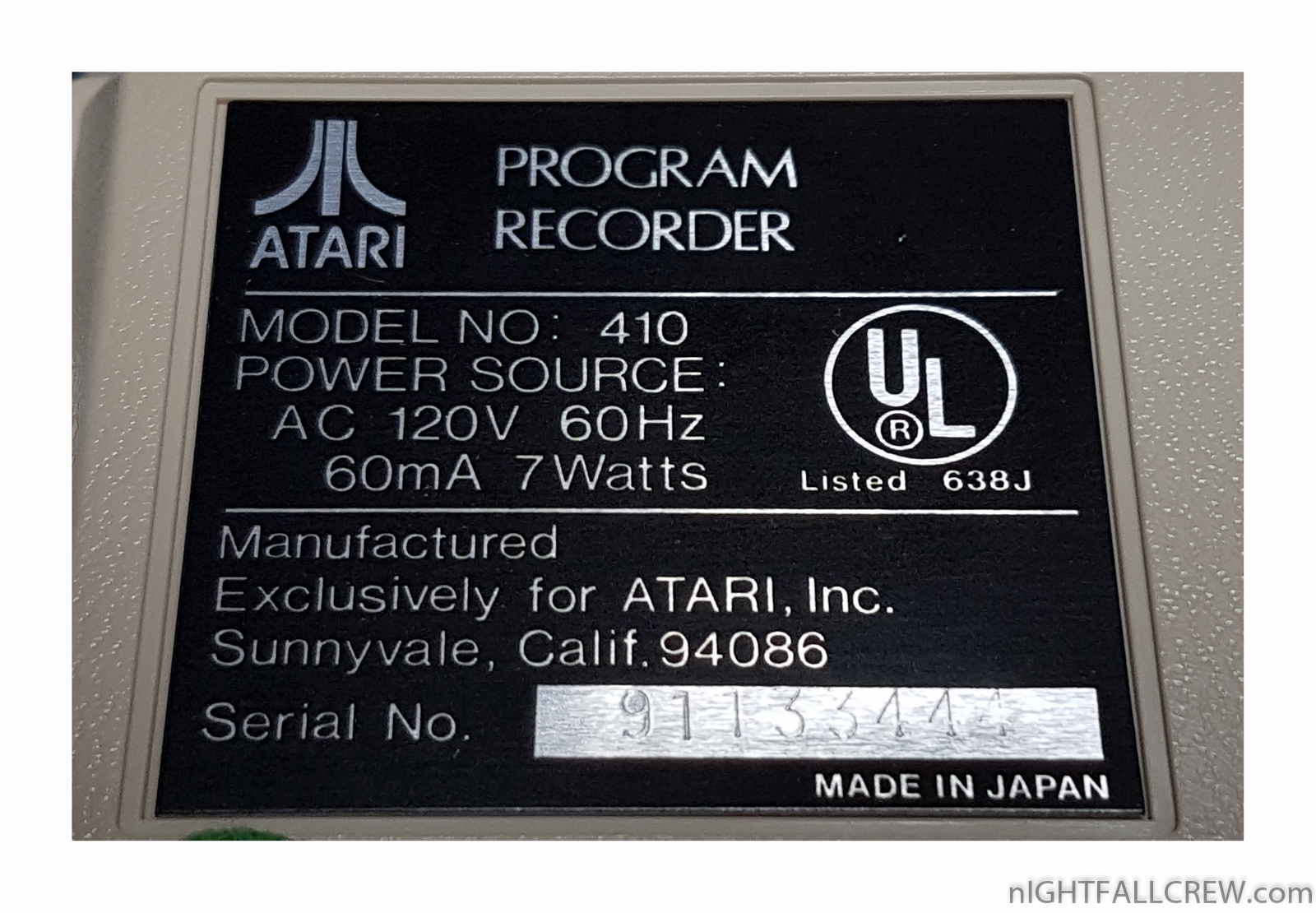
Atari Program Recorder Model 410 Boxed (early model)
I did not find much information about this specific Atari Tape Recorder Model 410, probably is one of the first models that have been produced for the Atari 400/800 series and does not have the SIO passtrough to connect other external peripherals.
General informations:
The Program Recorder was well built and study with built in power supply and SIO cable, the 410 didn’t need a bukly external power pak like most other Atari 400/800 components, how the SIO cable being built in and the Program Recorder having no daisy chain port on the unit meant that it had to be placed at the end of the SIO chain.
The original idea of the SIO (Serial I/O) port on the Atari computers was that it was to be used only for the Data cassette drive, however its functionality was extended so that it could use all Atari peripherals including disk drives, printers and modem.
The Atari 410/410a had a unique feature exclusively used by Atari. They could play two seperate tracks on a tape, this proved very useful for interactive programs where a user would run a program and would hear audio music/speech while the other track would load the next part of the program.
Gallery:
source: atarimuseum.com
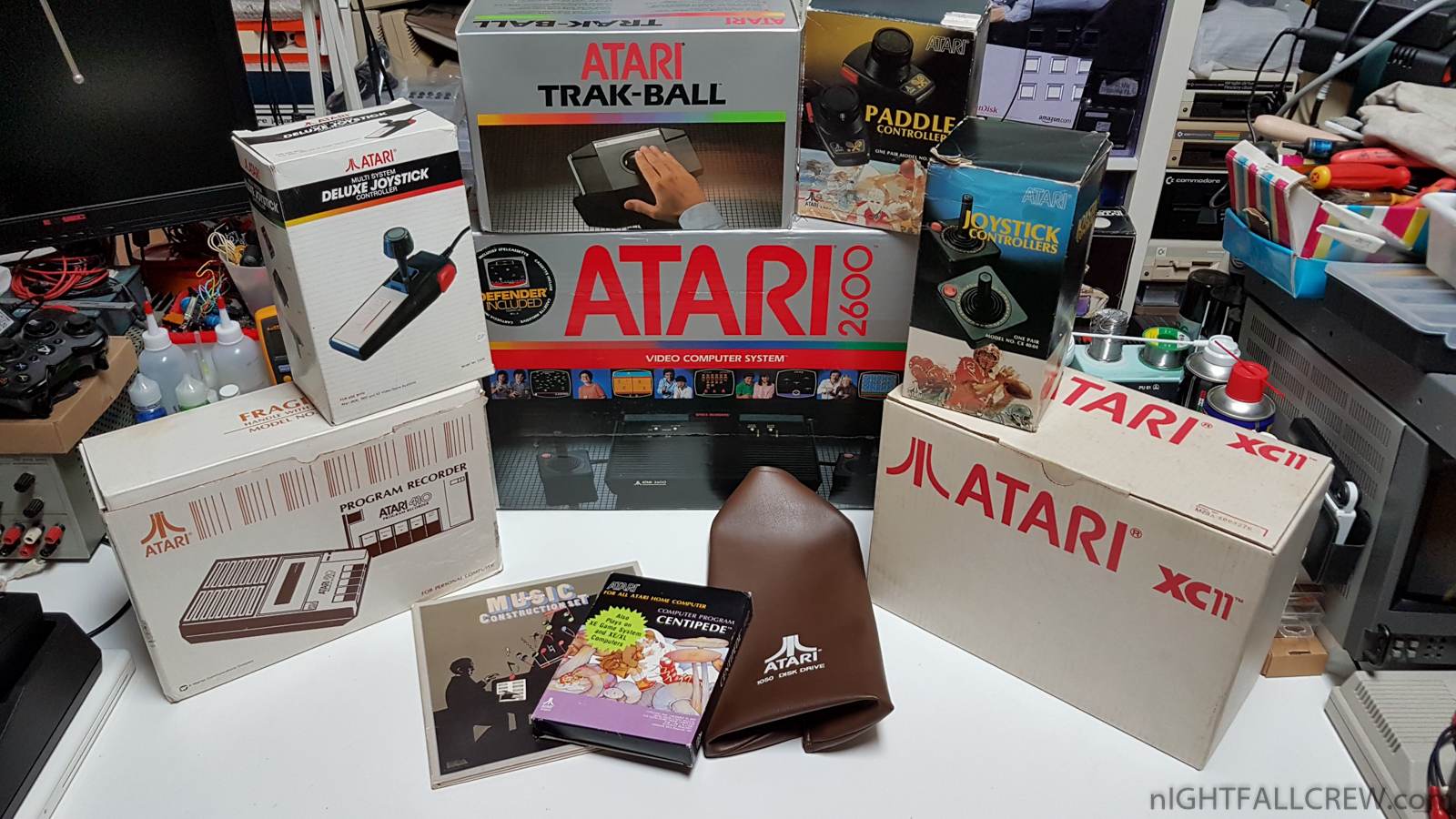
Some interesting things to close my personal Atari collection
Some interesting things to close my personal Atari collection.
Description:
- Atari Program Recorder Model 410 (early model)
- Atari Program Recorder Model XC11.
- Atari 2600 Dark Vader Defender Pack.
- Atari Joystick CX-40-04 Retail Box.
- Atari Paddle Controllers CX 30-04 Retail Box.
- Atari Multi System Deluxe Joystick Controller CX24.
- Atari Centipede (Atari)
- Atari Trak-Ball CX-80.
- Music Construction Set (Electronic Arts)
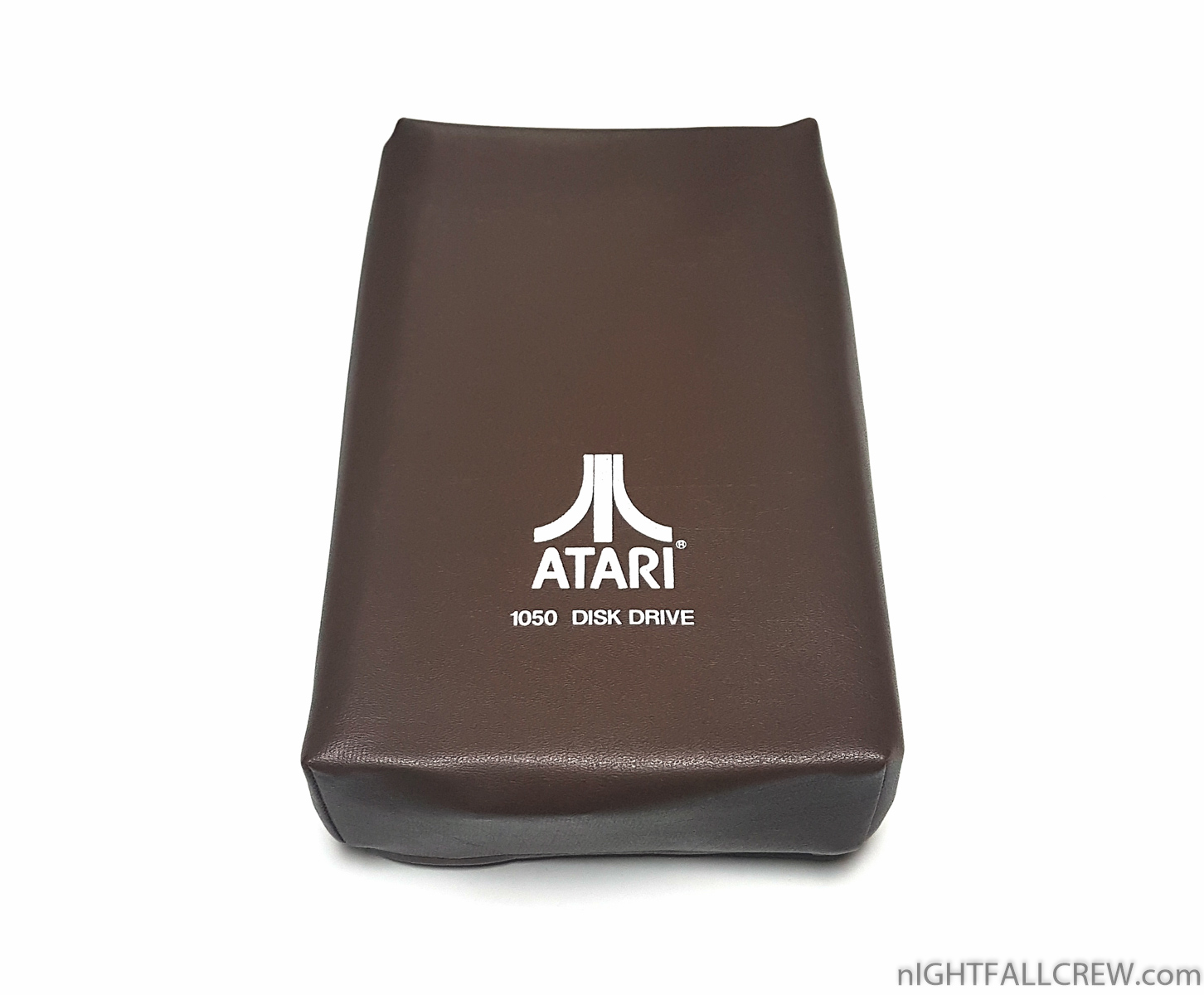
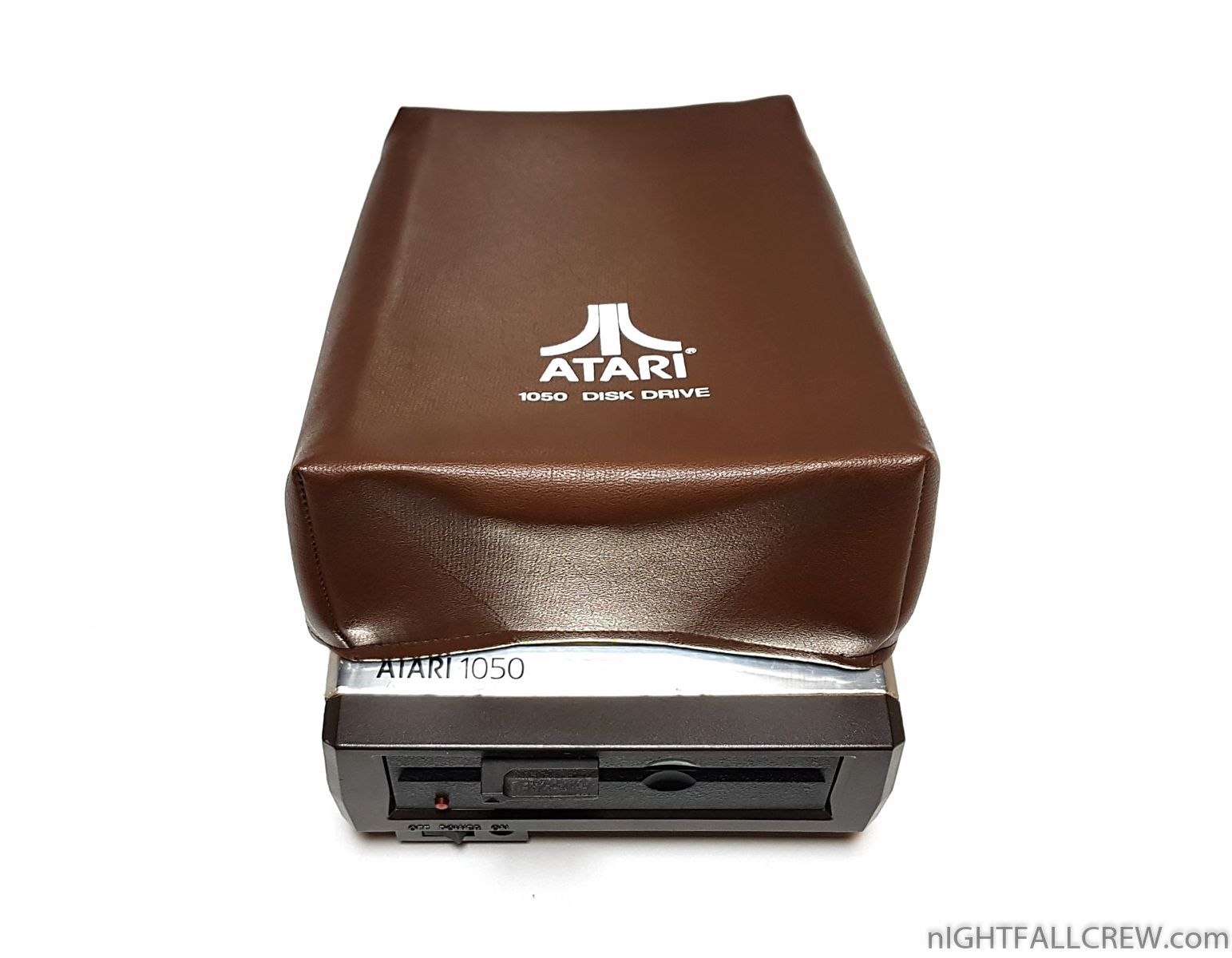
- Atari 1050 Disk Drive Soft Cover.
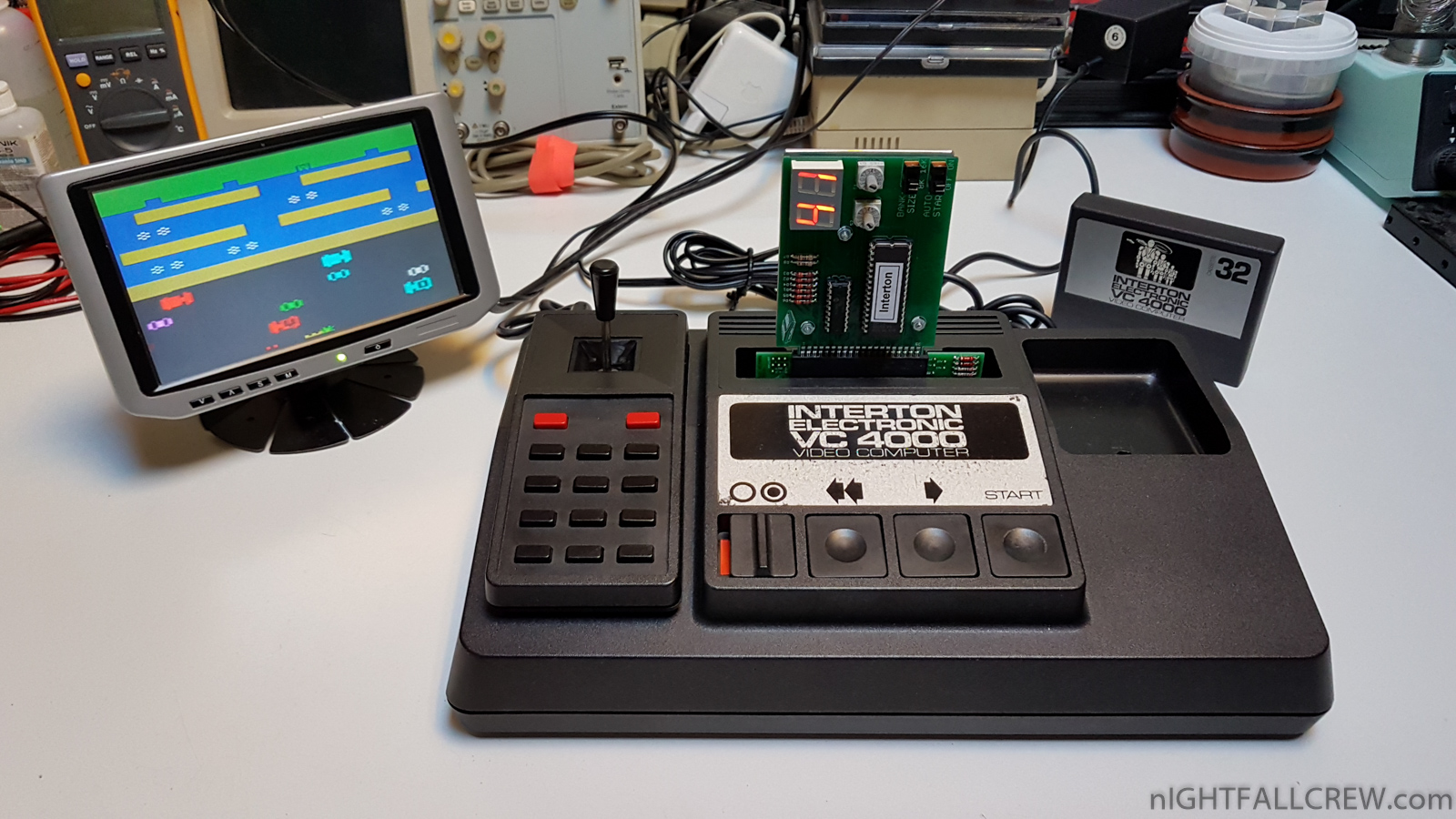
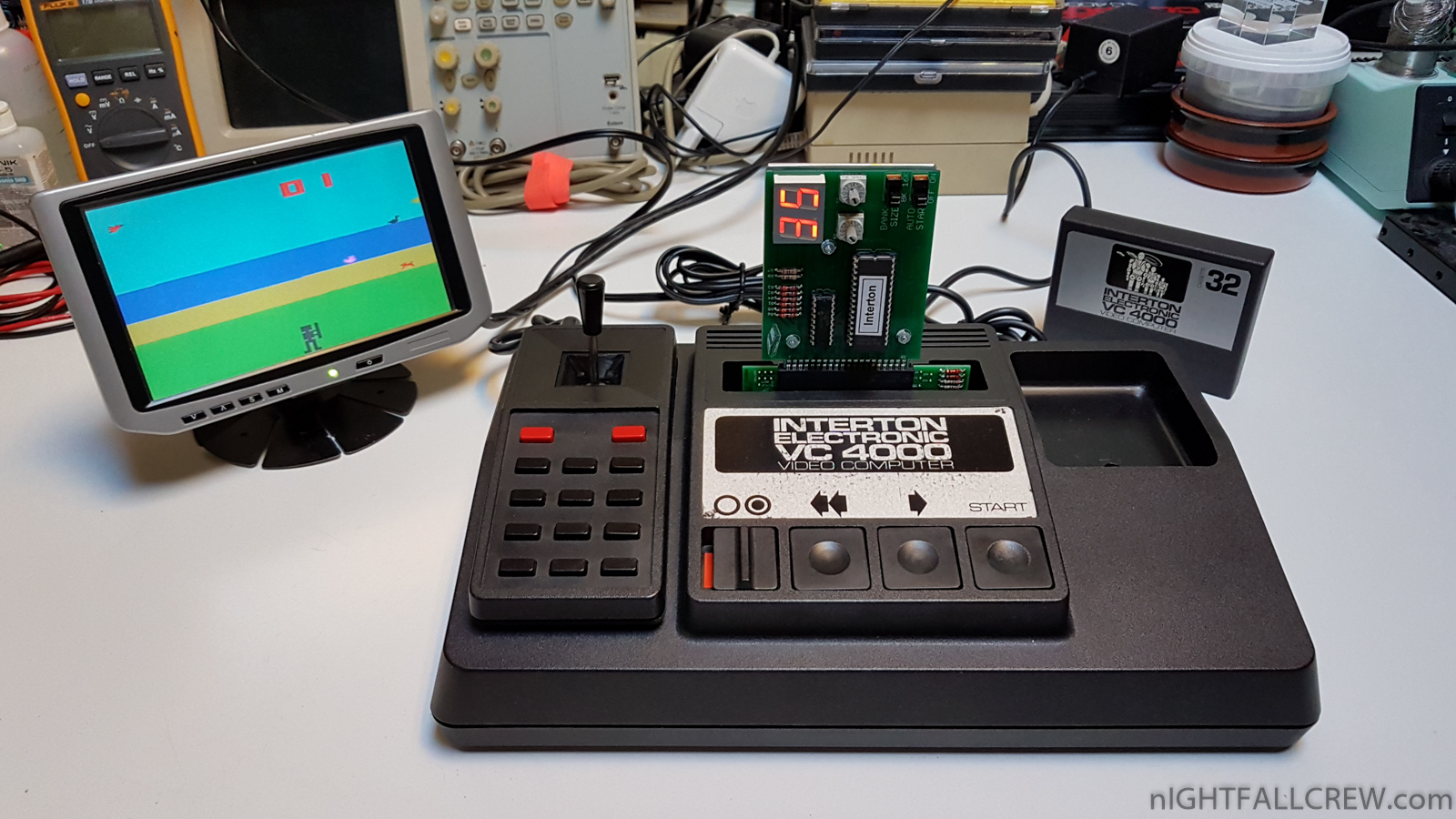
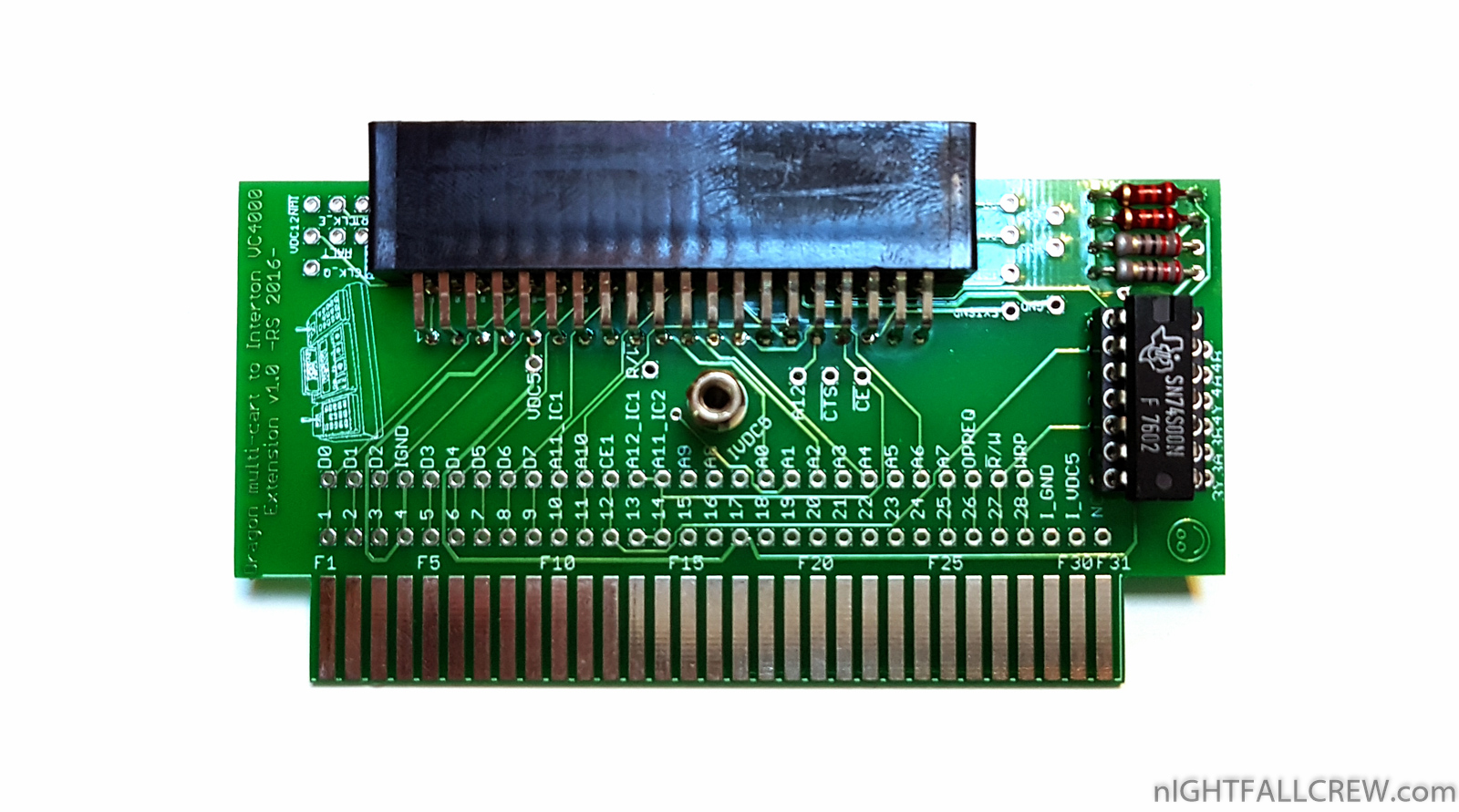
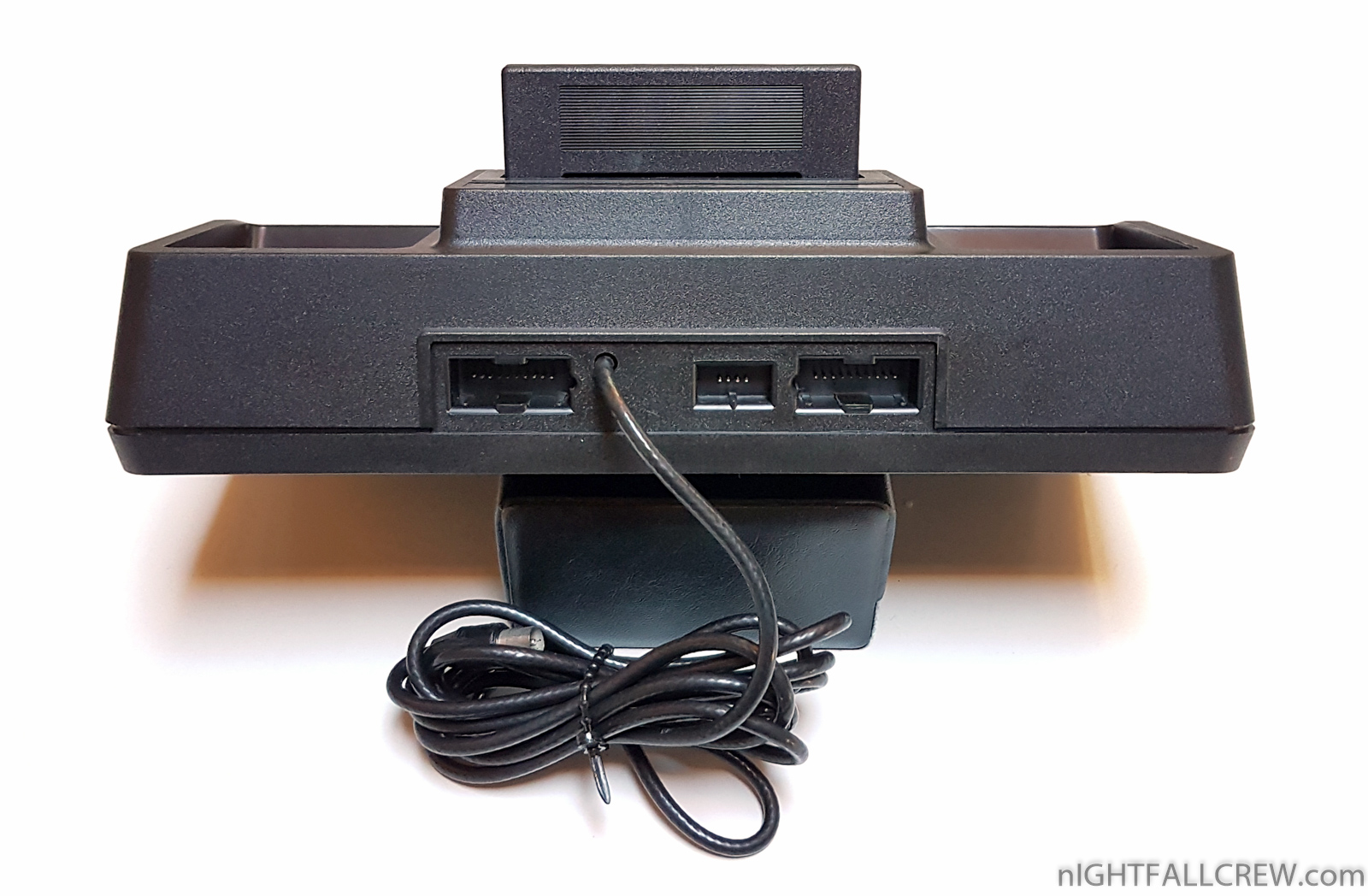
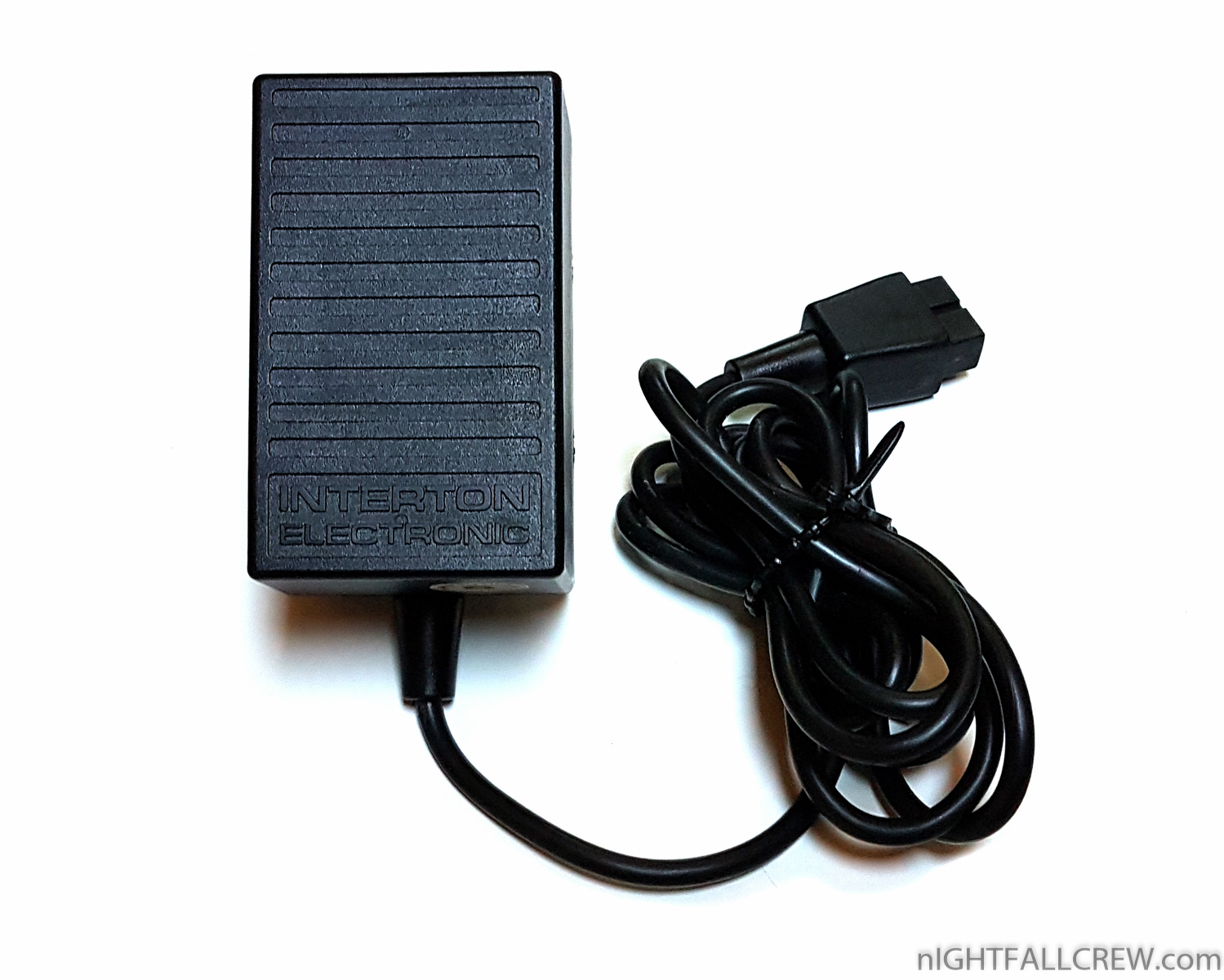
Multi-Cartridge Interton VC4000 Extension (Adapter)
Very nice adapter designed by Rolo that allows you to use the Rolo Multi-Cartridge also on the Interton VC 4000 console.
Gallery:
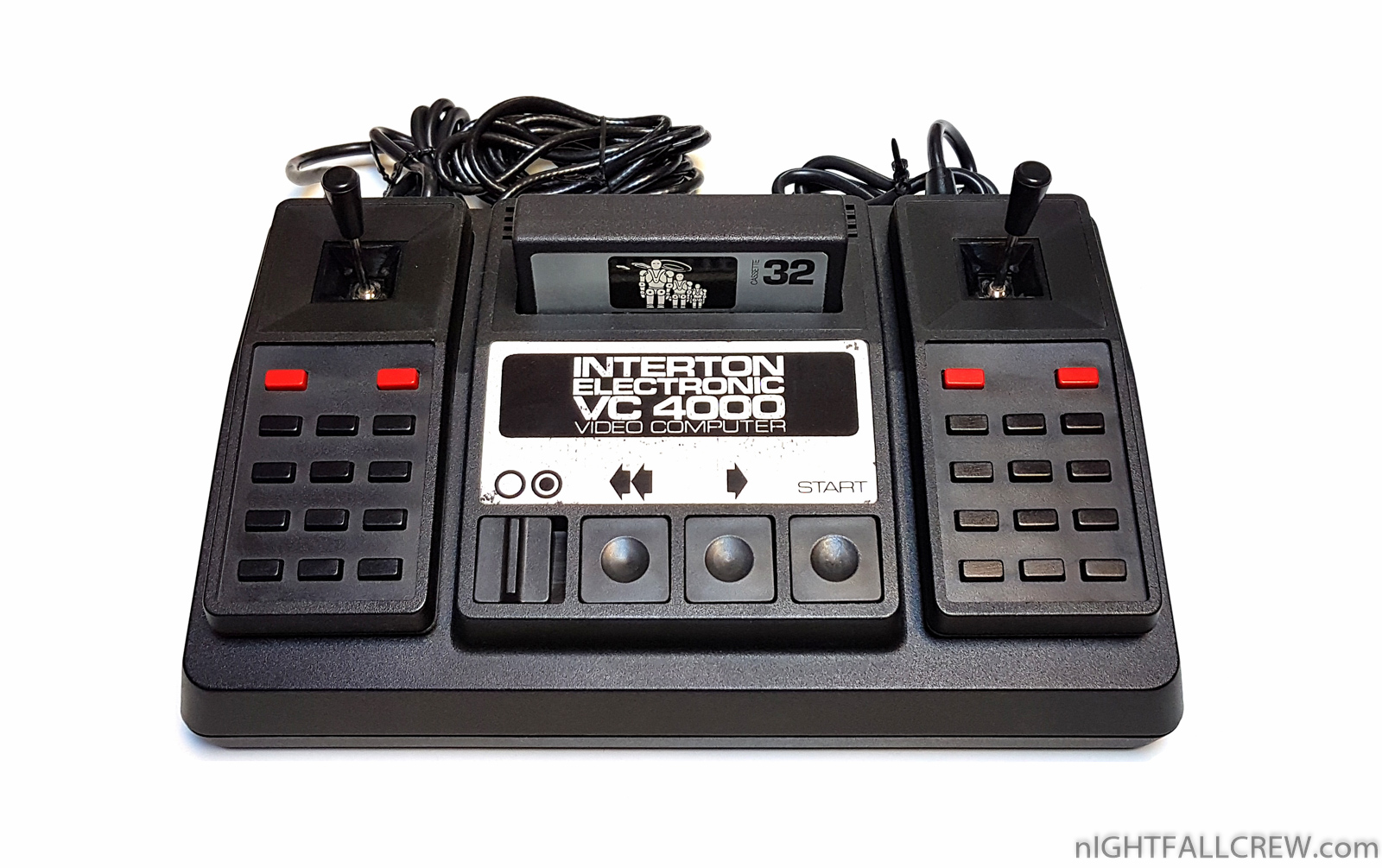
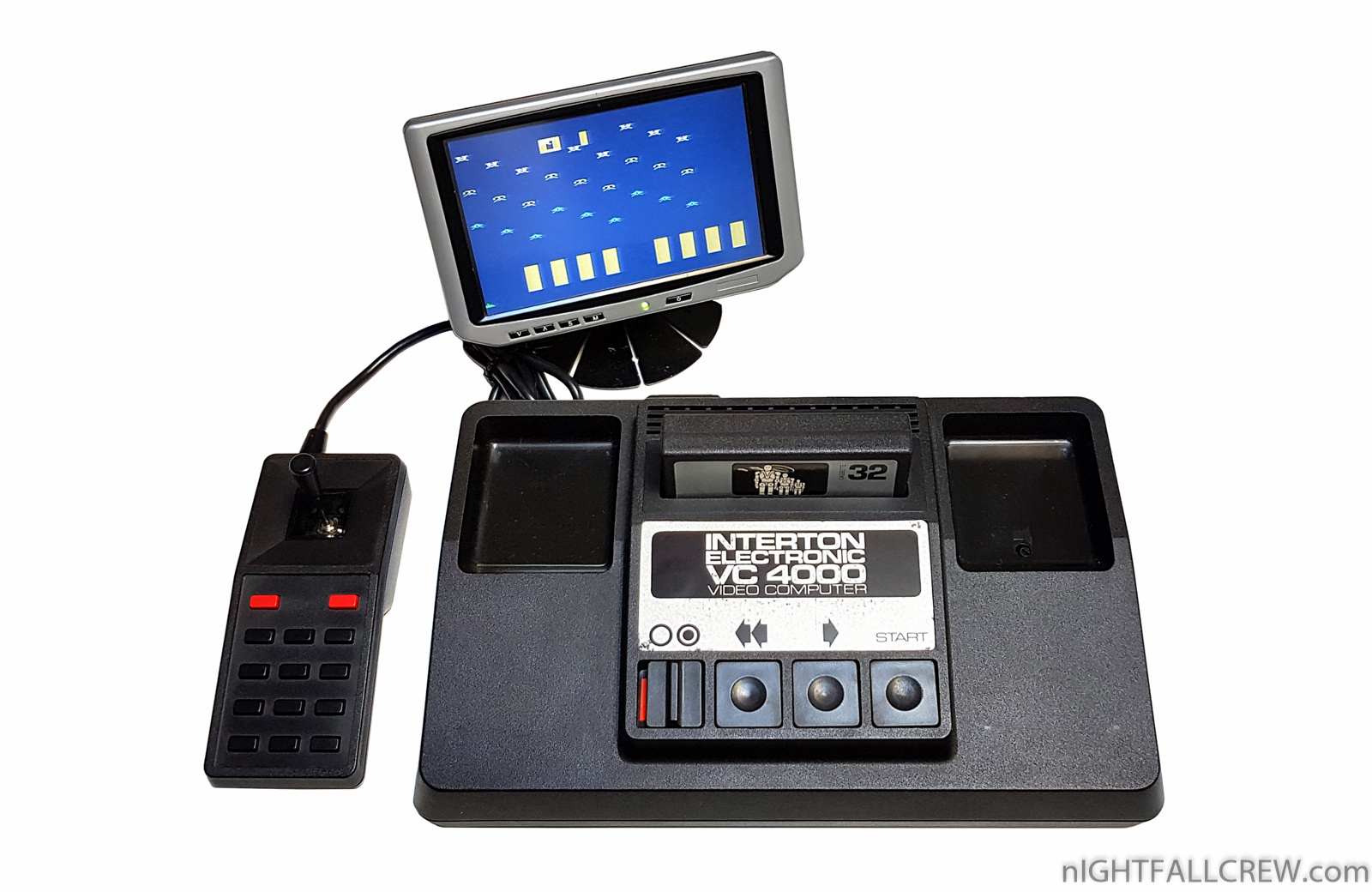
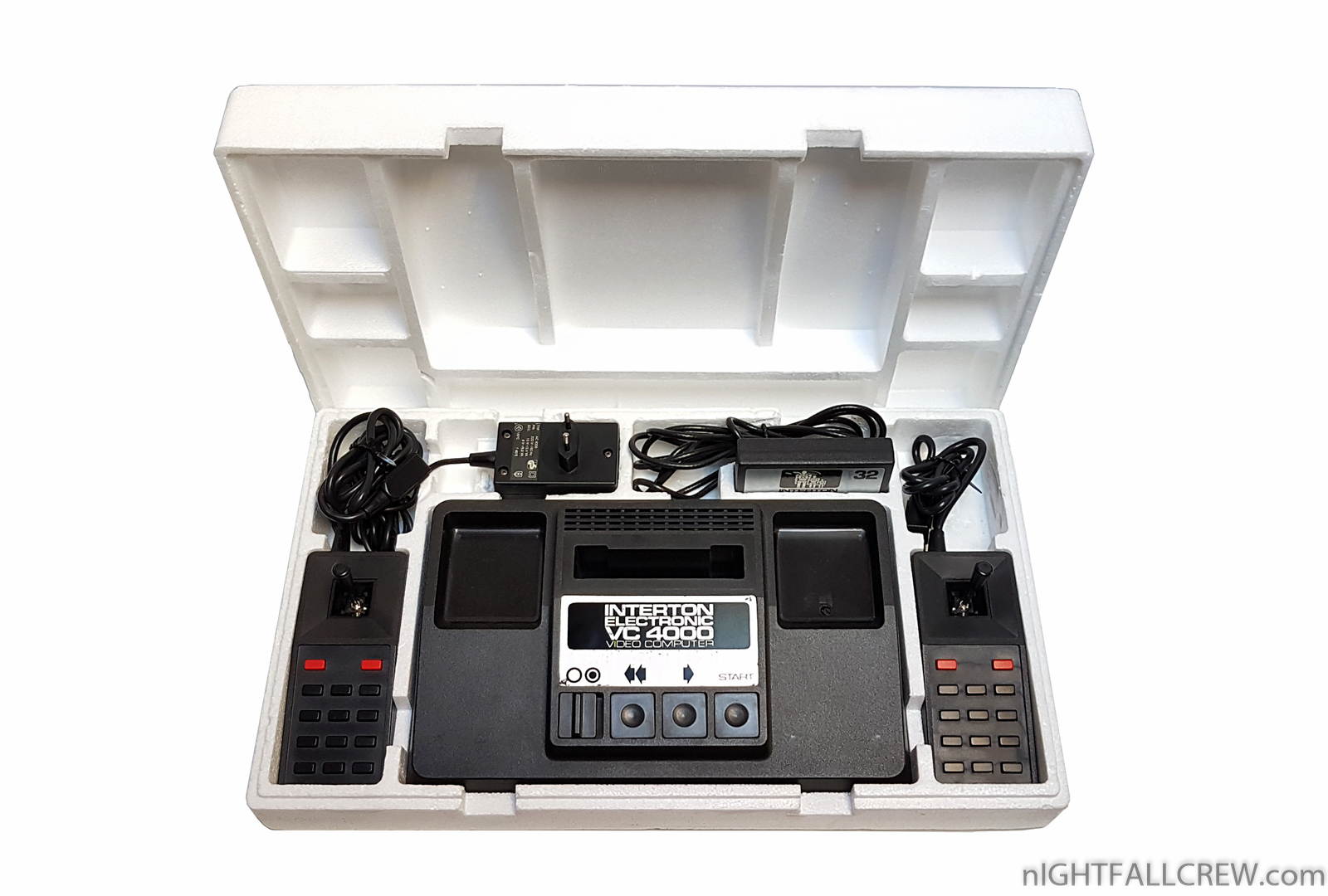
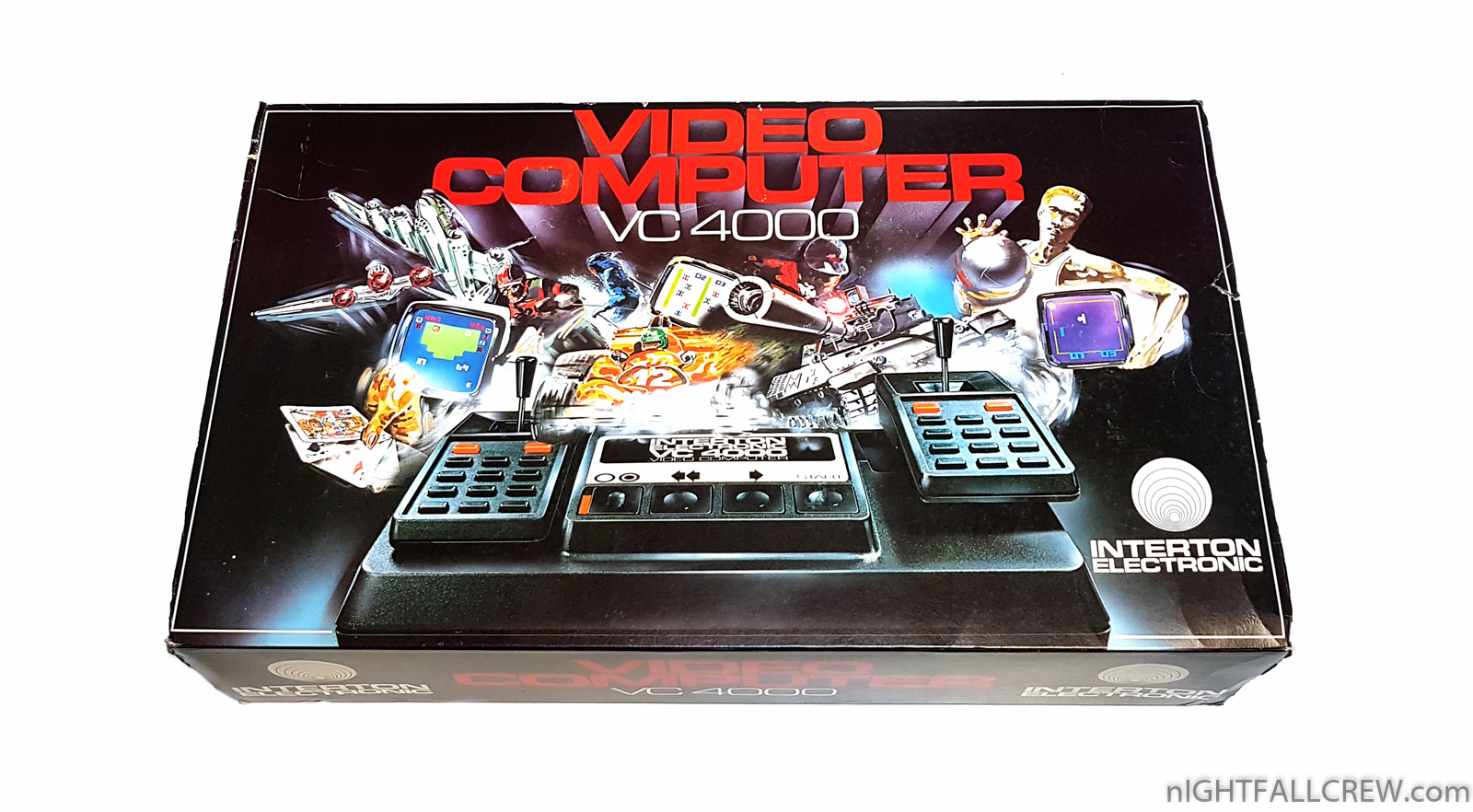
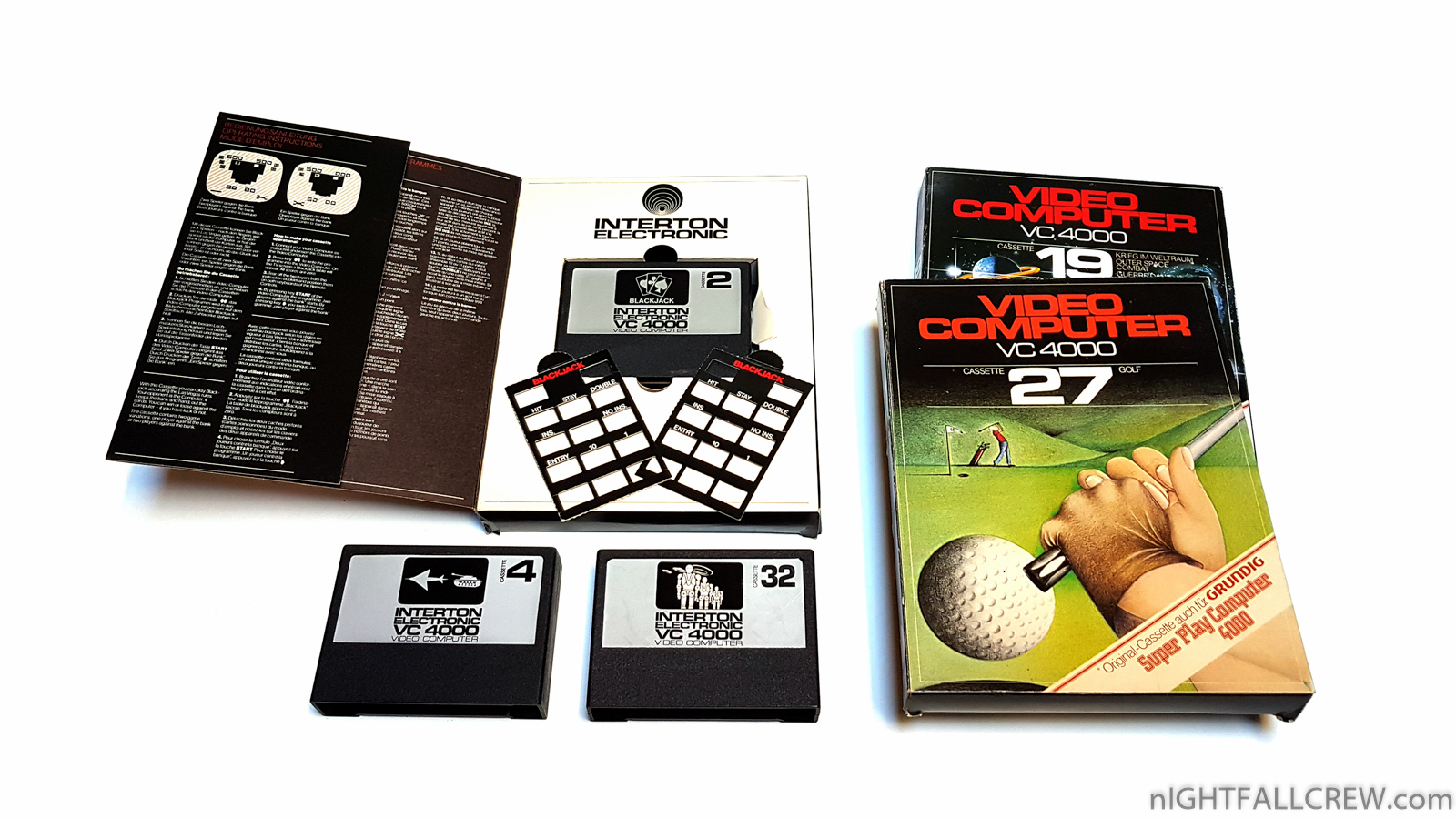
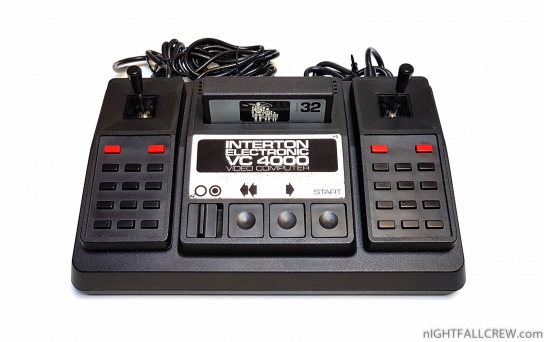
Interton Electronic Video Computer VC4000 (Boxed)
The Interton VC 4000 is originally a rebranded and reshaped Radofin 1292 Advanced Programmable Video System, released in 1976 (making it the second, if not the first, CPU and interchangeable ROM based console).
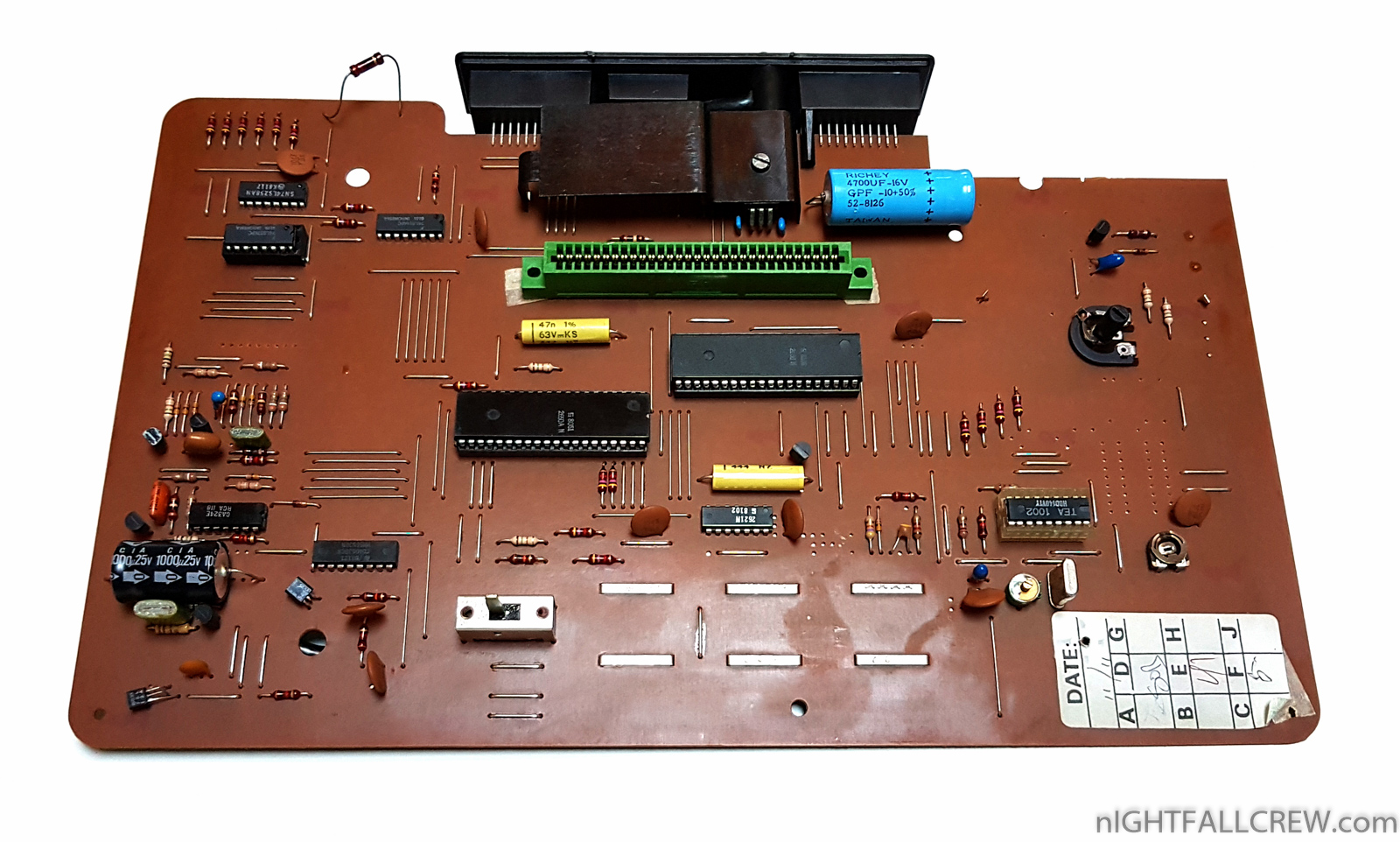
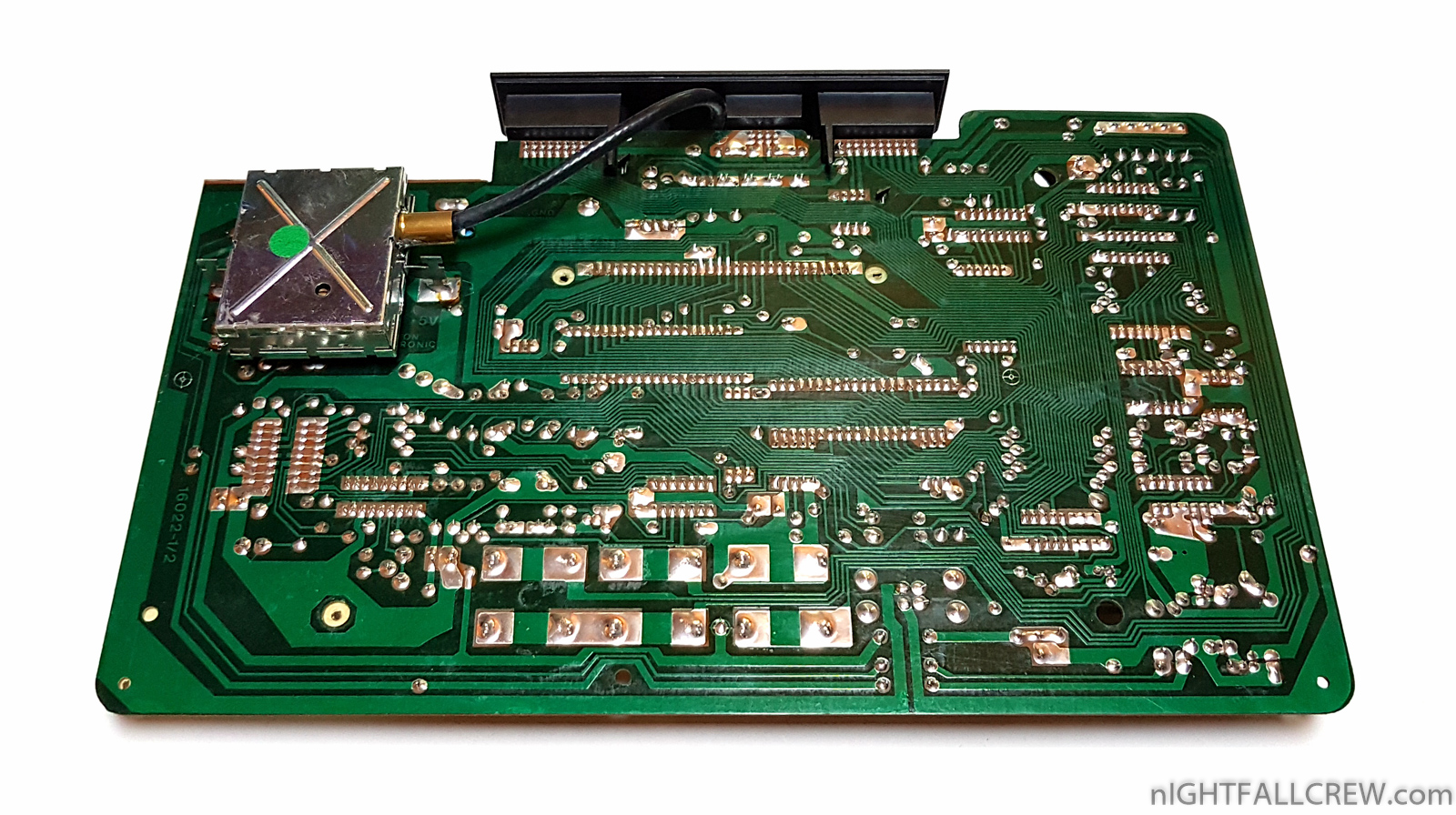
The machine is powered by a CPU and a GPU, both made by Signetics, an American chip maker bough by Philips in 1975. The APVS/VC4000 seems to be conceived by Philips to promote their Signetics chips, and was probably sold to various little electronics companies.
Claims are that Interton conceived the VC4000 before the APVS, but the release date is still 1978.
Various threads on Internet show different specs for the APVS and the VC4000, but it’s probably a confusion between the CPU speed and RAM and the GPU speed and RAM.
The specs seems to be as is:
- CPU : Signetics 2650AI : 0,887 Mhtz
- GPU : Signetics 2636 : 3.58 Mhtz
- CPU RAM : odd numbers, but as low as 87, 65 or 32 octets
- GPU RAM : 32ko
The GPU is able to offer a display of 218*200 pixels, with 8 colors, and monochrome sprite(s?).
It’s also in charge of the sound. It seems more able than your regular beeper, but not on par with the Atari 2600 or Videopac. (or, maybe it is but never shows, at the sound is exactly the same on the Arcadia 2001, and it sounds much better, tho still weak compared to other systems).
The input consist of 3 keys : Reset, Select and Start.
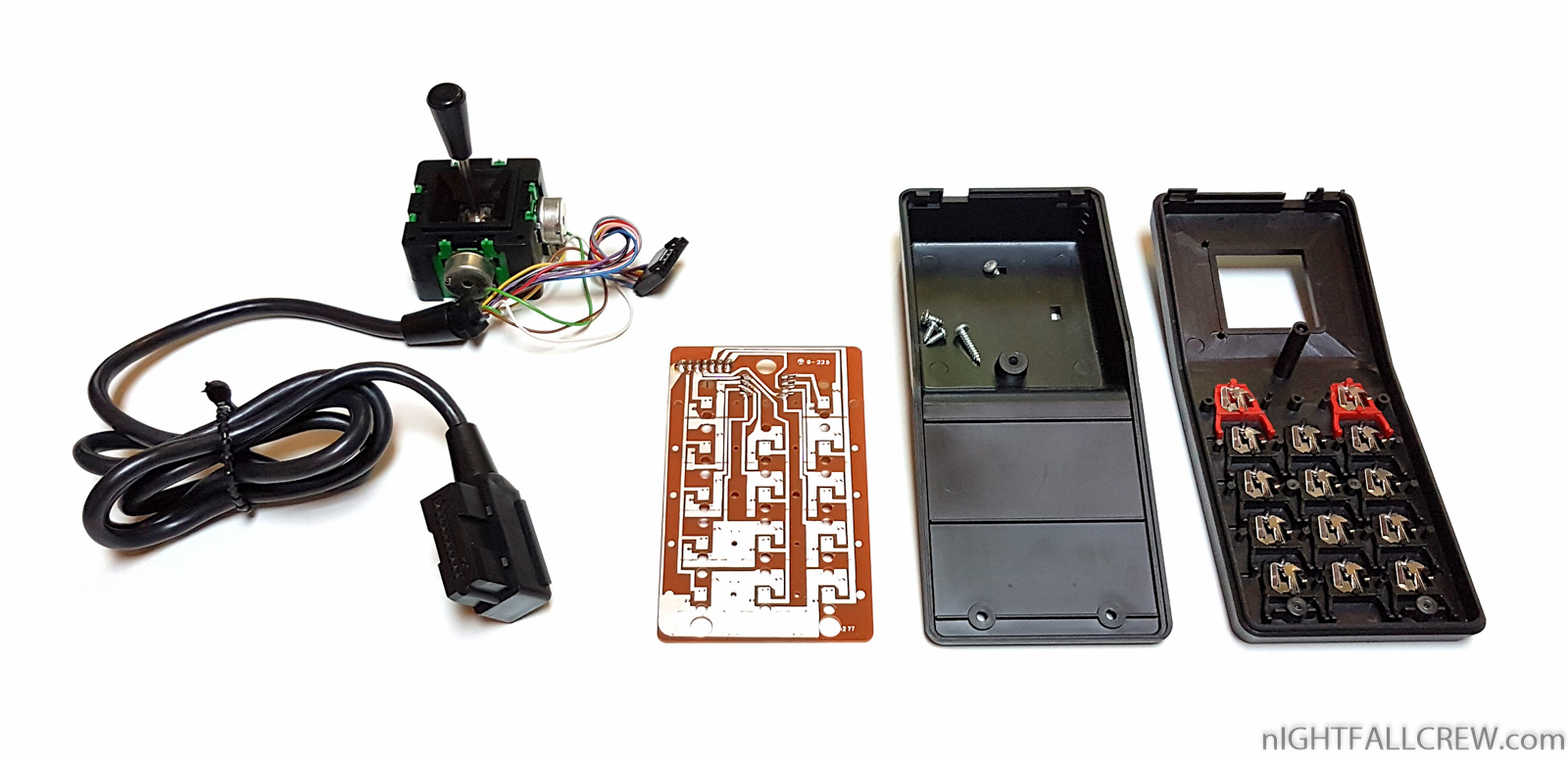
Plus two joysticks; they have an analog joystick (free on the APVS family, auto-centered on the VC4000 family) 2 action/fire buttons (which seems to be one button, so they might be internall wired together) and a 12 buttons keypad-like keyboard.
About 50 games have been programmed for the various systems release. Although Interton (or Interton fans?) claim that the Interton VC4000 is superior to the APVS, back in 1980, cart adapters were sold to play APVS carts on Interton VC4000 and vice-versa; furthermore, dump of games showed no difference between most games, the main difference being for some in-gam words changed to English to German, and the mention “Interton VC 4000″ added in few games.
Also, Interton claimed all games to have been programmed in Germany, but looking at the code in the game “Shoot out” bring up this text :
“CHOI ANDREW, HONG KONG, MARCH 31 1981. PROGRAMS BY THE SAME AUTHOR: INVADER, BREAKOUT”
The system was sold from 1976 to 1984; tho there isn’t any definitive date, as those date covers all licenced clones; I have seen the Interton VC4000 in a French video game magazine dated from December 1982; and I own a ITMC MPT-05 clone with a receipt from 1984 inside (tho it might just be some old stock; but the IMTC MPT series of clones seems all to started to sell in 1983).
From what I have found, there are 50 different games released for the system, tho some are available only on one family.
The families are :
1292/1392 APVS (6 uniques games + Hobby Module)
Interton VC4000 (a great winner with 10 unique games plus the biggest list of games overall)
ITMC MPT05 (not enough data)
Voltmace (5 unique games)
Rowtron (2 unique games)
There might be another family two French systems (Karvan Computer and Occitel OC-2000) but there is nothing but pictures to be found about them.
There is also the Hobby Module add-on (for the APVS only), that added the possibility to program games in Signetics BASIC? and more importantly, to record and load programs from a cassette tape.
Specs are even harder to find than for the main system, but this cart seems to add some RAM (tho, it might just be dedicaced to the tape data and not available for the program itself) and some mention an AY 3-8910 sound chip (a classic sound arcade chip found in so many computers of the 80′s and into some consoles like the Vectrex)
One notable feature of the console, aside from the analog joystick, is how to boot any game.
When powering the system, the screen will display raodom stuff; Reset mush be pressed to get a normal screen.
This is due to the weak amount of CPU RAM. Why so few RAM? Back in 1976, only some types of RAM could be adressed directly by the CPU;this RAM was obviously more expensive than other RAM; (it’s one reason why the Fairchild channel F got only 64 octets and the 2600 128 octets).
To get more RAM, one workaround (that got used also in the Colecovision) is to use few RAM to boot up the system, and load one instruction for the CPU to look in the GPU RAM to load data. The GPU RAM being obviously cheaper, allowing to get more of it.
Tho, probably from bad programming, later games carts not only have more ROM, but also up to 256 octets of RAM.
Most games are pretty typical of the era; Videopac/Odyssey² offer about the same kind of games, with a likely evolution from “basic” games to licenced-like games later in the life of the system, with clones of arcade such as Invaders.
Gallery:
source: atariage.com
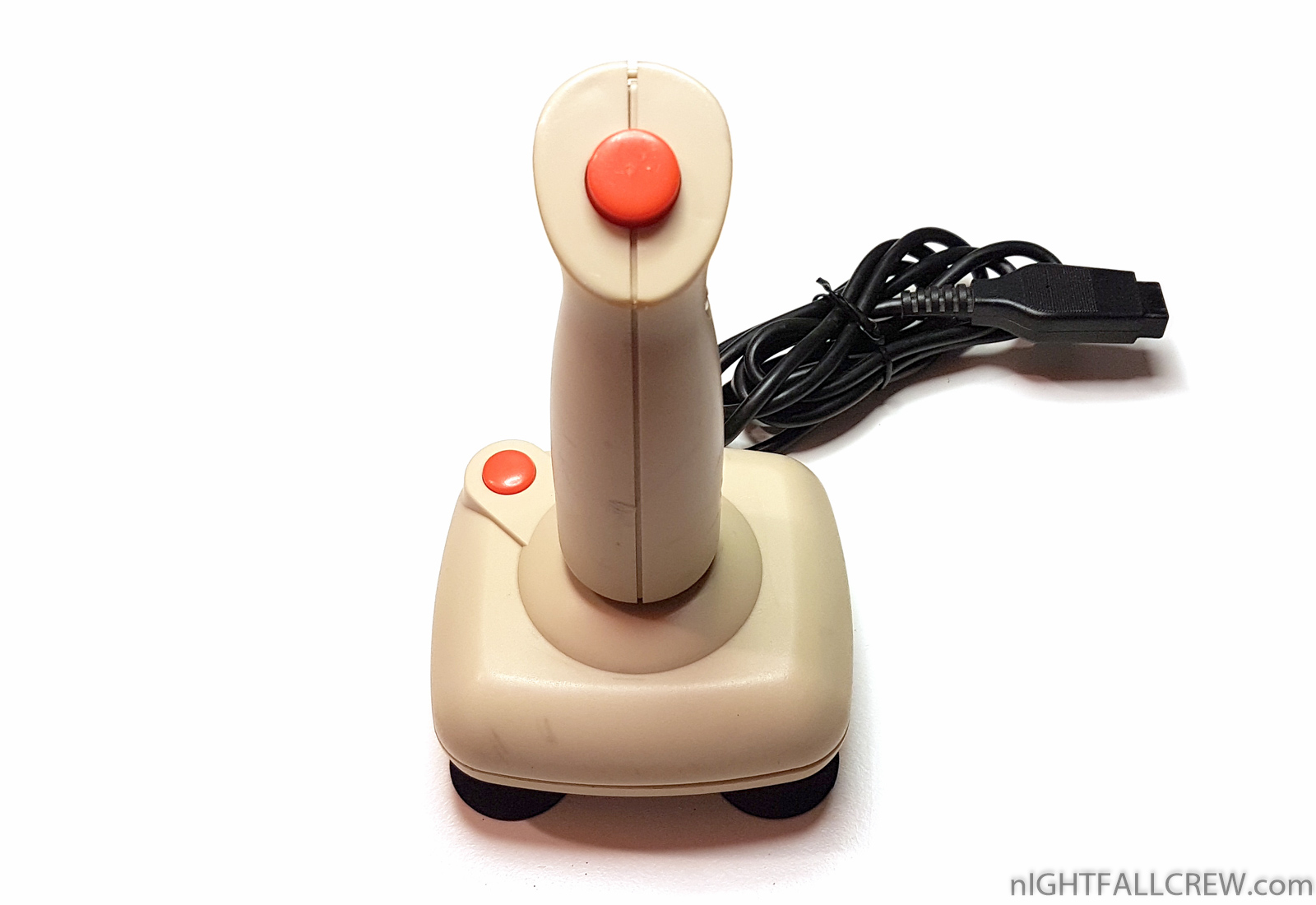
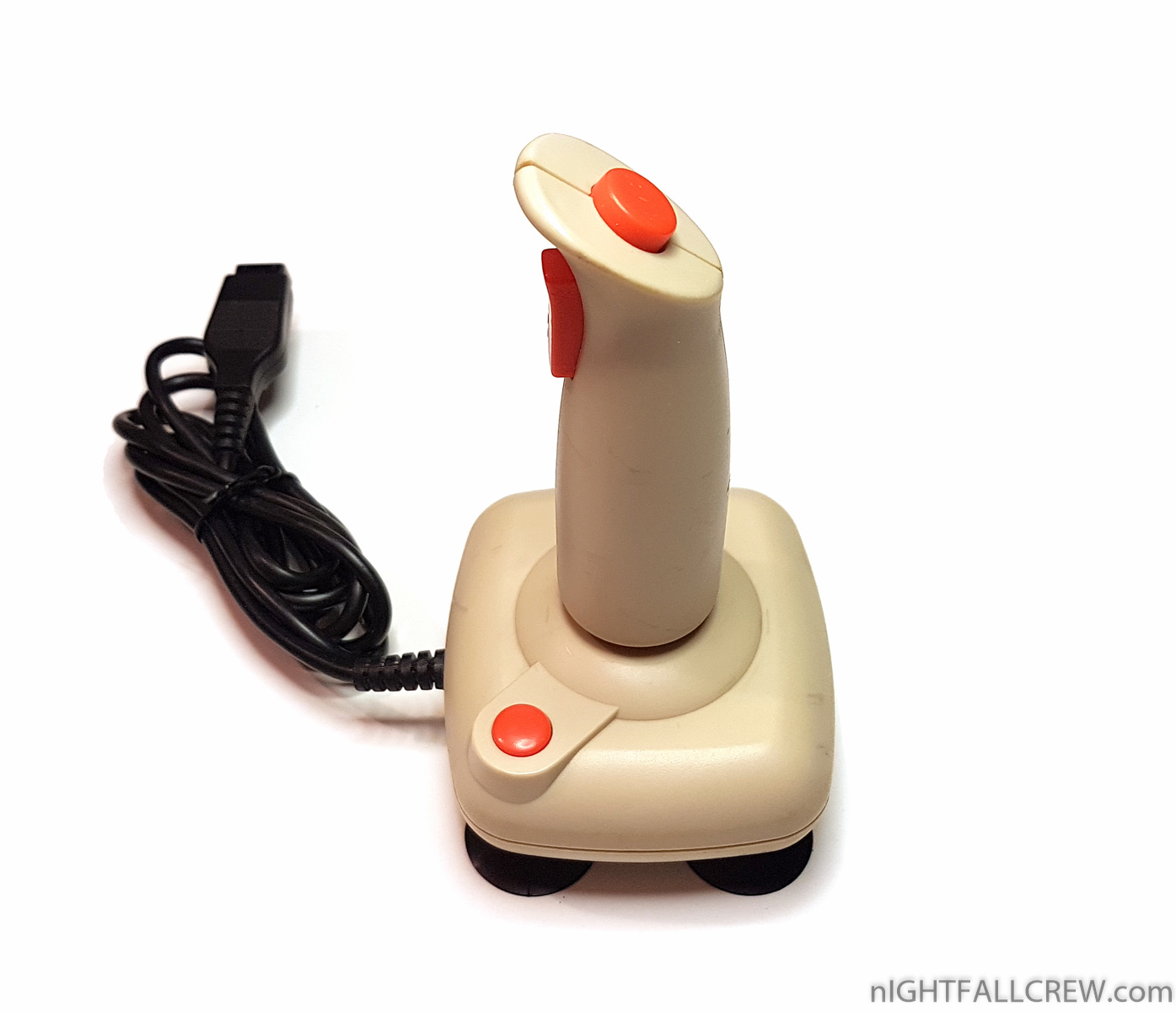
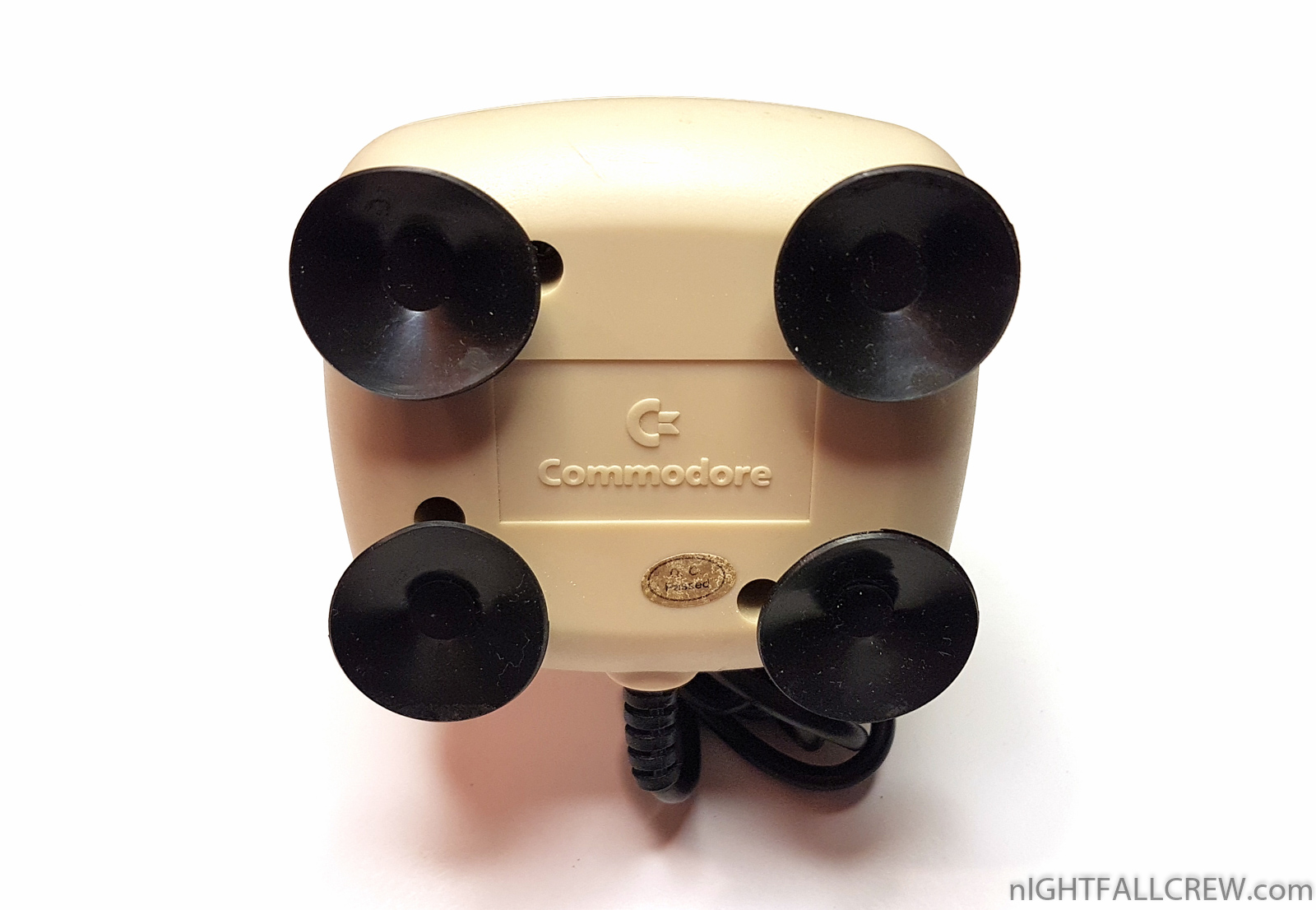
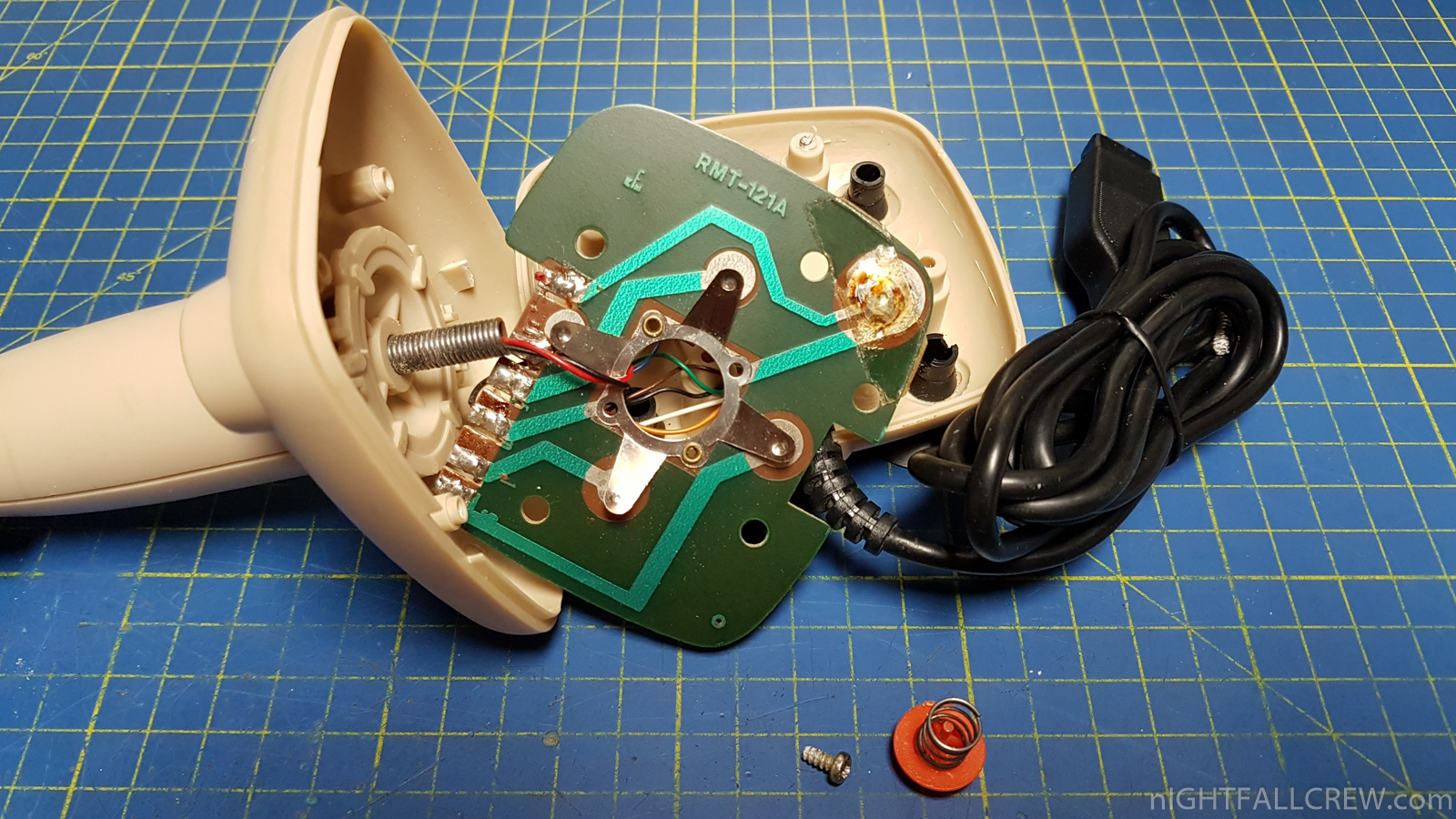
Commodore Joystick
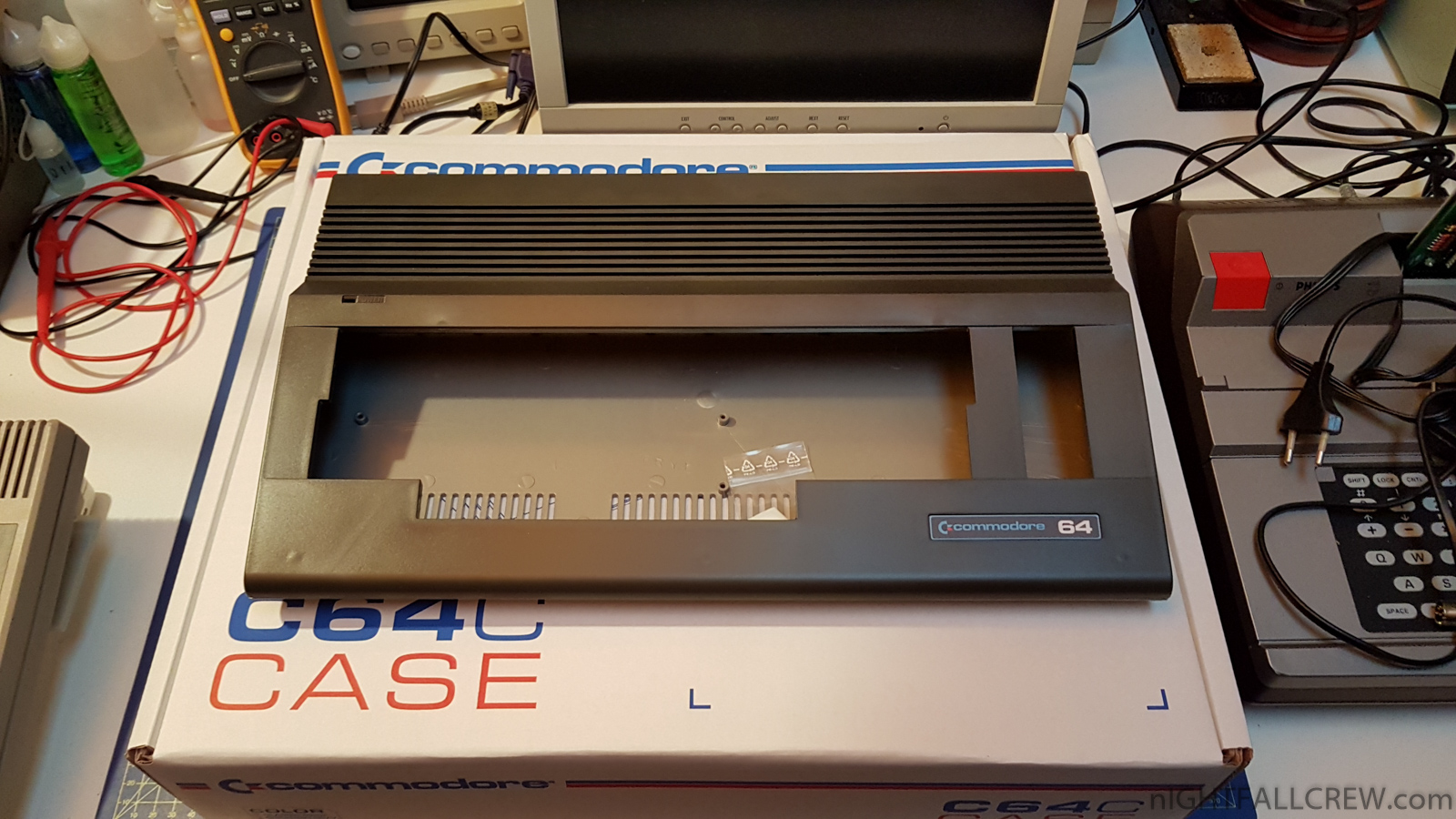
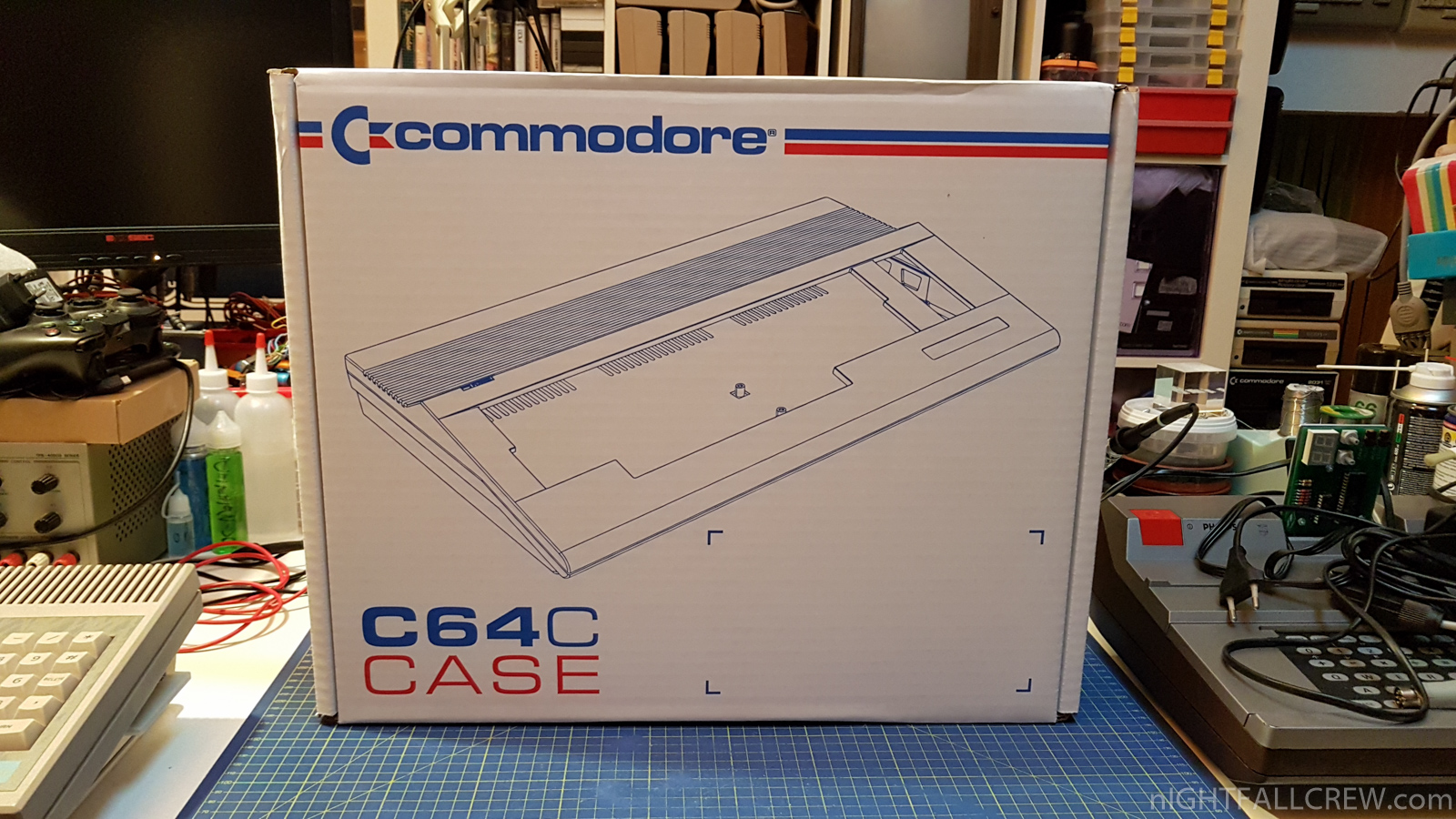
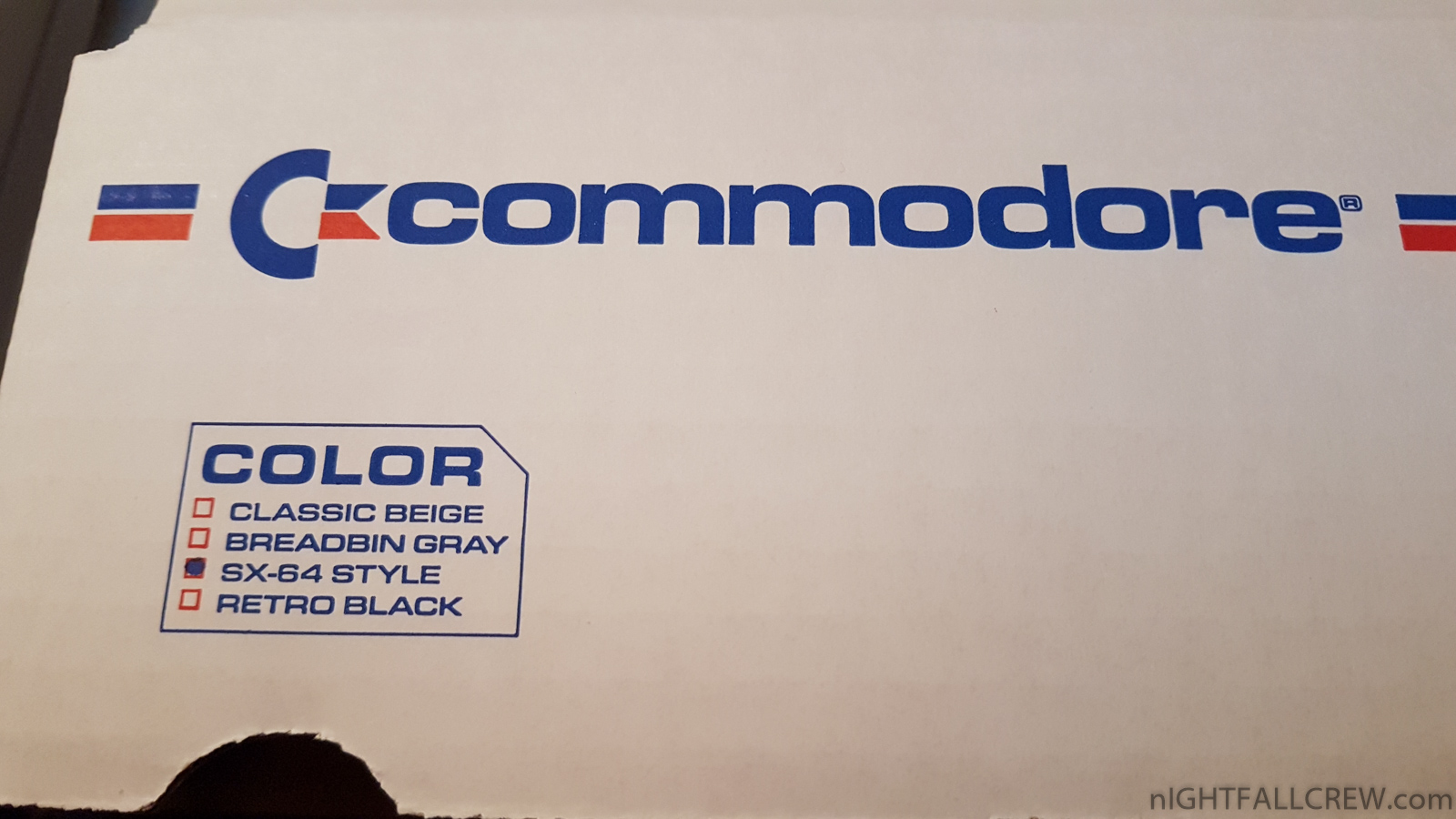
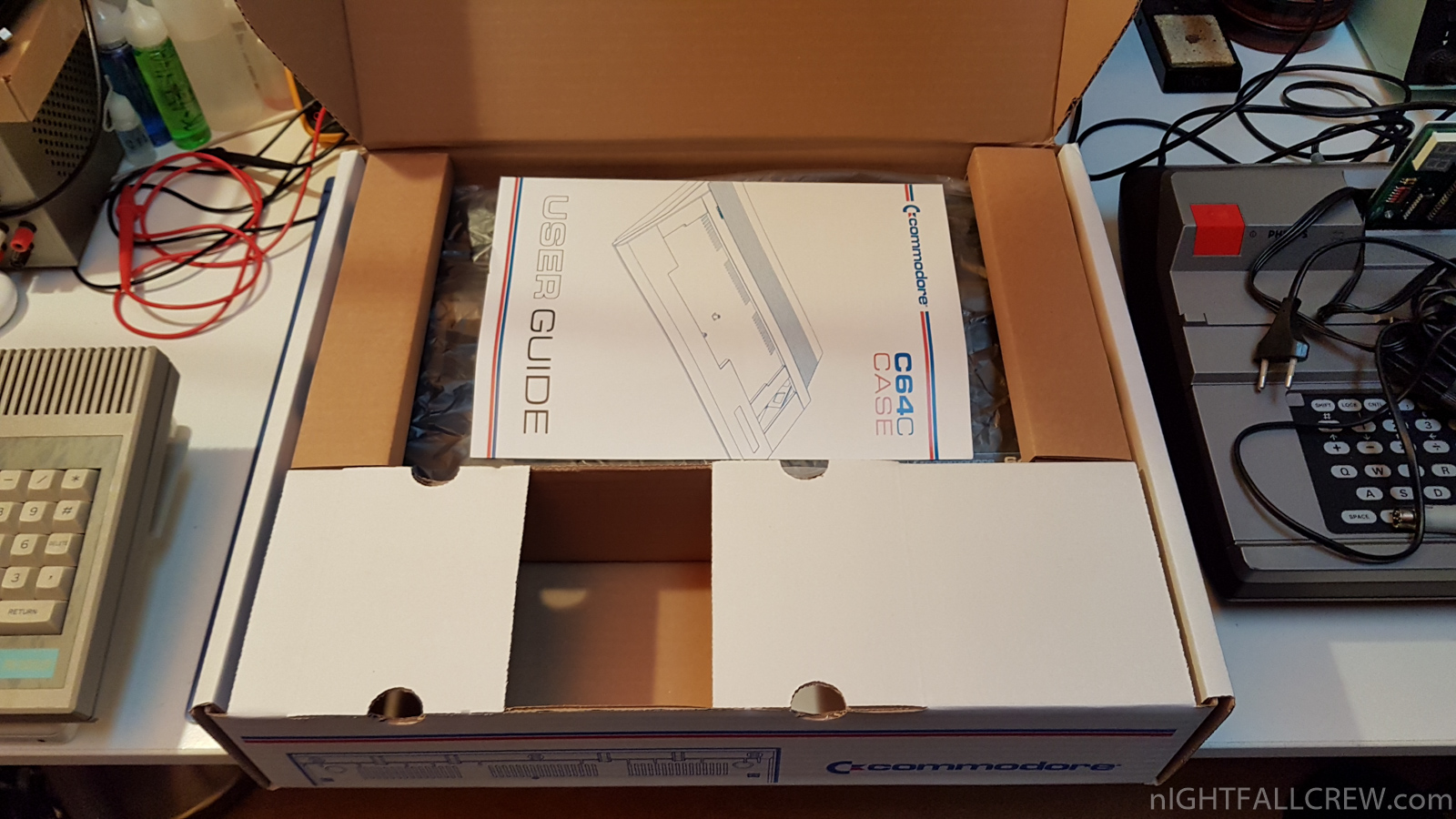
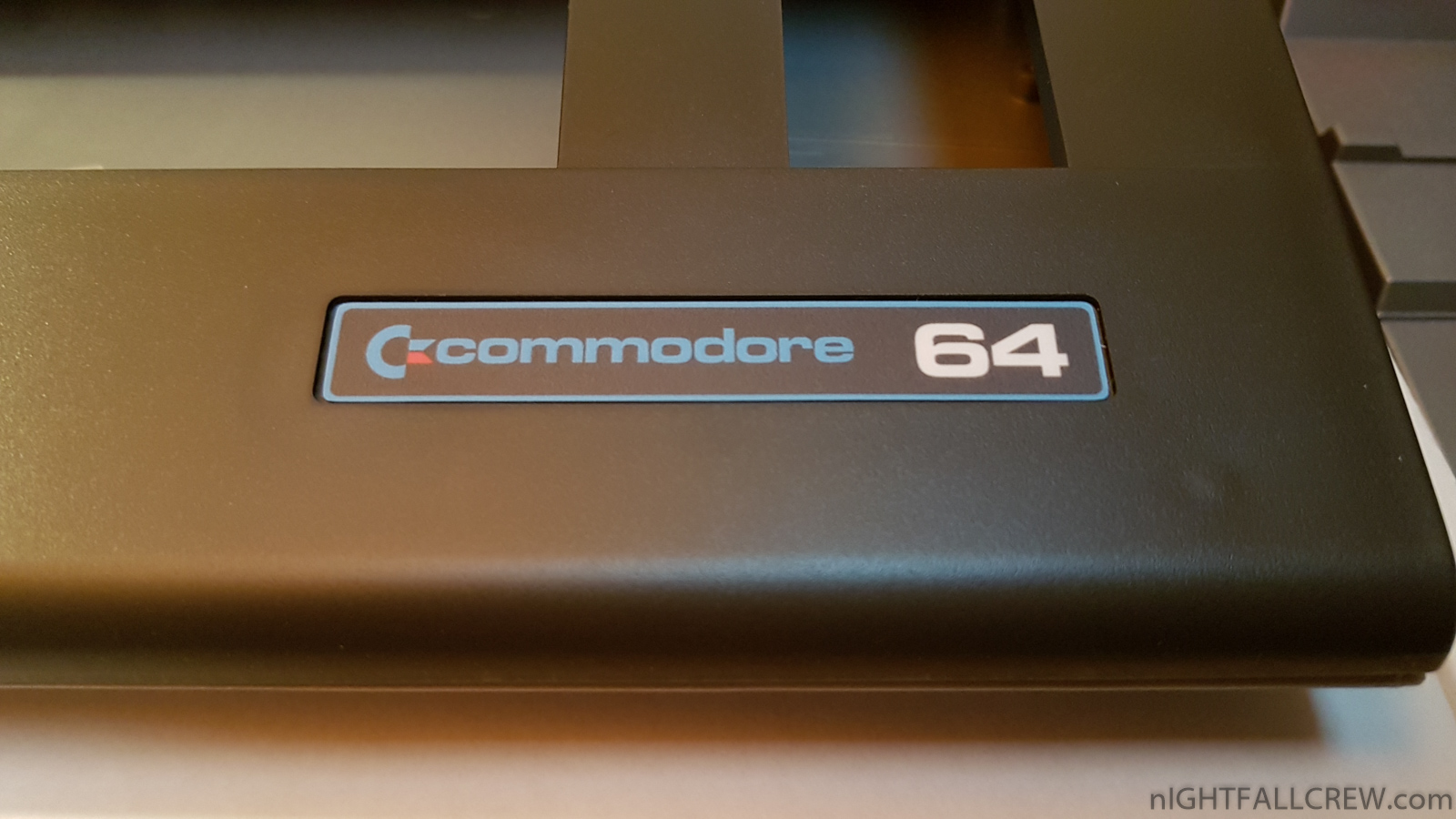
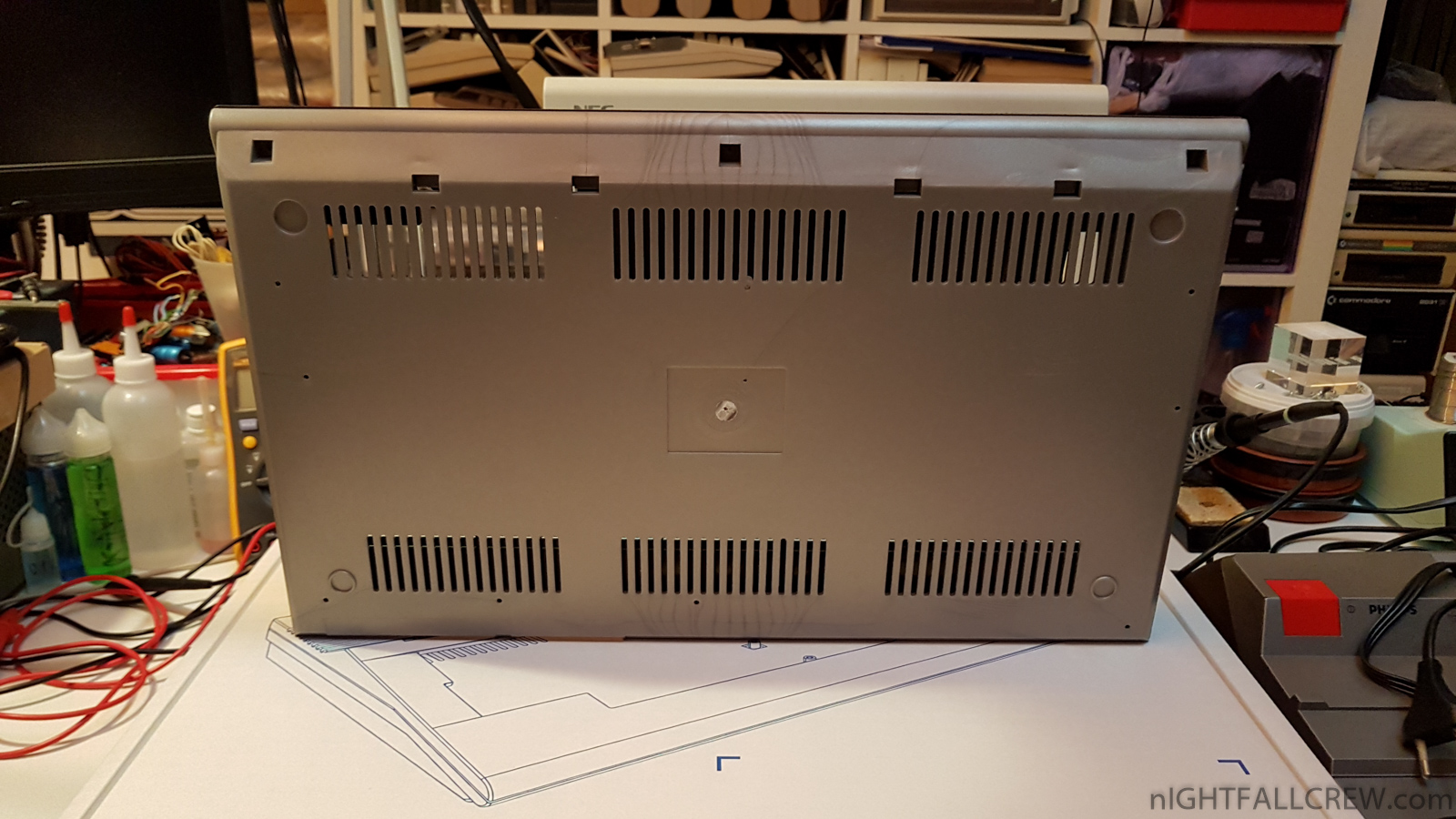
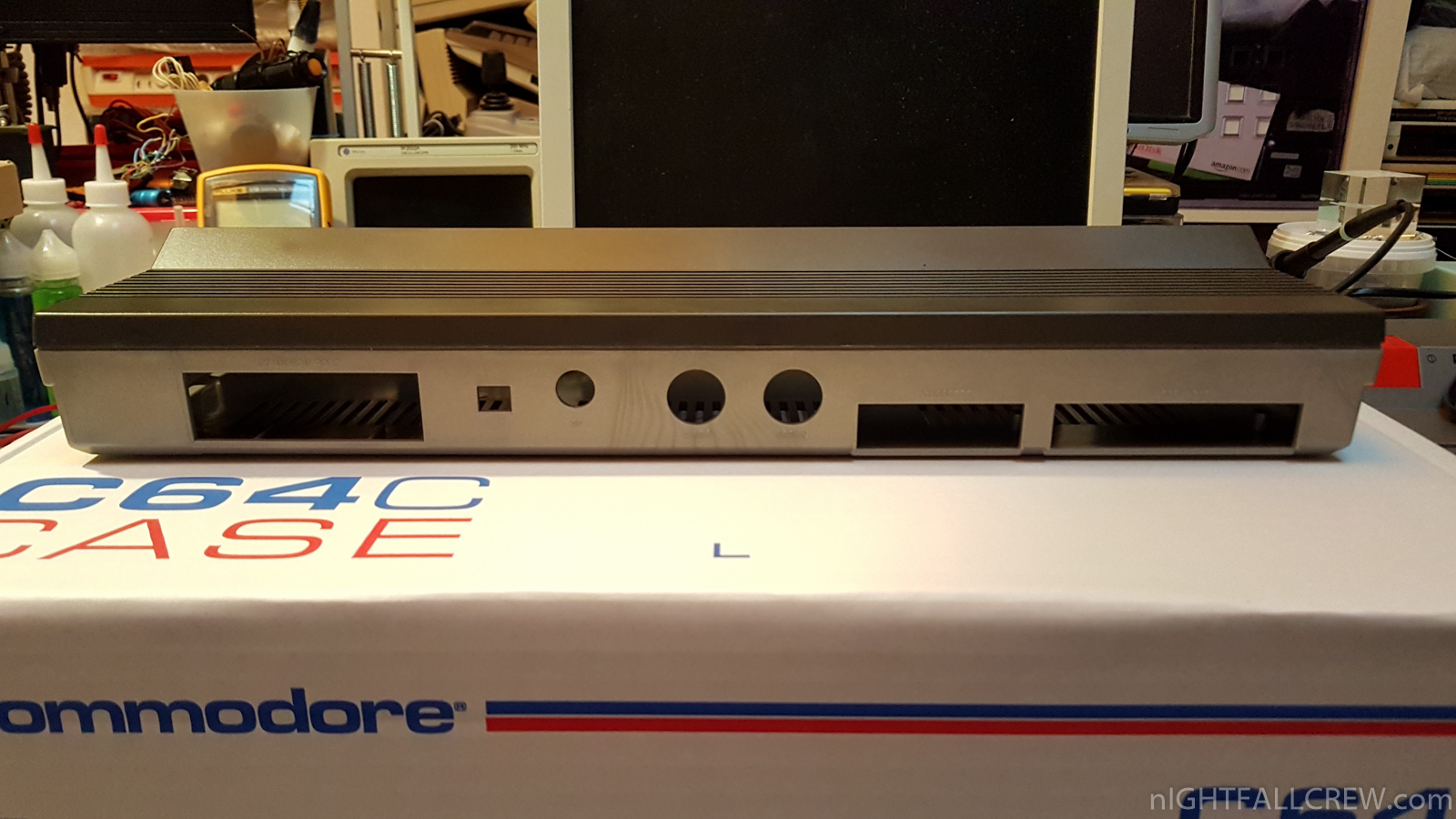
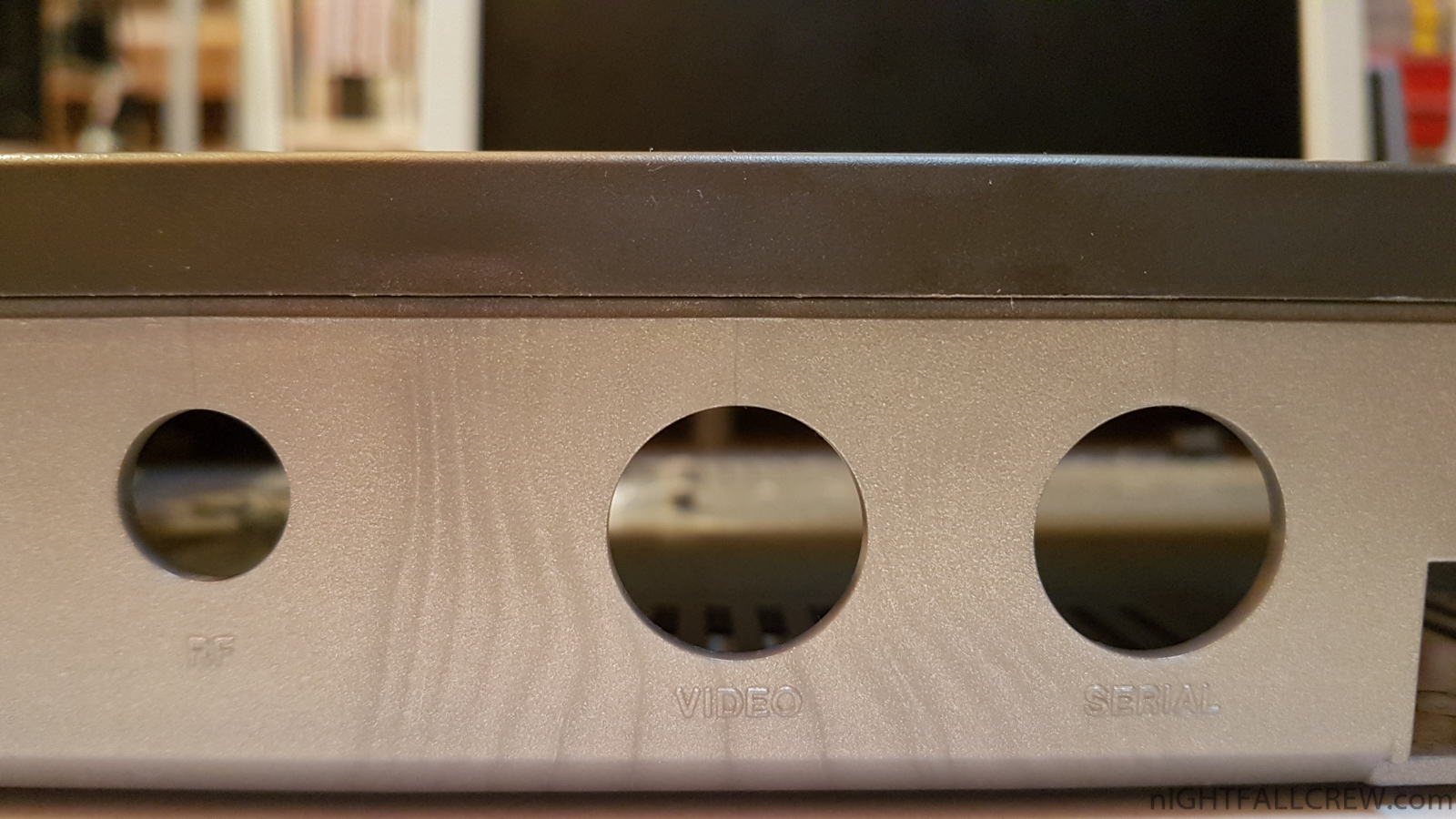
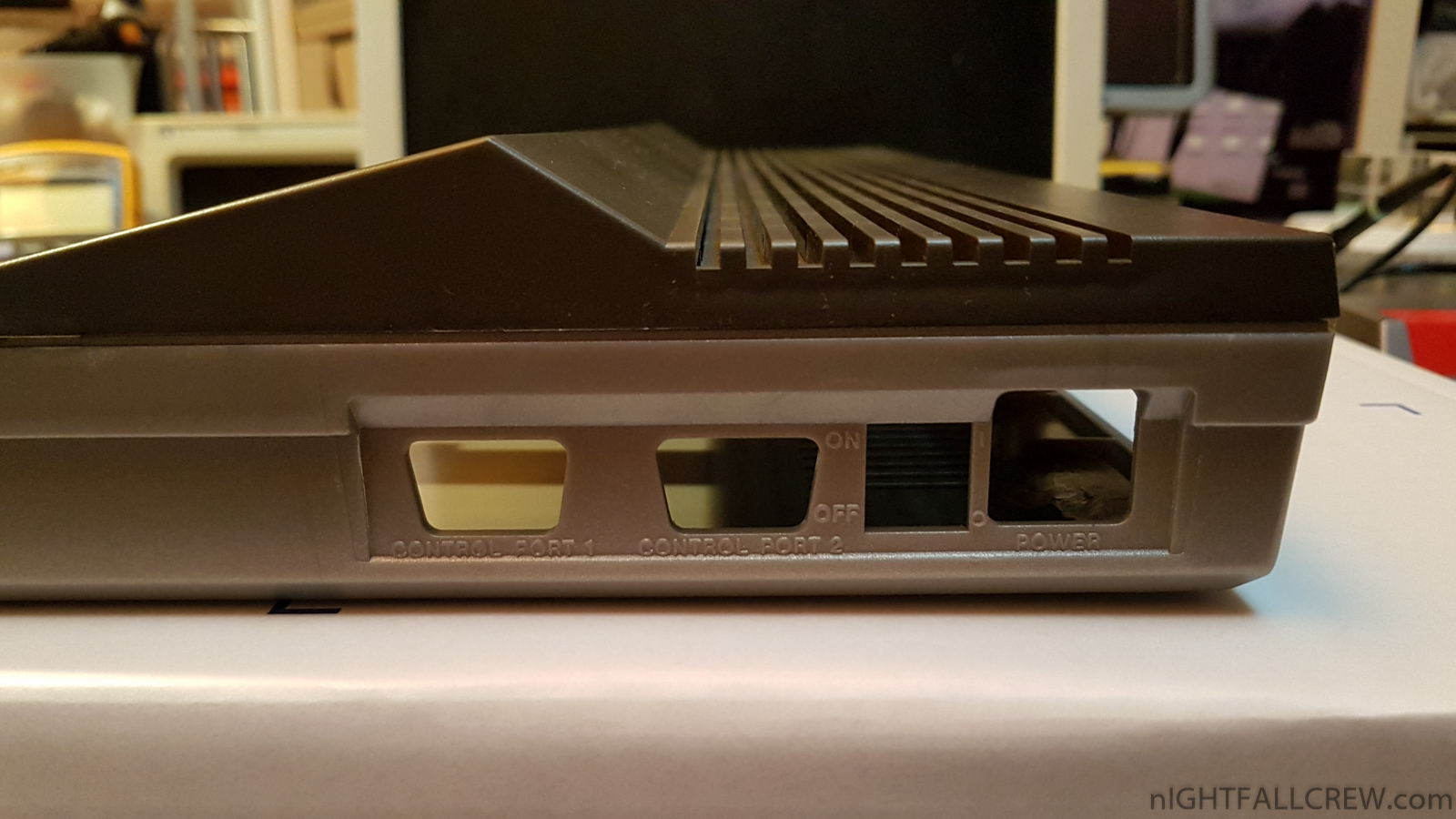
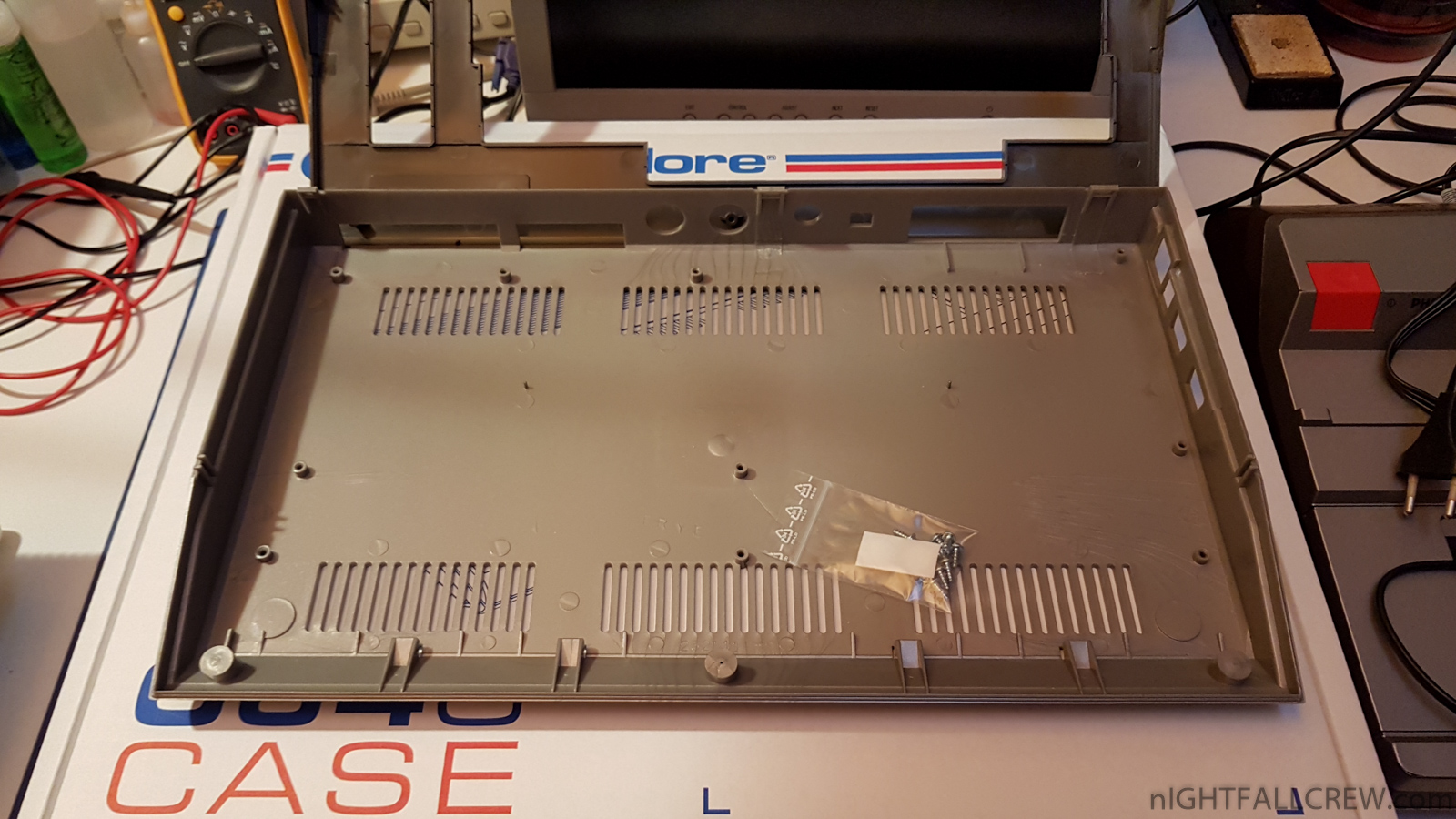
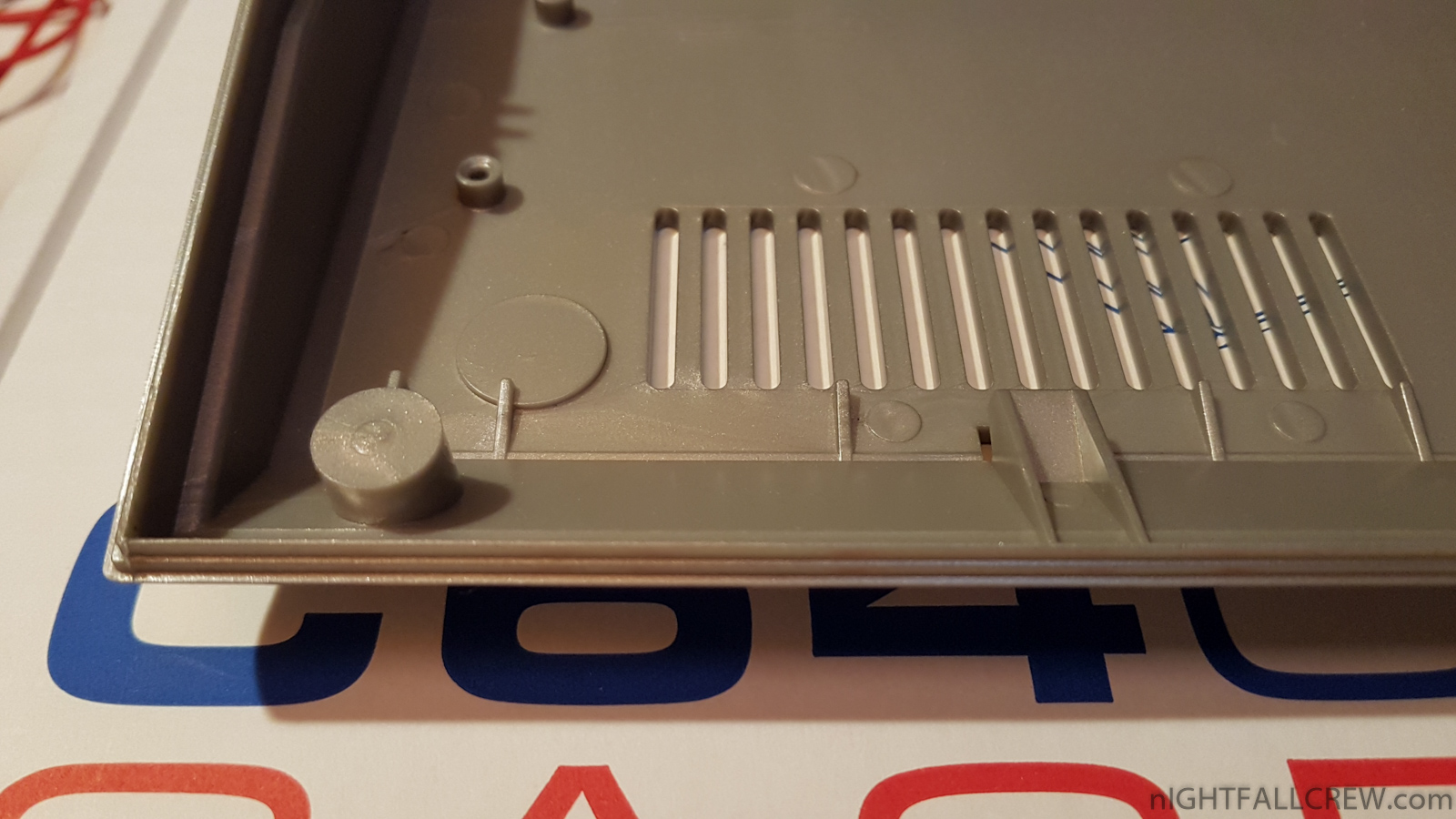
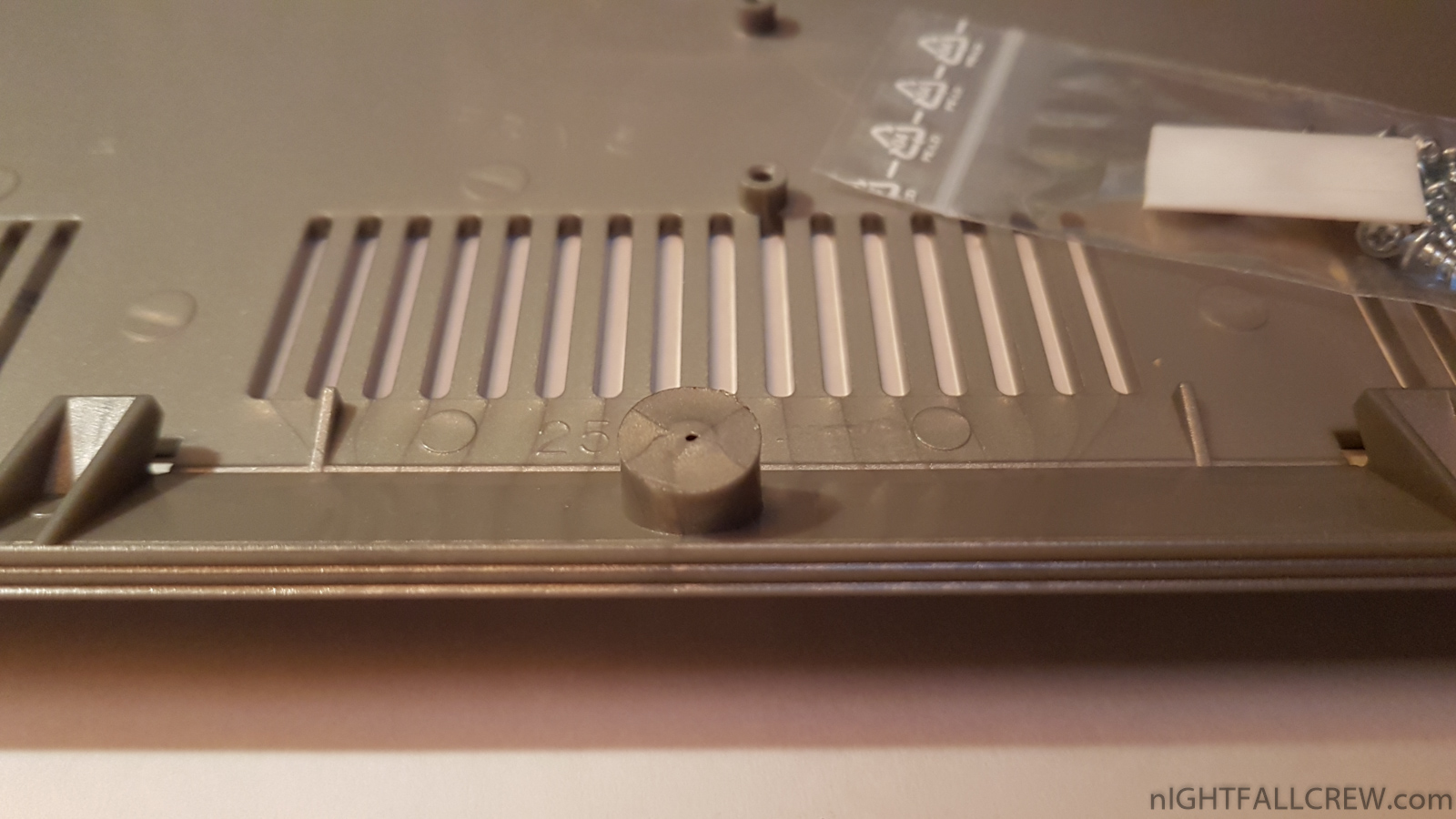
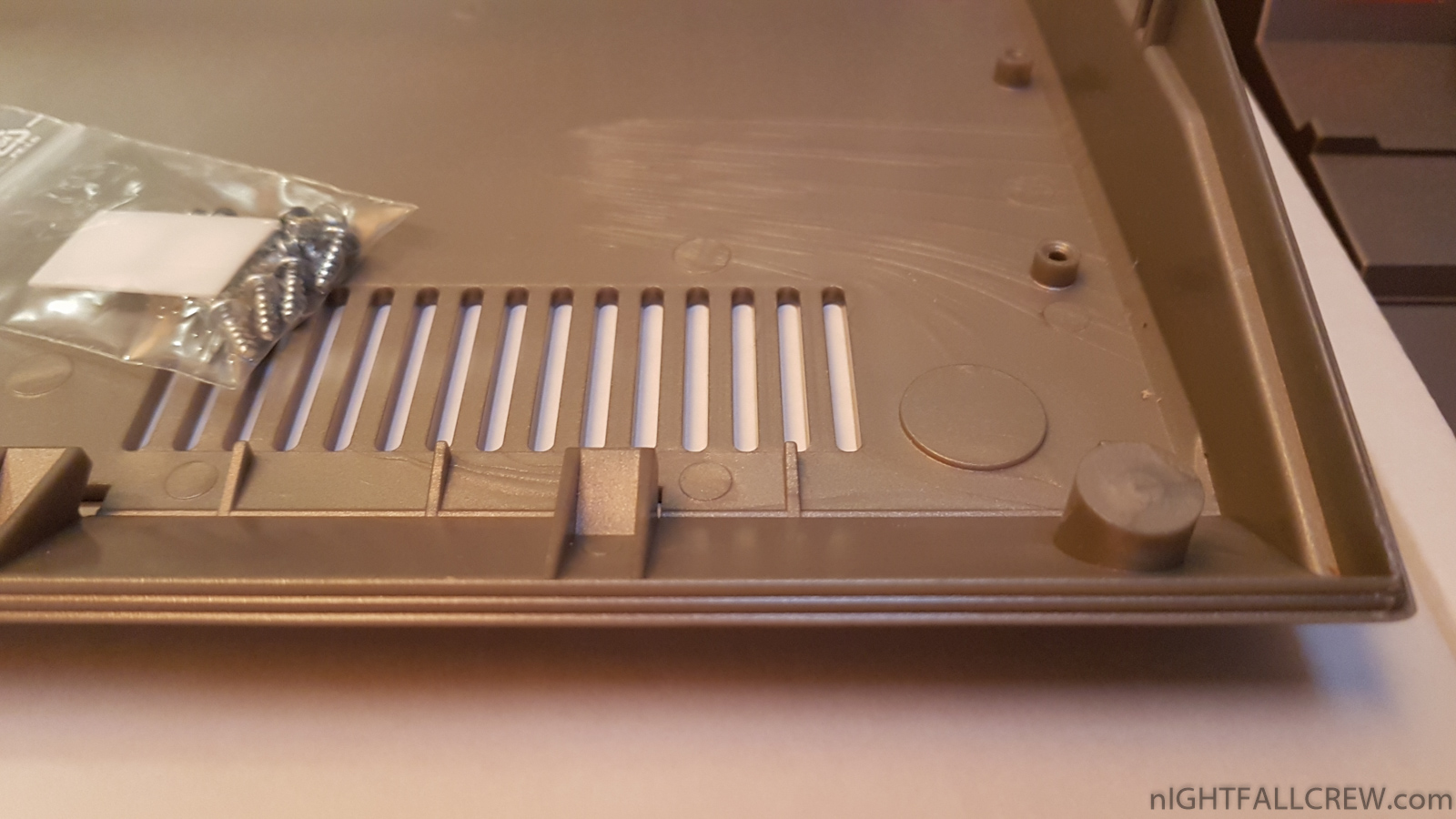
Commodore 64C Replacement Case (SX-64 Style)
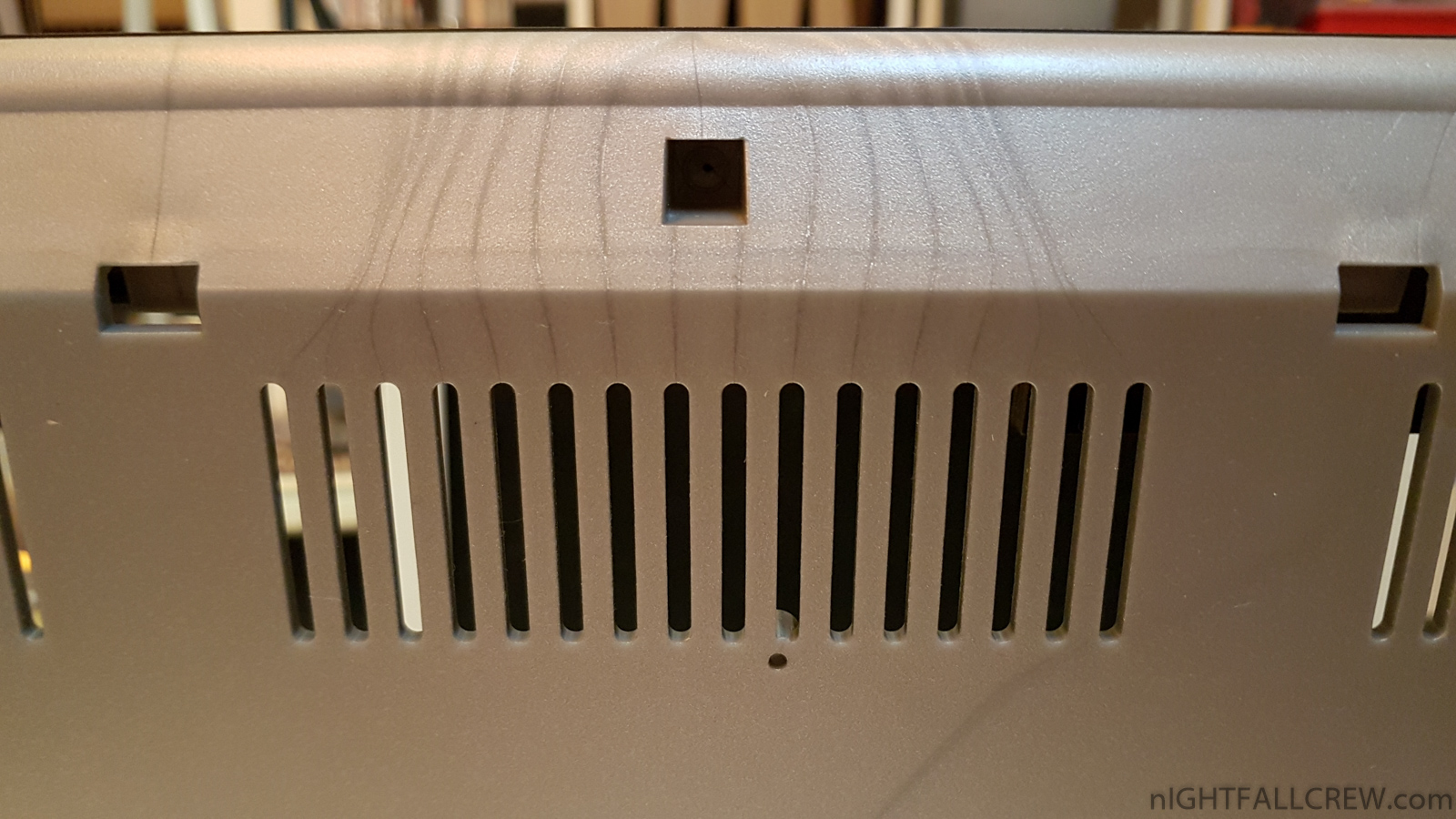
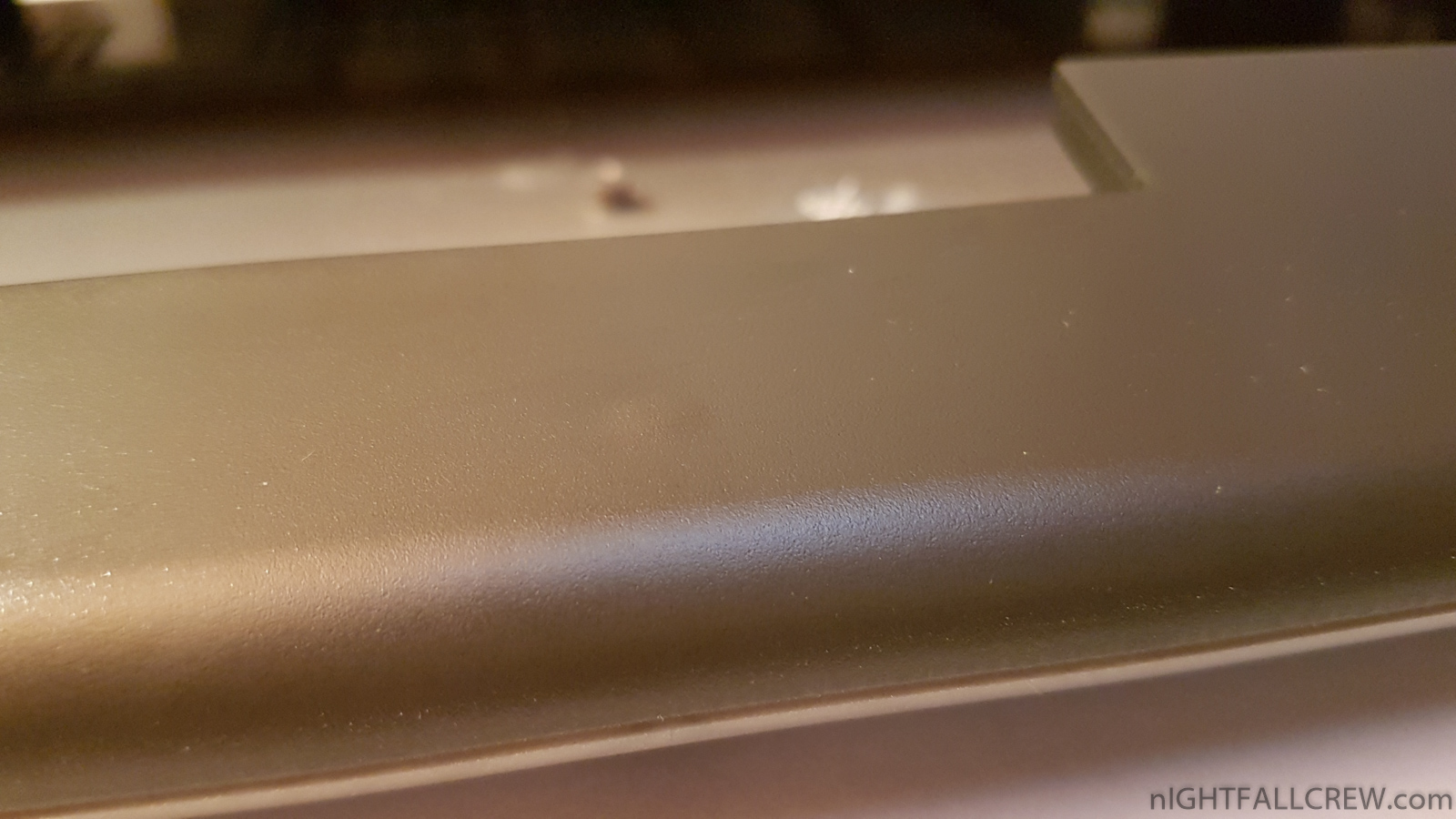
The Commodore C64C replacement case is very nice like the original one.
There are some imperfections in the plastic and in the painting phase, anyway i don’t look for the perfection. who is perfect ? :D
… so if you are not looking for the absolute perfection, i would recommend it to everyone.
Gallery:
source: return-magazin.de
Hoxs64 Commodore 64 Emulator Updated v1.0.9.4

Hoxs64 written by David Horrocks is a Commodore 64 emulator for Microsoft Windows 2K/XP/Vista/Seven (DirectX 9+)
The emulator substantially reproduces this legacy machine in minute detail.
Changelog:
- CIA serial and CNT timing improvements thanks to test programs written by Mariusz.
- Added VIC-II colour palette user configuration dialog box.
- Added command line options (see hoxs64.txt) to support the VICE 64 testbench.
- Changed the colour RAM reset pattern to use bytes $0C and $03 as per the same C64C whose RAM reset pattern is already used.
Download:
source: hoxs64.net
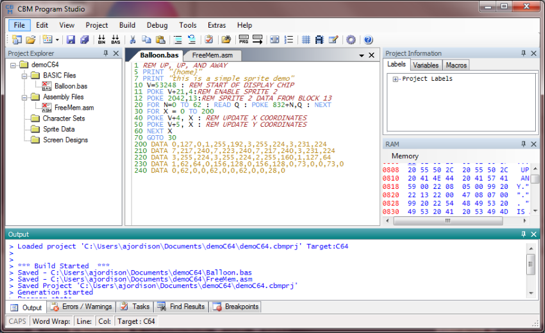
CBM prg Studio v3.11.0 released

CBM prg Studio Version 3.11.0 is released. There are a lot of new features in this version. I’d really appreciate it if you report any bugs you find or have any suggestions/comments.
CBM prg Studio allows you to type a BASIC or Machine Code program in using a nice Windows environment and convert it to a ‘.prg’ file which you can run on an emulator, or even a real C64 / VIC20 or PET if you’re feeling brave and have the right kit.
CBM prg Studio is the result of merging C64PrgGen and VIC20PrgGen. Adding new features and fixing bugs in two apps which were 95% similar was a bit of a nightmare so merging them made sense.
It was also a good opportunity for a face lift and to add some new features, such as:
- Programs are project based, meaning all related source files, sprite files etc. are kept in one place and multiple source files can be linked more easily.
- Tabbed MDI.
- Syntax highlighting.
What CBM prg Studio isn’t is a front-end for tok64, cbmcnvrt, bastext or any other tokeniser / detokeniser / assembler. It’s all been written completely from scratch.
New features in v3.11.0:
- Assembler:
- CTRL+Double click on label or variable will take you to its definition.
- Mouse over a directive to get a tooltip of its usage.
- Control/screen codes can be embedded in text strings.
- Debugger:
- Default watch list.
- Sprite Editor:
- Number keys for quick colour change.
- Screen Editor:
- Quick colour change.
- Screen editor can generate data to basic string array.
- BASIC:
- Super Expander basic extension for VIC 20 projects.
Bugs Fixed:
- Assembler:
- Having ‘*=’ in a comment causes an error
- Macros weren’t appearing in the macro viewer
- Multiple macro parameters in the same line were being ignored.
- BASIC:
- Incorrect line warning length for VIC20 projects.
- Screen designer:
- Crash when exporting C128 screens.
- Sprite Editor:
- Fail when importing from listing when the target line number was also in another part of the listing.
- Character Editor:
- Fail when importing from listing when the target line number was also in another part of the listing.
See the help for a complete list of new features and fixed bugs.
Note In this version, each target machine can have its own default project directory. If you are upgrading from a previous version (before version 2.5.1) of CBM prg Studio you may be asked to set up your project directories again. Your current projects will not be affected.
Download: CBM prg Studio v3.11.0 (943)
source: ajordison.co.uk

Recent Comments